

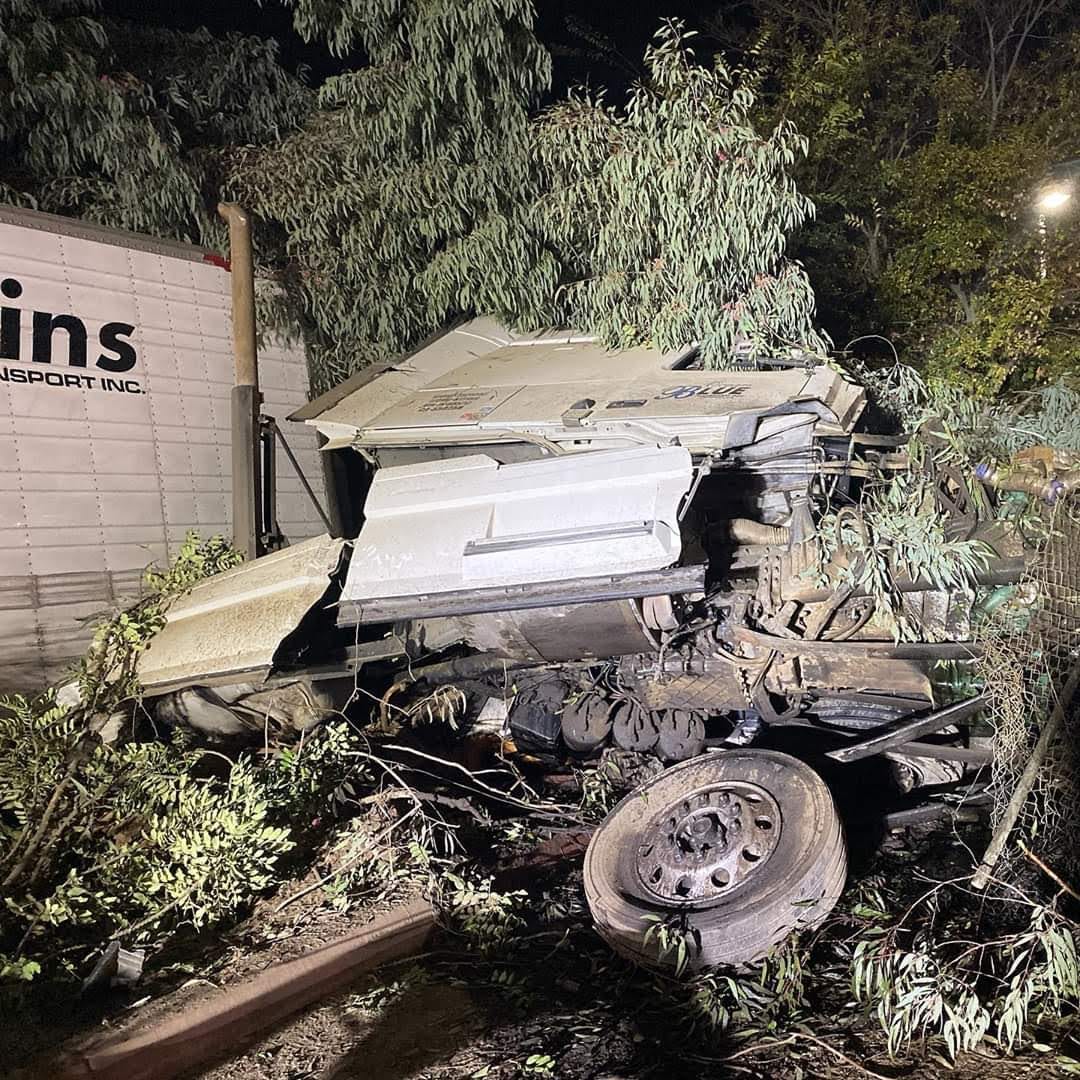
The phone rings at 2:14 a.m. It always rings at 2:14 a.m., or close enough that nobody in safety remembers the difference. A driver sits on the shoulder of an interstate, hands shaking, four-way flashers on, a sedan folded into the corner of his trailer. He doesn’t know yet whether the woman in that sedan is going to live. He doesn’t know whether he got his triangles out in time, whether his dash camera saved the clip or whether the trooper writing on a clipboard 40 feet away is about to hand him a citation. He just knows he needs somebody at the company to tell him what to do. That’s if you have a driver that at least cares enough to do so.
What happens over the next 10 minutes, the next eight hours, the next 32 hours and the next 30 days will possibly go to a jury two or three years from now. Every word the driver says at the scene. Every hour that passes before somebody calls the insurer. Every file that gets pulled, or doesn’t, when the preservation letter lands. The biggest exhibits in any litigation effort won’t come from that night but instead will come from the driver’s application, the MVR nobody signed, or no one has, the camera and/or telematics events nobody coached, the brake defect on a DVIR with no matching work order and the safety policy that says one thing while dispatch emails say another.
This is a discovery guide built from what plaintiff attorneys request, the items I review in countless litigation expert witness cases, and mock audits and consults with some of the biggest and smallest names across the industry, branch by branch. Flip it over and it’s a safety program blueprint, because every branch lists a record that will be used to prove you failed. This piece walks through the whole thing, from the shoulder to the verdict form, then flips it into a program you build before the phone ever rings. The same way the best chameleon carriers develop their business by reverse engineering regs to build their business, plaintiff attorneys, at least the good ones, engineer their strategy based on reverse engineering what you should have done from a compliance perspective as well as an industry standard issue.
Why the post-crash response decides the price
The American Transportation Research Institute studied 600 trucking verdicts from 2006 through 2019 and found jury awards against trucking companies grew 51.7% per year from 2010 to 2018, against general inflation of about 1.7%. Verdicts over $1 million went from 26 in the 2006 to 2010 window to 300 in the 2015 to 2019 window. That trend didn’t level off. Marathon Strategies’ 2026 report on corporate verdicts counted 12 nuclear verdicts in trucking and automotive cases in 2025 totaling $3.4 billion, more than double the $1.4 billion from 15 cases in 2024. Across all industries, verdicts of $10 million or more hit about $25.6 billion in 2025, up 40.7%, with more than 40 thermonuclear verdicts topping $100 million. Generally, the less lag time and the faster you manage the claim or potential claim, the better the outcome.
Not every big verdict survives, and not every big verdict means the carrier was dirty. A Houston jury in 2018 hit Werner Enterprises with roughly $89.7 million in damages after a pickup crossed an icy median on Interstate 20 and struck a Werner truck. On June 27, 2025, the Texas Supreme Court reversed, holding that the Werner driver’s speed and presence created the conditions for the crash but weren’t its proximate cause. Werner won. It took seven years after the verdict. Texas passed House Bill 19 in 2021. On the defendant’s motion, a commercial vehicle trial can split in two: the jury decides liability and compensatory damages first, then hears the employer-specific claims and punitive damages evidence. In that first phase, regulatory violations come in only when they tend to prove causation.
Winning on appeal seven years later is not a business plan. Tort reform in one state is not a business plan. The business plan is making sure that when the plaintiff’s team opens your files, the story in them is the story of a company that saw the risk coming and managed it on paper, in practice and in the culture. Carriers that do that settle cases for what they’re worth. Carriers that don’t get priced on how bad they look. There is a difference between making a victim or plaintiff whole and making a victim rich, and that difference often depends on how you manage your claims and the policies and framework you built your program on.
Minute zero: the scene
The first obligation is the simplest one. Stop. A conviction for leaving the scene costs a CDL holder his license for one year on a first offense under 49 CFR 383.51, on top of whatever the criminal court does. Get the truck as far out of the travel lanes as you safely can, unless moving it would make things worse or law enforcement needs the scene to stay put. Shut it down, set the brakes and check yourself for injuries, because adrenaline will hide a broken wrist for an hour.
Then the warning devices, and this is where I see more cases go sideways than anybody would believe. Under 49 CFR 392.22, the driver has to activate the hazard flashers immediately and keep them on until the warning devices are out. The devices go out as soon as possible and in any event within 10 minutes. On a two-lane road, one goes on the traffic side about 10 feet from the truck toward approaching traffic, and the other two go about 100 feet out, one in each direction. On a divided or one-way highway, they go at 10 feet, 100 feet and 200 feet back toward approaching traffic. If the truck is stopped within 500 feet of a hill, curve or other obstruction, one device goes in that direction somewhere between 100 and 500 feet out so approaching drivers see it before they crest or round the obstruction.
Why does a jury care about triangles? The second crash is often worse than the first. A truck sitting disabled across a lane at night is a target, and when a passenger car runs into it 20 minutes later, the first question plaintiff counsel asks is where the triangles were. The responding trooper’s photos answer that question. So do the dash camera clips. So does the forward-facing camera of the next truck that passed, if plaintiff counsel finds it and subpoenas it. If your driver training records can’t show the driver was ever trained on placement, and your truck inspection records can’t show the truck even carried three bidirectional reflective triangles, you’ve handed them the first chapter of their opening statement.
Next comes people. Check for injuries, call 911 and give a precise location, mile marker and direction of travel. Don’t move an injured person unless they’re in immediate danger, and don’t try to do anything you aren’t trained to do. Stay with them if you can, keep them warm and let them see that somebody cares. Juries remember a driver who knelt by the car. They also remember a driver who stood on the shoulder on his phone.
Then the documentation, and every driver should be drilled on the human factors behind it. When the crash happens, the brain dumps adrenaline and endorphins into the system. Pain drops, strength rises, perception narrows. Everybody at that scene, including the other driver and every witness, is operating on chemistry, and as that chemistry wears off over the next hours and days, injuries reveal themselves and memories shift. People talk to family, talk to friends, talk to a lawyer, and their recollection of who was where and what happened evolves.
The only version of events that doesn’t evolve is the one captured in the first hour. Photos from the fog line toward the point of impact. Photos from the centerline. All four corners of every vehicle at final rest. Close-ups of damage, gouges, debris fields and tire marks. Road conditions, signage, weather and lighting. Names, plates and insurance for every vehicle, names and phone numbers for every witness, the agency and badge number of every officer. Never photograph the injured or the dead, and never wander into traffic to get the shot.
Then what not to do. Don’t argue fault at the scene. Don’t speculate about the cause. Don’t apologize in a way that sounds like a confession, and never, ever tell the other driver the company will pay for something. Be polite, be human, answer the officer’s questions truthfully and stick to facts you saw. Don’t sign anything the other party hands you. The paper can run the other way. Some carriers put what are sometimes called exoneration cards in the cab, a simple form that lets a motorist who admits fault write that down and sign it on the spot. Your driver never signs one. The other driver might.
If there’s fire, the driver needs to know the fire extinguisher requirement in 49 CFR 393.95 and how to use it, pull, aim at the base, squeeze, sweep, from 8 to 10 feet back with the wind behind him. If there’s hazmat, the driver’s training under the hazardous materials rules is what keeps bystanders alive, and the shipping papers need to be where responders can find them. None of this can be taught at 2:14 a.m. It gets taught at orientation, drilled at safety meetings and proven with sign-in sheets, or it doesn’t exist. Make sure it’s not expired.
Hour one to hour 32: the compliance clock starts
The driver’s next call is to the company, and the company’s first job is to determine whether this is a DOT-recordable accident. Under 49 CFR 390.5, an accident means an occurrence involving a commercial motor vehicle on a highway that results in a fatality, an injury to a person who immediately receives medical treatment away from the scene, or disabling damage to one or more vehicles that requires a tow from the scene. A fatality counts if the person dies at the scene or within 30 days. Damage that can be fixed at the scene without special tools, a flat tire, or broken lamps, signals, horn or wipers doesn’t count as disabling. Getting in or out of a parked truck and loading or unloading cargo don’t count as accidents.
That definition triggers two things right away. The first is the post-accident testing decision under 49 CFR 382.303. A fatality requires drug and alcohol testing whether or not anybody gets cited. An injury treated away from the scene, or a disabling-damage tow, requires testing only if the driver gets a citation for a moving traffic violation arising from the accident within eight hours for alcohol or 32 hours for drugs. The alcohol test should happen within two hours. If it doesn’t, the employer has to write down why. At eight hours, the employer stops trying and writes down why. The drug test must happen within 32 hours; at 32 hours, the employer stops trying and writes down why. The driver has to stay readily available for testing, and if he doesn’t, the employer can treat it as a refusal, which carries the same consequences as a positive. The rule doesn’t keep a driver at the scene when he needs to leave for help or medical care. Tests performed by law enforcement under their own authority can satisfy the requirement, but only if the employer obtains the results.
Real carriers fail here. The driver isn’t cited at the scene, dispatch decides no test is needed and the truck rolls. Then the citation is issued six hours later, still inside both windows, after the trooper finishes the report, and nobody at the company circles back. Or the collection site is closed and the 32-hour window lapses with no written reason in the file. Or the test is done, but it’s a non-DOT test under company authority when it should have been DOT, or the reverse. In discovery, the post-accident testing file for that crash will be requested by name. If it’s empty, plaintiff counsel won’t have to prove the driver was impaired. They’ll just ask the jury why the company didn’t want to know.
The second trigger is the accident register under 49 CFR 390.15(b). Every recordable crash goes on it with the date, the city or town and state, the driver’s name, the number of injuries, the number of fatalities and whether hazardous materials other than fuel from the vehicles’ own tanks were released. The register must also include copies of every accident report required by a state or other governmental entity or by your insurer, and it must be kept for three years after each accident. Under 390.15(a), the carrier must also make all records and information about the accident available to an authorized FMCSA or state representative investigating it. Failing to keep an accident register is a critical violation under the safety fitness rating rules, and investigators look for it during post-crash compliance reviews.
While all of that is happening, the records clock is running down. The regulations set minimum retention periods. Under 49 CFR 395.8 (k), carriers must keep records of duty status and supporting documents, including electronic logging device data, for six months. Driver vehicle inspection reports are kept for three months under 396.11. Maintenance records are kept for one year and for six months after the vehicle leaves the carrier’s control under 396.3(c). The driver qualification file is kept for three years after the driver leaves under 391.51. Drug and alcohol records run from one to five years under 382.401 depending on the record. Those are floors. They’re not permission to destroy anything once you know a lawsuit is coming.
The moment a carrier reasonably anticipates litigation, and a fatal crash or a serious injury crash is reasonable anticipation by itself, the duty to preserve kicks in. That means a written litigation hold that suspends every automatic deletion cycle touching that driver, that truck, that trailer, that load and that trip. ELD data and the unassigned driving log. Dash camera footage, both directions, plus the driver’s full event history going back months. Telematics speed, location, hard-braking and following-distance data. Fuel receipts, tolls, bills of lading, dispatch messages, texts and phone records. The DVIRs and work orders for the unit. The engine control module and any event data recorder. Emails between dispatch and the driver. If any of that disappears after the duty to preserve attaches, the court can sanction you and, in the worst cases, tell the jury it may assume what was lost would have hurt you. In federal court, Rule 37(e) reserves that instruction for electronically stored information destroyed intentionally. Plaintiff counsel argues that an overwritten camera clip after a preservation letter shows purpose. State courts set their own rules, and some are tougher.
The tow: your evidence leaves on a wrecker
Most carriers find out what a heavy tow costs the night it happens. I sit on my county’s towing advisory board and work with the sheriff’s office on police-requested towing, so I see this from both the enforcement and carrier sides. On a highway crash, the responding agency usually calls the next company on its rotation list. That’s a nonconsensual tow. Your driver doesn’t pick it up, and your preferred vendor may not be on the list or close enough to matter when the agency needs lanes open. Heavy recovery, rotators, cargo transfer, spill containment and cleanup, traffic control and storage can run a big truck invoice well into five figures, and a spill cleanup can push it higher. The tower can hold the tractor, trailer and often the cargo under a possessory lien until the bill is paid or disputed through whatever process your state allows.
The tow hits you three ways. First, money. If you don’t know what your policy covers for towing, recovery, cargo transfer and environmental cleanup, you’ll find out at the worst time. Physical damage coverage, cargo coverage and pollution coverage are separate questions, and a standard auto policy’s pollution exclusion can leave a spilled-load cleanup sitting on your desk unless you bought the right endorsement. The MCS-90 endorsement guarantees the public gets paid on a final judgment up to the federal minimum, and it lets your insurer come back to you for every dollar the policy itself didn’t cover. It’s no substitute for buying the right pollution coverage.
Second, speed. Storage fees start the day the truck lands in the yard. The faster your claims person gets on the phone with the tower, the agency and your insurer, the less you pay to keep a wrecked unit sitting in gravel.
Third, the truck is evidence. The engine control module and any event data recorder carry speed, brake application, throttle and fault data from the seconds before impact. The brake adjustment, the tires, the lights and the trailer’s air system all tell a story. State troopers will often do a post-crash inspection, and that report becomes an exhibit. If the truck gets repaired, parted out or totaled by the insurer and sold at auction before the plaintiff’s experts get a chance to inspect it, you’ve created a spoliation problem out of a simple property damage decision. The right move is to get the unit to a secure location, hold any repairs, notify the other side and set up a joint inspection and download protocol with both sides’ experts present. Then decide what happens to the iron.
Set all of this up before the crash. Pre-negotiated recovery agreements with heavy towers along your lanes, with rates in writing. A list of who can be at a scene fast for a download. Know what your policy covers and what your deductibles are. And a claims procedure that tells the person answering the 2:14 a.m. call who to call next.
The insurance lag: the 24-hour line on my board
On my Plaintiff Mind Map, there’s a line on the process timeline that reads: claim occurs, collect all data as soon as possible, no more than 24 hours, contact others involved, reduce lag time. Then come the next nodes: plaintiff lawyer retained, suit filed, discovery requested. That line exists because the race starts the minute the crash happens, and most carriers don’t know they’re in it.
Lag time is the gap between the crash and the moment your insurer, or you, if you’re carrying a large self-insured retention, knows about it and starts working on it. Every hour of lag is an hour the injured party spends without hearing from anybody but the billboard attorney who answers on the first ring. Many plaintiff firms can have an investigator, a letter of representation and a preservation demand out before the carrier has even filed the first notice of loss. Once a claimant is represented, the adjuster can’t talk to them directly anymore. A property damage claim that could have been closed with a fast check and a rental car becomes a bodily injury claim with medical treatment that’s built to be presented to a jury. Some of that treatment is real and needed. Some of it is financed by litigation funding and built on lien-based care, where the bill grows because nobody expects the plaintiff to pay it until the case settles.
Report every recordable crash to your insurer the same day, with photos and the driver’s statement. Put your agent, your adjuster and your defense counsel’s numbers on the same card your driver carries. If you have a deductible or a self-insured retention, you are the first adjuster on that claim, and you need somebody who knows how to act like one. If you have excess or umbrella coverage, those carriers usually need notice too, often sooner than people think. Read the notice conditions in your policies before you need them. Late notice is a coverage fight you don’t want.
Inside the company, the crash should go to an accident review committee within days, not months. I recommend the safety director, the claims manager and the manager of the terminal where the crash happened, with the goal of finding root cause and countermeasures, not finding somebody to fire. Was it driver behavior, equipment condition, scheduling, route planning, training or a policy that doesn’t match how the work gets done? Then fix it, write down that you fixed it and prove the fix stuck. I also tell companies that if they’re going to take minutes or record these accident committee meetings, and they have a general counsel, have the GC on the committee as well.
The internal preventability determination that a good safety program depends on can become plaintiff’s Exhibit 1. A memo that says preventable, written before anybody’s seen the reconstruction data, will be read aloud in court. Some carriers handle post-crash root cause analysis at counsel's direction to protect it. Others separate the regulatory preventability review from the coaching conversation. Talk to your defense counsel about how your state treats these documents, and build the process before you need it, not after.
On the regulatory side, use the Crash Preventability Determination Program. Since Dec. 1, 2024, FMCSA reviews 21 crash types through a Request for Data Review in DataQs, including a catch-all type for crashes where video shows the sequence of events. You need the police accident report and supporting documents, photos or video. Reviews currently average about 90 days. A not-preventable finding pulls the crash out of your Crash Indicator BASIC calculation in the Safety Measurement System and gets noted in the Pre-employment Screening Program, though the crash still shows up as listed. That’s one more reason the dash camera clip has to be saved, every time.
The preservation letter and the demand
The preservation letter often arrives before the police report does. It lists every category of record the plaintiff intends to request and puts you on formal notice that destroying any of it will be held against you. If you’ve already issued your own litigation hold, the letter is a checklist. If you haven’t, it’s a countdown.
Then comes the demand. Sometimes it’s a policy that limits demand with a deadline attached, and that’s where carriers and their insurers get into real danger. In Texas, the Stowers doctrine can expose an insurer to the full judgment if it unreasonably refuses a reasonable demand within limits. Georgia has written rules for time-limited demands into statute. Other states have their own versions. A demand like that is sometimes a legitimate effort to settle a case. Sometimes it’s built to be rejected, with a short fuse, conditions that are hard to meet and a missing medical record, so the insurer can later be accused of bad faith and the policy limits can be blown open. Either way, the only safe response is to get it to your insurer and your defense counsel immediately, track the deadline to the minute and make sure the people who decide have the facts in time to make a reasonable call. If you’re carrying a self-insured retention or excess layers, every one of those parties needs to be in the loop.
Staged crashes. Most crash claims are real people with real injuries, but not all of them. In New Orleans, federal prosecutors in Operation Sideswipe have charged 63 people in a scheme to stage crashes with 18-wheelers, with drivers called slammers steering into trucks while passengers claimed injuries, and attorneys accused of running the lawsuits. More than 50 people have pleaded guilty. A carrier with forward and inward video of a staged sideswipe has a defense on day one. A carrier without it has a claim to argue over. A dash camera, an ELD that tells the truth and a driver trained to document the scene are as much an anti-fraud program as a safety program.
Discovery: the Plaintiff Mind Map
Once a suit is filed, discovery turns your company inside out. The written requests, the depositions and the corporate representative deposition under Rule 30(b)(6) or your state’s version of it are built from a predictable list. My board breaks it into branches, and each one maps to a set of requests.
It starts with company management and policy development, and the first question on the board is the one that sinks the most carriers: do they follow the policies they have in place? A written policy you don’t follow is worse than no policy, because it proves you knew the standard and chose not to meet it. Plaintiff counsel will request the employee handbook, the driver and manager DOT handbook, the documented hiring criteria for drivers, managers and mechanics, the substance abuse policy and when it was last updated, the preventive maintenance policy and the hours-of-service disciplinary policy. They’ll ask how the company communicates its rules and expectations and whether employees acknowledged them in writing. They’ll ask whether there’s an emergency action plan and whether anybody has ever drilled it. They’ll ask for the claims handling procedure. They’ll ask, through every dispatcher email and every driver text, whether the culture supports bending or breaking the rules when a load is late. If dispatch or even pay and incentives encourage or facilitate impossible operational demands. Someone paid by the load Mon-Fri when a facility is open 8-4 each day can be read as encouraging drivers to run as fast and as hard as possible to get as many loads completed during that short window.
Then telematics. It’s not the fact that you have a camera that can tell on you, it’s the fact you have telematics that provide data that you managed or didn’t. That’s the difference between making someone whole vs. making someone rich, and it might be the difference between what he said and what you said occurred.
Do you have dash camera footage? Did this driver have a history of events or violations on camera before the crash? What was the corrective action? Do you manage driver behavior events with coaching, training, progressive discipline and, when it comes to it, termination? If your cameras are AI-enabled, how do you manage AI-detected events, and who reviews them? This is where the technology that protects you can bury you. A carrier with 140 distraction events on a driver, an inbox full of unread alerts and no coaching record doesn’t have a camera program. It has a recorded history of knowing and doing nothing.
Then the regulatory profile. Is the MCS-150 current and accurate, or does it show eight power units when the yard holds 40? What do the Safety Measurement System, the SAFER snapshot and the BASIC percentiles show? What’s the operating authority history, including suspensions, revocations and applications? What did prior compliance reviews and civil penalty cases find, and did the company fix it? The gap between what a carrier declared and what it operated is a finding in its own right, and juries understand it immediately.
Then there's driver fitness and the qualification file, where most of my mock audits find the hole. Was the driver medically qualified, and if the medical card was issued for less than 24 months, what condition required monitoring and was anyone watching it? Is the medical certificate on file, and did anybody verify the examiner on the National Registry? After National Registry II changes, is that correct self-certification and CDLIS data on the MVR, and did you check it? Was the CDL valid, properly endorsed and free of restrictions that matter? Were MVRs pulled at hire from every state of licensure for the past three years, and annually since, and who reviewed them and signed off? Could you have done continuous MVR monitoring that would have prevented a disqualified driver from being on the road? Is the application complete, signed and dated under 391.21, and were the previous employer safety performance inquiries under 391.23 done, including drug and alcohol history? Was the driver working a second job, and did anybody track total hours? Did you accept a CDL in lieu of a road test, and would a five-minute road test to determine driver proficiency and fit have prevented the crash? Were red flags at hire documented and managed, or waved through because the company needed seats filled?
Then training. Was the road test given on a compliant form and signed by someone competent to give it under 391.31? What training happened at hire, was it tested and what ongoing training followed? Do you have safety meeting records, with sign-in sheets and topics, showing the company kept teaching after orientation?
Then, hours of service. Was the driver within the rules and within the company’s own policy? What type of duty-status record was required, and was the ELD on FMCSA’s registered list and working? If the carrier claimed a short-haul or other exemption, was the operation inside it on that day? And does the company audit logs against fuel, toll and GPS data, or does it only look when someone gets caught?
Then drug and alcohol and the Clearinghouse. Was the post-accident test done on time and on the right forms, or is the reason it wasn’t done written down? Was the pre-employment drug test completed with a verified negative before the driver ever performed safety-sensitive work? Was the pre-employment full Clearinghouse query run before hire, and is the annual limited query on file with the driver’s consent? Was it the correct test under the correct agency’s rules? Is the person running the program qualified to run it?
Then maintenance. Every DVIR on that unit for at least the past 90 days. Any open defects. Whether every defect has a matching work order showing the repair, signed off by the person who made it and certified before the truck went back out. Whether brake work was done by a qualified brake inspector under 396.25. The full maintenance file, the date of the last annual inspection and the preventive maintenance schedule the company says it follows. A brake defect written up three times and fixed zero times is not a maintenance problem in front of a jury. It’s a choice.
Then load securement and permits. Did the carrier have every license and permit the operation required, and was the load legal and adequately secured? Then hazmat and passenger requirements when they apply. Even I-9 and E-Verify compliance shows up, because a plaintiff’s attorney looking at a carrier’s hiring process will look at all of it.
Then the corporate representative. Somebody from your company will sit in a conference room and be asked whether safety is the company’s number one priority. Whether a trucking company should ever needlessly endanger the public. Whether a company that fails to follow its own safety rules is putting the public at risk. Every one of those questions sounds like a yes. Every yes becomes a rule your company will be accused of breaking. That person needs to be prepared by counsel and have a program behind them that can carry the answers.
The jury: psychology, sociology and the hijack
Everything above is mechanics. What decides the number is how the jurors feel when they go into the deliberation room.
The plaintiff-side playbook is well known and well taught. The reptile approach reframes a crash from what happened on one stretch of road into a question of community safety. Is this company a danger to you and your family? Did it make a rule that endangers all of us? Is this driver still out there? Once the jury stops measuring the crash and starts punishing a threat, the verdict becomes a deterrent rather than a measurement. Anchoring sets the number. A large figure, sometimes the company’s revenue, sometimes a multiple of something, gets said out loud early in trial, and every number afterward is judged against it. Half of an absurd anchor can still feel like a compromise.
The sociology underneath it is just as real. Jurors drive the same roads as your trucks and they’ve been cut off by one. Many distrust corporations by default. Many have read about chameleon carriers, CDL mills and drivers who can’t read a road sign, and they bring that into the box whether your company had anything to do with it or not. Local news coverage and social media shape the jury pool before voir dire. In one case on my desk right now, the exhibit binder includes the sheriff’s office social media post about the crash and the public comments posted below it. The court of public opinion files its brief early.
I tell carriers the same thing every time. You can’t control the playbook. You can control what it has to work with. The reptile approach depends on gaps between what you said and what you did, between your written policy and your operational reality. It depends on a corporate representative who can’t explain the program because one doesn’t exist. It depends on emails where a dispatcher pushes a driver past his hours and nobody in safety pushes back. Close the gaps and the strategy has a lot less to grab. The defense can then do its work: jury selection that finds the people most likely to be swept up in threat-based reasoning, preparation that tells jurors what’s coming, and a safety story told by drivers, mechanics and safety managers who lived it.
Then there’s how you treated the family. Juries punish indifference more than error. A carrier that reached out, paid the property damage fast, showed up and treated the injured family like people, without admitting what it shouldn’t, is a different defendant than one that went silent and lawyered up on day one. Empathy and admission of fault are not the same thing. Your crisis communication plan should know the difference, and it should name one person who speaks for the company.
Building the program: the mind map, flipped
Now flip the map. Every node on that board is a question that will be asked after the crash. A participatory risk program answers each one before the crash, in writing, in practice and in data. I call it compliance-plus: meet the regulation, exceed it where the risk demands, and document all of it in a way that tells a coherent story to the worst-case audience, a jury primed to find what went wrong.
Start by articulating policy, because nothing else holds without it. At minimum, a carrier needs an employee handbook, an FMCSA compliance handbook for drivers and managers, a preventive maintenance policy, an hours-of-service accountability and disciplinary policy, a drug and alcohol policy that includes your Clearinghouse, dilute and marijuana positions, an electronic device policy and a written acknowledgment of telematics and camera recording. Every one of them gets signed at hire, reviewed at least annually and enforced the same way for the top driver and the newest one. If you won’t enforce it, don’t write it.
Build the hiring file like it’s going to be read by a stranger looking for a mistake.
Documented hiring criteria for drivers, mechanics and managers. Applications complete before the first dispatch. Previous employer inquiries and drug and alcohol history pulled and documented, with your good-faith efforts in writing when an employer won’t respond. MVRs from every state, reviewed and signed by a named person against written standards, and continuous MVR monitoring between annual pulls so you know about the speeding ticket in March instead of finding out in a deposition. Medical cards tracked by date, with examiner verification, and monitoring for short-term cards. Road tests by qualified evaluators, on proper forms.
Close the telematics loop. Every camera event gets reviewed, every reviewed event gets an outcome and every outcome gets documented, whether it’s a coaching session, retraining, a written warning or a termination. Track trends by driver, by terminal and by manager. If you can’t staff the review, adjust the alert settings to something your team can review every day, and document why. A camera program you don’t manage is a liability with a lens on it.
Close the maintenance loop the same way. Every DVIR defect gets a work order; every work order gets a signature from a qualified technician and certification before the unit returns to service; and repeat defects get flagged for root cause. Annual inspections on schedule with qualified inspectors. Brake work by qualified brake inspectors. A preventive maintenance schedule the shop follows, with records that prove it.
Run hours of service as a supervision function, not a paperwork function. Audit logs against supporting documents. Watch for unassigned driving. Make sure dispatch and load planning build trips that legal drivers can run, because the email where a planner asks a driver to make it anyway is the most dangerous document in your building.
Build the post-crash response before you need it. A written emergency action plan, drilled at least once a year with sign-in sheets that prove it. An accident kit in every cab with a camera or charged phone, a scene diagram, witness cards, the phone tree, the triangle placement diagram and a plain-language card telling the driver what to say and what not to say. A 24-hour first-call line answered by someone trained to run the checklist: injuries, location, law enforcement, recordable or not, post-accident testing decision with times written down, insurer notified, litigation hold issued, footage saved, tow and download handled. Pre-negotiated heavy recovery vendors along your lanes. A rapid response list with defense counsel and a reconstructionist who can be at a serious scene within hours. A litigation hold template ready to sign. An accident review committee that meets on a schedule, determines root cause, assigns countermeasures and tracks them to closure. CPDP filings when the crash type qualifies.
Manage claims like a business function. Same-day notice to the insurer. Monthly claims reviews with your adjusters. Quarterly loss trend analysis by crash type, driver tenure, terminal and time of day. Reserve reviews you understand. A clear understanding of your deductibles, retentions, excess layers and notice conditions. A procedure for time-limited demands so nobody misses a deadline on a holiday weekend.
Audit yourself before somebody else does. Mock DOT audits, sampled the way an investigator would sample, at least annually. Monthly SMS monitoring with intervention thresholds flagged before they’re crossed. Update an MCS-150 when the fleet changes, not every two years when the system nags you. Document retention mapped to every regulatory schedule, with a hold process that overrides it.
Measure what all of this is worth, because owners respond to math. On a 3% margin, a $10,000 claim takes about $333,000 in revenue to pay for. A $50,000 claim takes about $1.67 million. A $150,000 claim takes about $5 million in revenue. A nuclear verdict takes the company. The safety program isn’t overhead. It’s the cheapest freight you’ll ever haul.
The driver on the shoulder
Go back to that driver at 2:14 a.m. In one version of this story, he’s alone. He doesn’t know where his triangles are. Nobody ever trained him on placement, so he guesses. His camera overwrites the clip by morning because nobody told him how to save it. Dispatch tells him to keep rolling once the trooper lets him go, and the citation comes later, and the test never happens. The tower takes the truck to a yard nobody at the company calls for a week. The insurer finds out on Tuesday. The preservation letter arrives Thursday. Eighteen months later, a corporate representative who started in safety three months before the deposition tries to explain a hiring file with no MVR review and a camera history with 60 unreviewed events.
In the other version, he reaches into a kit, follows a card he’s practiced, places the devices where he was trained to place them, saves the clip and calls a number that’s answered on the second ring by someone who knows exactly what happens next. The test is done inside the window. The insurer knows before sunrise. The truck goes to a secure yard and nobody touches the ECM until both sides can download it. And when discovery comes, the files tell the story of a company that saw this day coming and got ready for it.
Same crash. Same road. Same injured family that should be made whole. Two completely different cases.
The crash takes seconds. The case takes years. What you build before the first decides the second.