

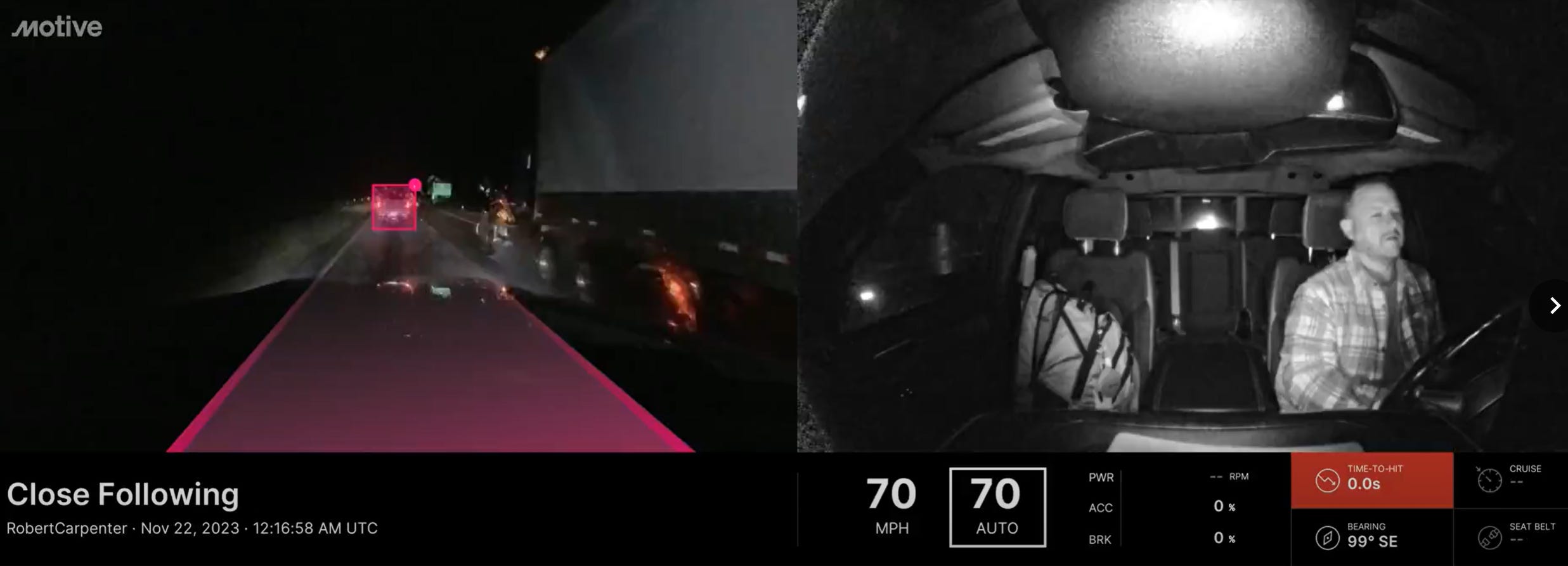
If you run freight into, through, or anywhere near British Columbia, you need to watch Bill M217, and by watch, I mean we’re just looking for Royal Assent; it’s already passed. The Dashboard Cameras in Commercial Vehicles Act was passed on third reading with unanimous all-party support in May 2026. Once it receives royal assent, which could happen any day, the clock starts. Six months later, every heavy commercial vehicle operating on a B.C. highway needs a forward-facing dash cam that meets specific technical requirements. Late 2026 or early 2027 is the realistic compliance date.
Not a proposal. Not a discussion. Passed. Unanimously. British Columbia is about to become the first jurisdiction in Canada to mandate dash cams on heavy trucks, and, as written, the bill extends across the border.
The bill applies to trucks, tractors, buses, and vehicle combinations with a gross vehicle weight rating over 11,793 kg. That is roughly 26,000 pounds. If you think in FMCSA terms, reset your brain. This is not a 10,001-pound rule. This is a Class 8 rule. Your semi is in scope. Your light service van is not.
The camera requirements are based on the bill and committee discussion:
Forward-facing only. It has to record the road through the windshield. Driver-facing cameras are not required under this mandate.
Continuous recording during operation. You cannot turn it off. You cannot obstruct it. If the truck is moving, the camera is rolling.
Minimum 1080p resolution with night vision capability.
Minimum 72 hours of footage retention on board.
The vehicle owner is responsible for installation and maintenance. If the truck is leased, that duty shifts to the lessee. Drivers are responsible for ensuring the camera is functional and unobstructed, so a camera check needs to be part of your pre-trip.
Footage is protected under B.C.’s Personal Information Protection Act. The regulations that spell out exactly how footage is accessed, seized, or shared by law enforcement have not yet been written. The bill sets the rule. Cabinet writes how later.
The Alaska Problem
There is no road to Alaska that does not go through British Columbia. The Alaska Highway runs roughly 1,300 miles from Dawson Creek, B.C., through the Yukon to the Alaska border. Every overland load moving between the Lower 48 and Alaska crosses B.C. and crosses an international border twice.
The rule keys on operating on a B.C. highway. It does not key on where the truck is plated. A Texas carrier running a heavy load up ALCAN to Fairbanks falls under the recording requirement while on B.C. roads, just like a Surrey-based outfit. Non-resident is not a loophole. B.C.’s Commercial Transport Act already regulates out-of-province trucks through its permitting framework.
Most Alaska freight by tonnage goes by barge out of Tacoma or Seattle. The road handles full truckloads, heavy equipment, oversized loads, flatbed loads, specialized work, time-sensitive freight, and some freight simply transiting Canada on a U.S.-to-U.S. trip. If that is your lane, plan to be compliant before the wheels touch B.C., not after a scale operator points at your windshield.
The Alaska run carries its own rules beyond this camera law. Cabotage still applies. You cannot pick up and deliver domestic Canadian freight en route. Your loads move under in-transit customs handling. Your drivers operate under Canadian hours of service while they are north of the border, and those rules are not identical to U.S. rules. In 2025, B.C. Premier David Eby floated tolling U.S. commercial trucks transiting to Alaska as a tariff response. It never took effect, but it showed how the province thinks about its leverage. B.C. knows it owns the only road, and it has shown it is willing to use that.
Why This Matters Beyond B.C.
Is this a signal, not just a rule? When a jurisdiction passes a dash cam mandate unanimously, it means the political resistance to requiring cameras on trucks has collapsed. The arguments about driver privacy, cost burden, and government overreach that have stalled camera mandates everywhere else did not land in B.C. Not a single legislator voted against it.
If you are a fleet that already runs cameras, this is a non-event. You probably already exceed the spec. Your real task is to confirm that your current hardware meets the retention and resolution requirements and that you have coverage for every unit.
If you are a fleet or an owner-operator that does not run cameras, the question is not whether mandates are coming. The question is how fast they spread. B.C. is first. It will not be the last. The insurance industry wants cameras. The plaintiff bar wants cameras. FMCSA recorded more than 5,400 fatalities involving large trucks in 2023. The regulatory momentum is in one direction.
What to Do Right Now
Figure out which of your trucks touch B.C. If you do not have a clean list, that is step one.
Check whether the cameras you already run meet the spec. Most fleets that have cameras do not fail to have one. They fail on the details, usually retention or resolution. If your current setup stores less than 72 hours or records below 1080p, that is your gap.
Put a camera check in the pre-trip. Define what happens when a camera goes offline mid-route. Sort out in writing that the recording duty falls to the lessee for leased trucks.
Six months sounds like plenty until you factor in procurement, internal approvals, installation scheduling, policy updates, and driver communication. Start with the gap analysis now, and you phase the rollout. Wait, and you turn every truck into an emergency the same week.
I wrote a deeper breakdown of the technical requirements and compliance timeline on the Motive blog if you want the full spec sheet.
The bottom line is that B.C. just told the industry that cameras on trucks are no longer optional, so whether you run the Alaska Highway or never cross the border, we see the direction Canada is going with dashcams. My guess is…BC is not the last stop.