

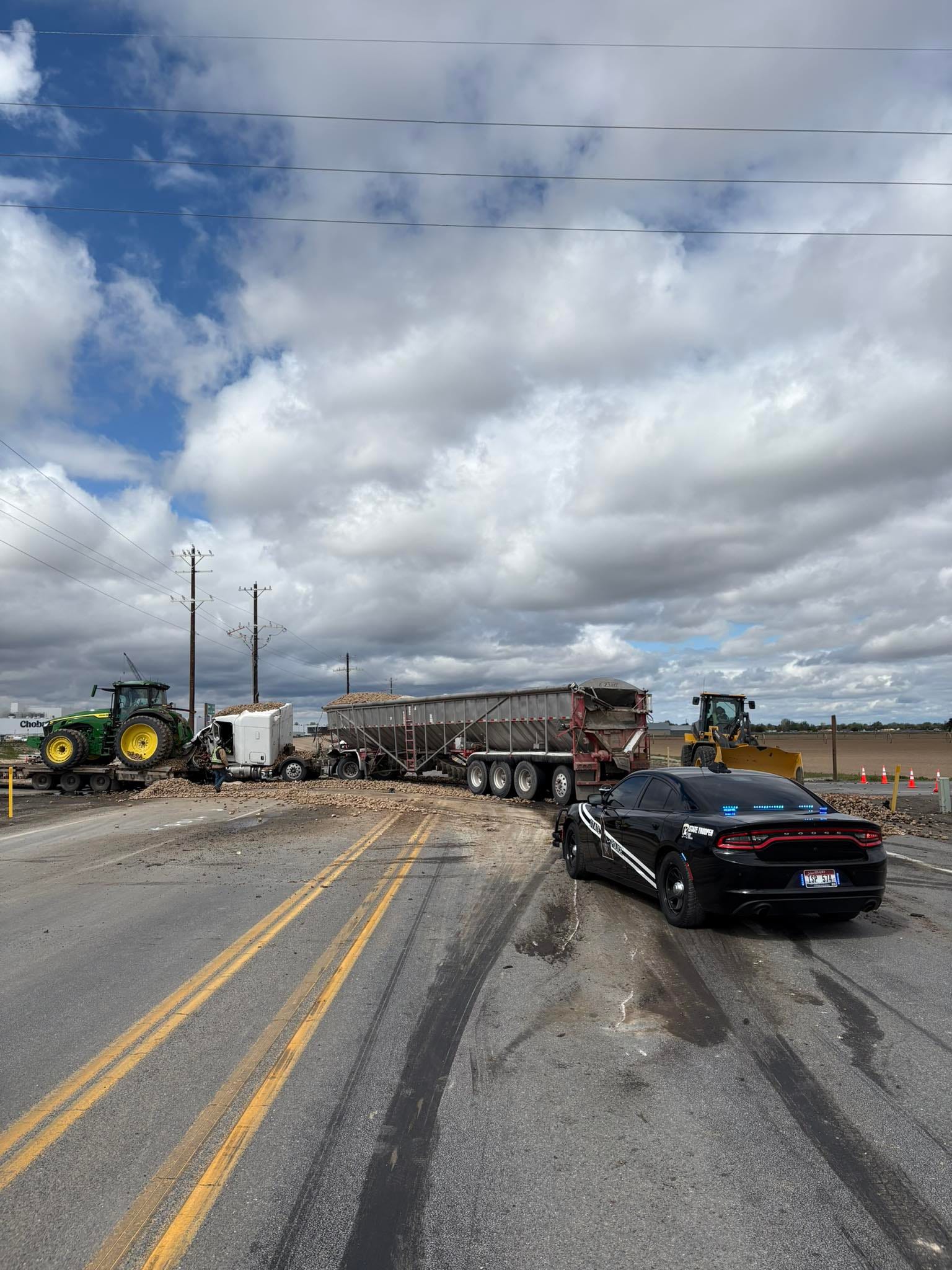
Every truck and broker risk gets financed twice…Once on the front end at a price you set, or once on the back end at a price a jury sets. Trucking has spent 40 years choosing the second one, and the reason isn’t ignorance. It’s that the people who skip the cheap end almost never pay the expensive one.
I have never once enjoyed paying to park a truck.
Twenty dollars for a gated lot with lights, a camera, and a fence, when there’s a free truck stop 11 miles up the road with an open row along the back. At 2100, with a receipt in your hand, you have to explain to somebody that the math looks obvious. It isn’t obvious. It’s backward. That twenty dollars isn’t the cost of parking; it’s the price of retiring four or five separate losses I’d otherwise carry on my own balance sheet overnight with a $5 million load sitting on the back.
Cut the seal on that trailer, and I don’t have a claim; I have a rejection, and a rejection is the load plus the claim plus the customer. Fill the lot and send my driver back out to hunt for a space, and I’m buying an hours-of-service violation, a percentile, a premium, and eventually a broker who screens me out of his network without ever telling me why. Send him to the shoulder instead, and I’m buying the fact pattern the Supreme Court just spent a term on. Shawn Montgomery was stopped on the shoulder of Interstate 70 in Illinois when Caribe Transport II’s truck hit him and took his leg.
Twenty dollars against all of that isn’t an expense. It’s a purchase, and what it purchases is control over the price. The same purchase shows up at every other decision point in a trucking operation, at a maintenance interval, at a hiring standard, at a camera policy, at an insurance limit, at a carrier vetting pull. Each one is a risk you can finance now at a number you choose, or later at a number somebody else chooses for you. The distance between those two numbers runs from a parking receipt to a nine-figure verdict, and the only thing that changes along the way is who holds the pen when the price gets written.
The layers, and who pays for each one
Risk in trucking is financed in stacked layers, and the layer you’re standing on determines who writes the check and how fast it clears. Most people in this business can name two of them. There are six. Naming all six is the only way to see which ones you control and which ones control you, and the answer is not evenly split.
Layer zero is the operating decision. Parking, maintenance interval, hiring standard, dispatch pressure, governor setting, camera policy, the decision to pull a Pre-Employment Screening Program report or skip it. It’s priced in dollars per truck per week. It’s fully controllable, it’s fully deductible, and it never appears anywhere on a balance sheet under the heading of risk. That last part matters more than it sounds like it should, because a cost with no risk label attached is a cost that gets cut in a bad quarter by somebody who has no idea what he just sold.
Layer one is the retention. The deductible, or self-insured retention, means the first dollars of any loss are the carrier’s own money. It runs from $2,500 at the small end to $5 million or more for a large fleet operating with self-insurance authority under 49 CFR 387.309, or through a fronted program where a rated paper company issues the policy and the captive takes the working layer back through reinsurance. Front-end discipline shows up here faster than anywhere else in the stack, because a fleet with a real program is buying its own losses at cost instead of buying them at a marked-up premium. A fleet without one is doing the same thing and finding out what its losses actually cost for the first time.
Layer two is primary. The federal floor is $750,000 under 49 CFR 387.9, a number Congress set in the Motor Carrier Act of 1980 and finalized in 1985, and it hasn’t moved since. The practical floor on the road is $1 million combined single limit, and that number comes from shipper and broker contracts rather than from any regulation. The market, not the federal government, has set the real minimum in this industry for four decades. Every argument about raising the federal number is an argument about the floor under the contracts, not about what most fleets are actually carrying.
Layer three is excess and umbrella. Stacked towers, a lead $1 million or $5 million, then $5 million to $25 million, then higher, each layer priced per million with the rate falling as you climb. This is where the commercial auto market repriced hardest after 2019 and where capacity actually left the room. A fleet that bought $50 million eight years ago is often assembling that same tower today out of four carriers instead of two, at a multiple of the old rate. The tower looks the same on a certificate and costs something else entirely to build.
Layer four is reinsurance and the catastrophe layer. Zurich, Old Republic, National Indemnity, Lloyd’s syndicates, and the fronting arrangements sitting behind the names on the certificate. I mapped this market in February, and the finding held. Northland is Travelers, Great West is Old Republic, and National Indemnity, GEICO’s commercial book, Guard and biBERK are all Berkshire Hathaway. State National and National Specialty are Markel, and ACE is Chubb. Five parent balance sheets, dozens of filing entities, and a broker pulling five certificates from five different names may be looking at one company’s appetite five times over.
Layer five is uninsured. The verdict minus the tower. It’s paid by the carrier’s balance sheet until the balance sheet is gone, and then it isn’t paid at all, which means it’s paid by everybody. Medicaid absorbs about 15.8 percent of the hospital cost, Medicare about 7.3 percent, and the rest lands on the hospital’s uncompensated care pool, the victim’s family, and the taxpayer. The people who created the exposure are the only participants who exit that transaction whole.
Layer zero is the only layer priced in advance. It’s the only layer the operator controls outright, the only layer where the buyer sets the terms, and the only layer this industry treats as optional. Every layer above it is priced by somebody else, on a schedule somebody else sets, in a currency that gets more expensive the higher you climb. That ordering is backward from how a business manages any other risk it owns, and it holds across fleets of every size.
Why the cheap end loses
An industry full of people who are competent at arithmetic systematically underfunds the layer that costs the least and returns the most. They do it consistently enough that individual bad judgment doesn’t explain it. Six structural reasons do, and every one of them is documentable, which makes this a design problem rather than a discipline problem. Operators respond to the incentives in front of them, the same as anybody else, and the incentives in front of them point at the back end.
The first is timing. Front-end cost is certain, immediate, and lands on this week’s operating margin. Back-end cost is probabilistic, delayed by years and lands on a different line item, sometimes on a different owner entirely. A controller looking at a quarter can see the parking reimbursement. He cannot see the crash that didn’t happen, because it didn’t.
The second is the pricing lag. Commercial auto liability is underwritten on three to five years of loss history, which means you spend on the front end in 2026 and the premium credit shows up in 2029, assuming your program still exists, your agent didn’t move the account, and the market hasn’t hardened underneath you in a way that swallows the credit whole. The reward for front-end discipline arrives after most people have stopped waiting for it. That’s not a moral failing on the part of operators; it’s a signal delay. It’s long enough that the signal frequently never gets received at all, and a control that never pays a visible dividend gets cut the first time somebody looks for money.
The third is that loss prevention has no revenue line. You can invoice a load. You cannot invoice a hijacking that didn’t occur, a rollover that didn’t happen, or an out-of-service order you avoided because somebody adjusted the brakes on Tuesday. What you purchased was an absence, and absences don’t show up in accounting systems built to count events. Every fleet in America can tell you what it spent on claims last year, and almost none of them can tell you what they spent preventing them.
The fourth is the ownership horizon, and this is the one I’ve watched from inside the room. A private equity hold on a trucking platform runs four to seven years. The tail on a catastrophic auto liability claim runs longer than that, sometimes considerably longer, between the filing, the discovery fights, the trial date, and the appeal. Safety capital spent in year two of a hold depreciates past the exit, and the loss it would have prevented lands on the next owner’s tower and the next owner’s carrier. I’m not going to tell you fleet executives sit in a conference room and say that part out loud, because they don’t. I’ll tell you the incentive is structured that way whether anybody names it or not, and incentives don’t require permission to work.
The fifth is the externality, and it’s where this stops being a business problem and starts being a public one. The carrier that fails doesn’t pay the verdict. The limited liability company dissolves, the equipment gets repossessed by the lender holding the title, the factoring company enforces its blanket lien on the receivables, and the plaintiff holds a judgment against an entity with a mailbox. The cost transfers to the victim, to Medicaid and Medicare, to the hospital, and to the premium pool every carrier still standing pays into. Front-end spending is privately expensive and publicly cheap. Back-end failure is privately cheap and publicly expensive, and that inversion is the whole problem.
The sixth reason is the one I’ve been reporting on for a year. If the business model is to run the paper until it gets hot and then reincarnate under a new DOT number, the back end costs nothing at all. Front-end spending in that model is pure loss with no offsetting return, because the operator was never going to be present for the claim. That’s not an irrational actor; that’s a rational actor responding correctly to the incentives in front of him and producing an outcome that lands on somebody else. Every chameleon network I’ve mapped, from Protrust in the Chicago suburbs to the entities under investigation after the Jay County, Indiana, crash that killed four members of an Amish community, runs on that arithmetic.
The broker has nothing but a front end
Montgomery v. Caribe Transport II settled the preemption question in May and left the financial responsibility question wide open. A broker’s only federal financial responsibility requirement is a $75,000 surety bond under 49 U.S.C. 13906 and 49 CFR 387.307, raised from $10,000 by MAP-21 in 2012. That bond is a payment instrument. It ensures carriers and shippers get paid when a broker defaults on freight charges, and its own statutory language says so.
The bond doesn’t respond to a bodily injury judgment, it doesn’t respond to a negligent selection claim, and it doesn’t respond to anything a jury does. There’s no federal requirement for a broker to carry bodily injury liability coverage in any amount. Contingent auto exists; it’s the policy that answers a negligent hiring claim, and it has always been a voluntary purchase made by the brokers sophisticated enough to understand the exposure. The unsophisticated ones skipped it because nobody made them buy it, and preemption meant they probably would never need it.
Map that against the layers above and the picture is unusual. A broker has no layer one, no layer two and no layer three unless he chose to buy them. What a broker has is layer zero. Vetting isn’t a compliance chore sitting adjacent to a broker’s risk program; vetting is the entire risk program, and it’s the only instrument in the box.
The reason this matters is blunt: if the load ends up on an unvetted truck, you selected the risk whether you meant to or not, and after Montgomery, a state court gets to ask you about it. Pulling authority age, out-of-service rates against the national average, Behavior Analysis and Safety Improvement Category percentiles with the date stamped on them, an insurance verification that includes the limits and the excess layers, and an officer, address and VIN cross-check for reincarnation runs to a few dollars a load. The cost of not pulling it starts where the carrier’s tower ends and stops wherever the jury decides. A jury will not be told the vetting was expensive, because it wasn’t.
The control everybody buys and nobody checks
Collecting a certificate of insurance is a front-end control, and it’s in near-universal use across freight brokerage. Verifying the solvency of the company named on that certificate is a different front-end control, and almost nobody performs it. A $1 million limit from a company that can’t pay it is a number printed on a page. That isn’t a theoretical concern, and I have the ledger to prove it.
Global Hawk Insurance Company Risk Retention Group was liquidated by a Vermont court on June 8, 2020. Its last annual statement claimed $42.7 million in assets against $609,481 the banks actually held, and its president, Jasbir Thandi, pleaded guilty last July to two counts of conspiracy to commit insurance fraud after moving roughly $14 million out of the company. The liquidator found 512 policies that never made it onto the company’s books at all, real filings in the federal system with no insurer behind them who knew they existed. Six years after that liquidation order, my dataset shows 2,748 carriers still carrying a Global Hawk filing of record in FMCSA’s system, including 131 carriers whose census records are active today. The insurer has been dead since 2020, and the paperwork doesn’t know it.
Layer the risk retention group problem on top. Under 15 U.S.C. 3902(a)(2), no risk retention group in America can participate in a state guaranty fund, and every RRG policy carries a notice saying so. When a traditional insurer fails, the state guaranty association pays the claims, and in Thandi’s own case the Texas guaranty association paid $4.8 million on the conventional insurer he also looted. The trucking side got nothing, by act of Congress. My extract covers 76 RRGs insuring 29,423 carriers with 209,854 crashes and 6,373 fatal crashes in the federal crash file, all of it sitting outside guaranty fund protection.
A broker who verified the limit and not the company behind it bought a document. He didn’t buy a control. The front end failed and gave no signal that it had failed, which is the only way front-end controls ever fail, and the failure doesn’t surface until the back end is the only thing left in the room. By then the question isn’t what the certificate said. It’s who’s still solvent enough to argue about it.
What it looks like when somebody does it right
The group captive is the one structure in this industry where front-end spending shows up as a number the member can actually read. Members fund a shared loss layer, and the underwriting profit on that layer comes back to the members who controlled their losses. Loss control isn’t a cost center in that structure; it’s the return. Nobody in a captive has to be persuaded that the front end matters, because it arrives on the distribution statement every year with a dollar figure attached.
The member who runs a real driver qualification program, replaces brake components on an interval instead of on a violation, and pays for parking gets his money back. The member who doesn’t funds the member who does. He gets a loss-control visit he didn’t ask for, then a rate action, and eventually he gets asked to leave the group. That sequence is the entire mechanism, and it works because the money moves fast enough for a human being to connect the spending to the return.
Compare that to the bottom of the food chain, where the entire product is speed. A quote in minutes, a policy in hours, a self-attested application, no inspection, no driver file review, and no verification that the three power units you declared aren’t the 30 you’re running. The front end hasn’t been neglected in that model; it’s been removed on purpose because removing it is the feature the customer is paying for. Speed is what’s being sold, and underwriting is the thing that had to go to sell it.
The regulations governing both models are identical. The federal minimum is identical. The direction of travel is opposite, and the variable that separates them is whether the party making the decision is the party who eats the loss. A captive member is buying his own losses and knows it. An instant-issue buyer is renting a filing.
What this costs, and who it costs
The front end is priced in dollars per truck per week, and it’s paid by the person making the decision. A maintenance interval, a Pre-Employment Screening Program report, a previous employer inquiry under 49 CFR 391.23, a camera, an insurance verification that goes one layer deeper than the certificate, a parking receipt. Each is a known quantity, purchased in advance, on terms the buyer sets. None of them requires anyone’s permission or a change in federal law.
The back end is priced by a jury and paid by whoever is left. The American Transportation Research Institute put the median nuclear verdict in trucking at $36 million in 2022 and the average verdict between 2020 and 2023 at $27.5 million, against a federal minimum that has been $750,000 since 1985 and covers well under 2 percent of that median. ATRI also found that in more than 80 percent of verdicts above $1 million, non-medical damages ran as much as 10 times the actual medical bills. That’s the number a carrier declines to buy down when it decides loss control is a line to squeeze.
The gap between those two prices isn’t a market failure in the ordinary sense, because markets clear when the party bearing the cost is the party making the choice. In this market, those are frequently different parties, and in the worst corners of it they’re deliberately different parties. Separating them is what a shell entity accomplishes on purpose. A dissolved LLC accomplishes it after the fact, and an undercapitalized risk retention group with no guaranty fund behind it accomplishes it whether or not anybody designed it to.
I’ve never handed over a parking receipt and felt good about it. It doesn’t buy peace of mind, and it never did. It buys a known, small, certain cost in place of an unknown, large, uncertain one, which is the definition of financing a risk. Every layer stacked above it is that same purchase at a denomination somebody else picked, and the further up you go, the less say you have in the price.