

After I published “Why I went to war with the worst of trucking,” a reader named Chris left a comment asking whether I could give ordinary drivers some tips on protecting themselves from bad truck drivers, and whether there are indicators people can watch for on the highway.
There are. Most of the time, the truck tells you. That matters, because you are the one most likely to pay if it goes wrong. In 2024, 5,340 people died in crashes involving large trucks, according to the National Highway Traffic Safety Administration, and 70% of them were in the other vehicle. When a car and an 80,000-pound truck meet, physics picks the loser before anybody’s insurance does.
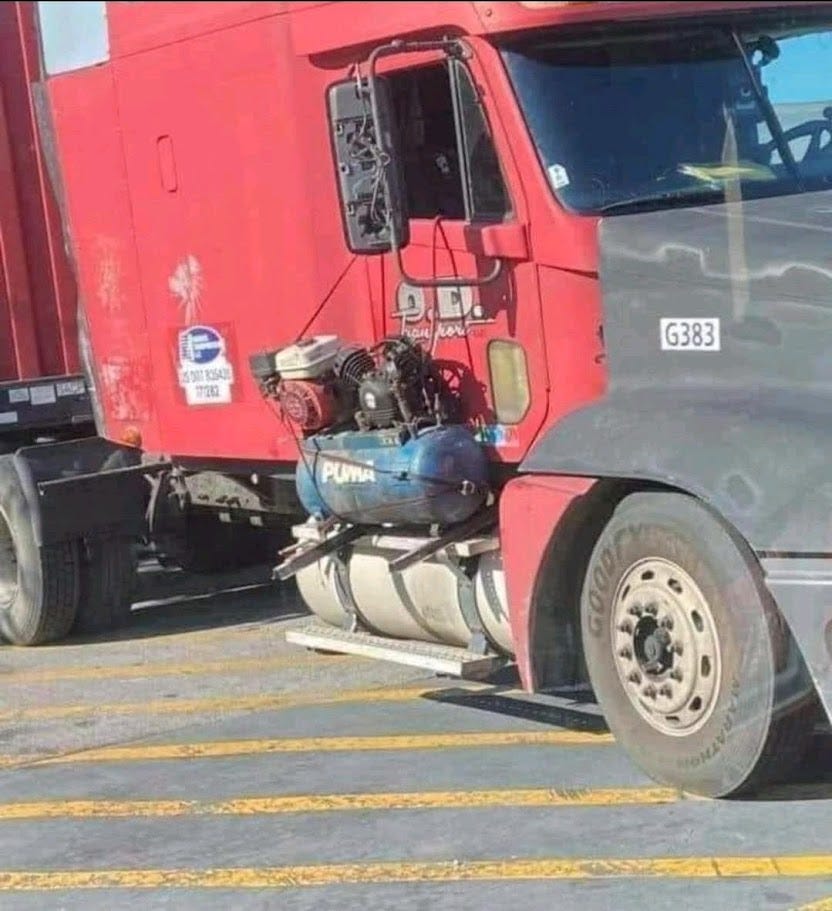
The single most useful thing I can teach a driver is this: a truck’s condition is a story about the people behind it. The equipment tells you about the ownership, the management, and the driver who decided that rig was good enough to put on the road. More than that, it tells you whether that truck is a threat.
I have made a version of this argument to Collin Mooney, the executive director of the Commercial Vehicle Safety Alliance, the organization behind North America’s roadside inspection standards. My push to the industry has been that a carrier does not need to survive a roadside inspection if it can prevent one.
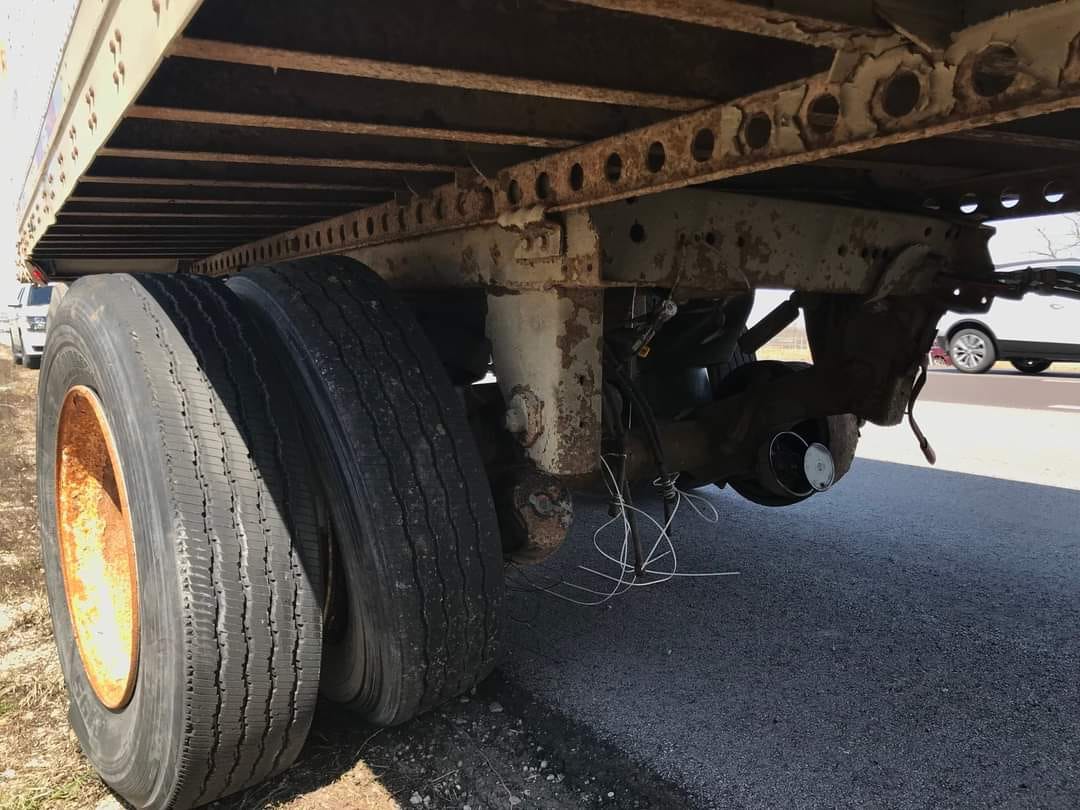
If a truck looks right, the lights all work, the tires have tread, the driver is belted in, the truck is clean, and it holds its lane, an officer can reasonably decide his time is better spent somewhere else. If the truck is trashed, the trailer lights half work, the wheels are rusted, a tire is low or flat, the driver isn’t wearing a belt, and the truck can’t stay between the lines, that officer knows his time is well spent pulling it in. We previously worked with the VA DMV Commissioner on limiting who the State stops or pulls into scales based on historical safety performance. The best carriers were stopping up the scales and forcing the worst bad actors to bypass. It’s all the same mindset.
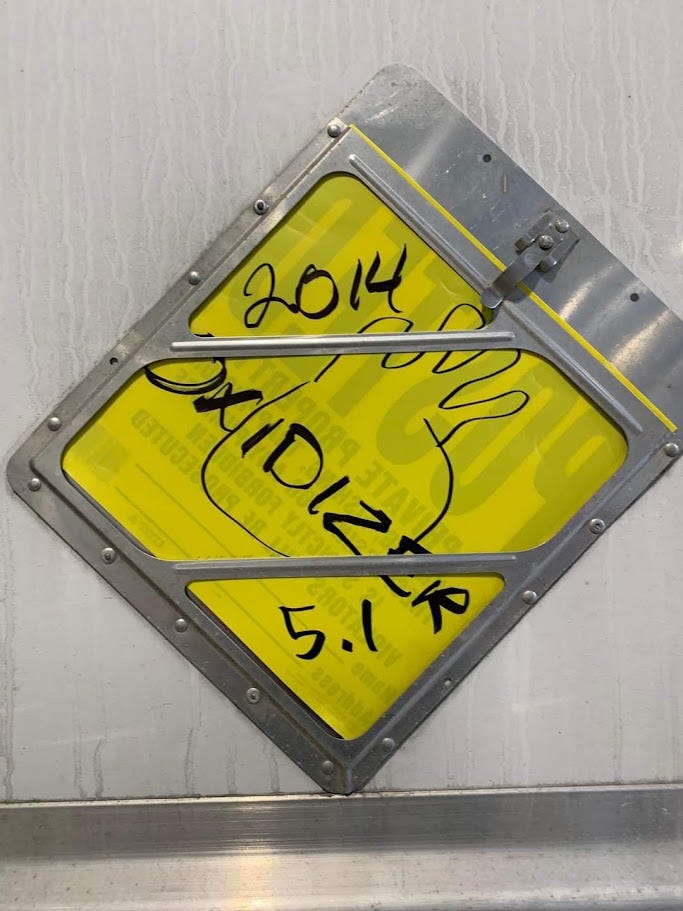
During the CVSA’s International Roadcheck from May 12 through 14 this year, inspectors across North America conducted 54,575 inspections and placed 10,350 vehicles out of service (about 19%), along with 3,184 drivers (about 5.8%). Brake problems were the top vehicle violation. Tires, lights, and cargo securement were right behind them. Those are the same problems you can often see from the next lane. A truck that far gone didn't get there overnight. Somebody looked at it and sent it out anyway.
You can read a truck the same way an officer does. You just need situational awareness and a little discernment. Here is what I look at.
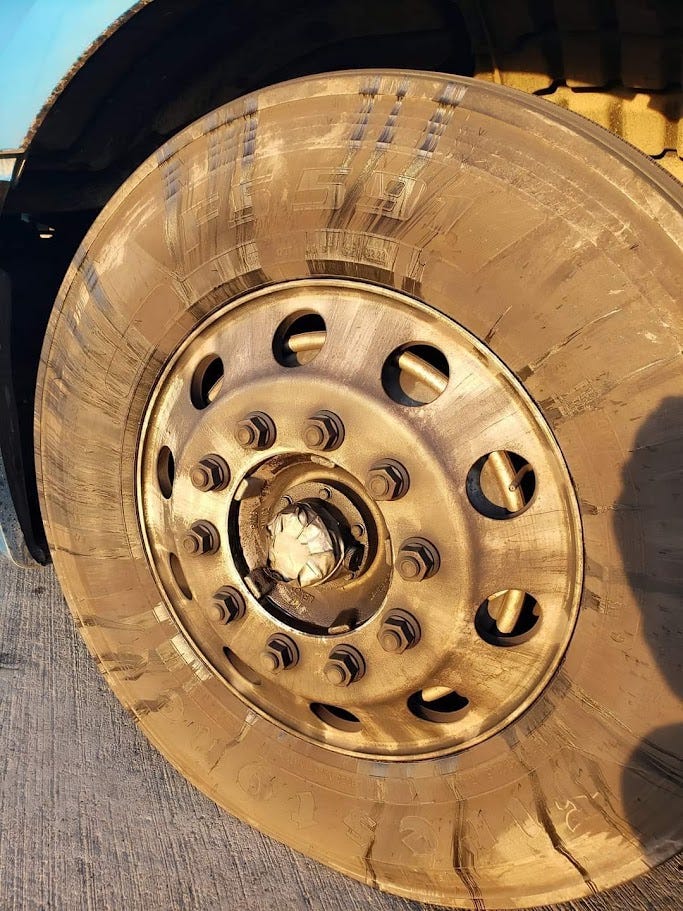
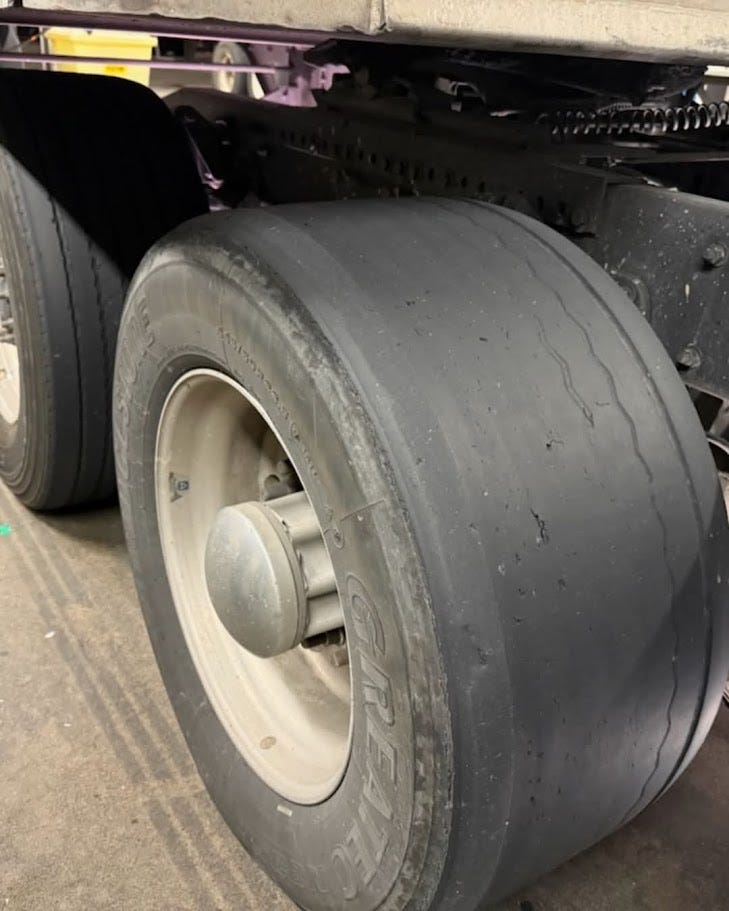
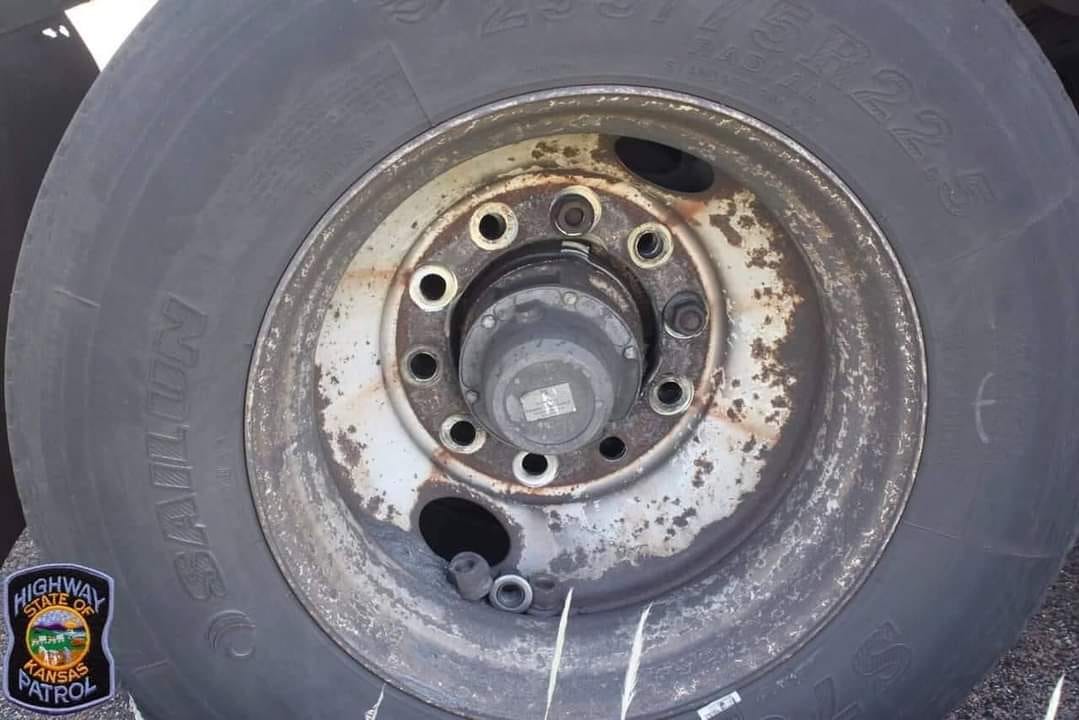
Start with the tires and wheels, because they are the easiest to see and the hardest to fake. Look for tread you can’t see from the next lane, sidewalls with bulges or cords showing, a tire that sits visibly lower than its neighbors, and rust streaks running from the lug nuts, which can mean loose or broken wheel fasteners. Does it even have all its lug nuts and studs? A tire that lets go at highway speed throws rubber and steel belts into traffic. A wheel that comes off is a 100-pound projectile.
Then look at the lights. At night or in rain, a trailer with half its marker lights dead, a missing brake light, or no working turn signal is not just a ticket. It means the driver either never walked around the truck before leaving or saw the problem and drove anyway. Neither is someone you want behind you.
Watch the lane. A truck that wanders inside its lane, rides the line, corrects late, or drifts onto the rumble strip is telling you something about the person driving it. Fatigue and distraction both look like that. In my “Last Eight Seconds” piece, I wrote about a driver I watched nodding off for an entire shift on his own cab camera before he killed a young woman at a red light. The weaving came first. If you see it, don't stay beside that truck or pull in front of it. Back off and let it get well ahead of you.
Rate the strap work. Look at the cargo. Flatbed loads should be strapped or chained, and the straps should be tight, not flapping. Cover loose material like gravel, sand, mulch, or trash where state law requires it. Federal cargo securement rules sit in 49 CFR Part 393, Subpart I, and cargo securement made the CVSA’s list of top vehicle violations this year. If you see a load that is shifting, leaking, unstrapped, or uncovered, move away. The last thing you want is a rock or a piece of somebody’s load coming through your windshield.
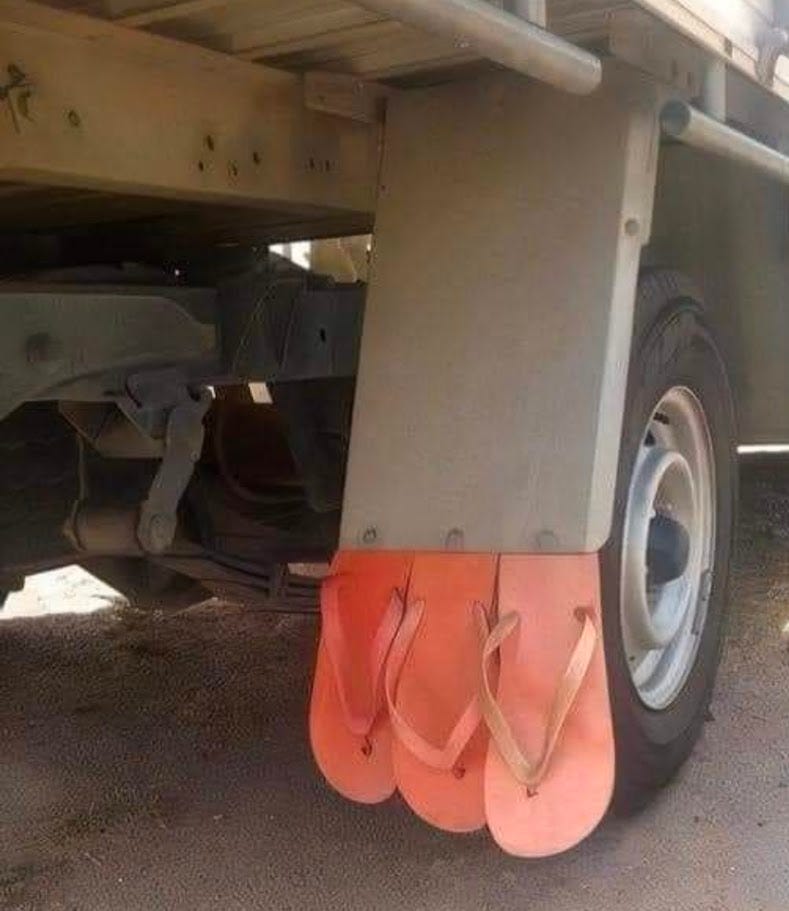
Look for mud flaps, sometimes called splash guards. Most states require them, and for good reason. A truck without them throws road debris, gravel, and water spray straight back at the car following it. Missing flaps also tell you a lot about a fleet that doesn’t sweat the details.
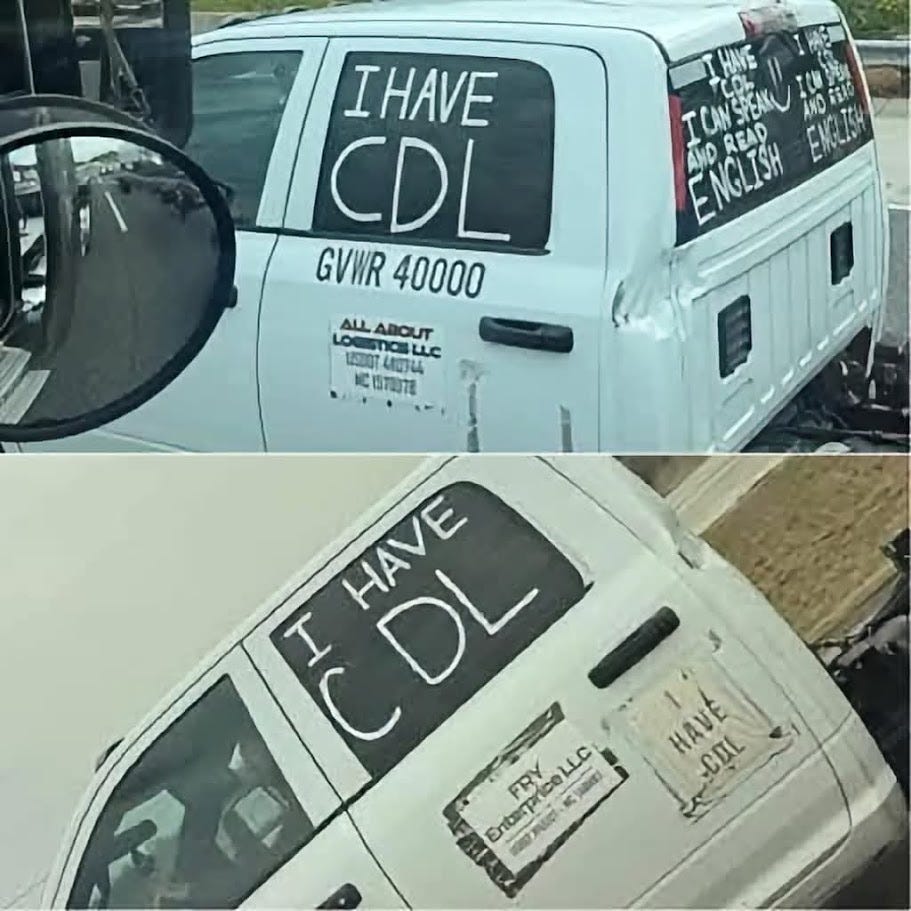
Look at the door. Interstate trucks have to display the carrier’s name and USDOT number. A legitimate fleet paints or applies it cleanly. A DOT number that is taped on, hand-lettered, half peeled, or missing altogether can be a sign of a carrier swapping identities, which is exactly what the CBS 60 Minutes investigation into chameleon carriers documented this spring. Be fair about this one. Plenty of good owner-operators and leased trucks run plain white, and a missing logo alone proves nothing. Add bald tires and a drifting lane, and the story gets clearer.
Look in the cab if you can do it safely in passing. A driver who isn’t wearing a seat belt, has a phone in his hand, or is looking down more than up is a driver whose habits extend well beyond the belt and the phone. You can usually see the belt across the chest from the next lane.
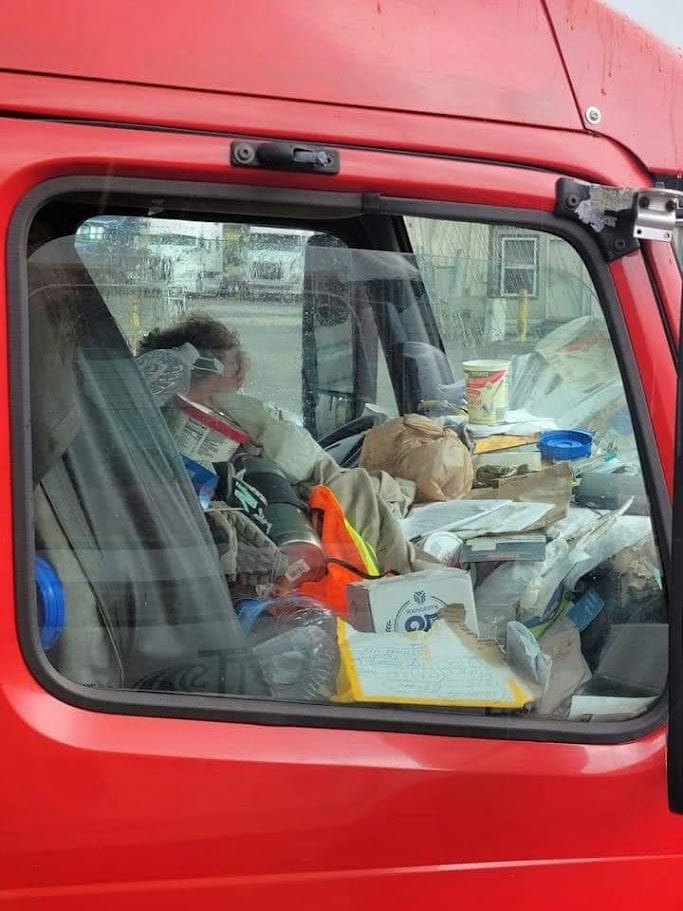
The whole truck tells a story, too. A dirty truck is not necessarily a dangerous one, because trucks get dirty doing honest work. But a rig with rust bleeding through the frame, body damage nobody fixed, mismatched equipment held together with ratchet straps, and a cab that looks like a storage unit tells you how the people above that driver think about maintenance and money.
Reading a truck is half of it. The other half is driving in a way that keeps you out of its path.
Stay out of the left lane except to pass. Lingering there forces trucks and faster traffic to pass you on the right, which is where crashes start. Do not pass a truck on the right if you can avoid it. The right side of a tractor-trailer is its largest blind spot, and a driver changing lanes to the right often cannot see you at all. The Federal Motor Carrier Safety Administration's rule is simple: if you can’t see the driver’s face in his side mirror, he can’t see you.
Don't tailgate a truck, and don't cut in front of one and hit your brakes. A loaded tractor-trailer needs far more distance to stop than your car does. When you slide into the gap in front of it, you take away the space that driver was counting on. Give a truck room ahead and behind, and do not ride next to it longer than you have to. Pass it decisively or drop back.
Learn to drive for the other people around you, not just for yourself. Defensive driving is anticipating what the worst driver near you is about to do and making sure you are not where it lands. That is what I teach professional drivers, and it works just as well in a minivan.
If you want a record of a truck that worries you, capture it safely. I use camera glasses for this: one glance, one press, and I have the image or the plate without taking my hands off the wheel. A dashcam does the same job. Better still, hand the job to a passenger. Do not pick up your phone to take a picture while you are driving. You will become the hazard you were trying to document, and it is illegal in many states.
Once you have the DOT number, look it up later. The FMCSA’s SAFER Company Snapshot at safer.fmcsa.dot.gov is free and shows a carrier’s authority status, fleet size, inspection results, out-of-service rates, and reported crashes. A carrier with out-of-service rates far above the national averages listed on that page shows a pattern. If a truck is an immediate danger, call 911. Many states also run a highway patrol line for non-emergency reports, posted on signs along the interstate. If you want to file a complaint about a trucking company, FMCSA runs the National Consumer Complaint Database for exactly that.
None of this means you should treat every truck as a threat. Most trucks on the road are driven by professionals who do this job right every day, and they watch the bad ones as closely as you do. The point is discernment. The best carriers in this country maintain their equipment, train their drivers, and put trucks on the road that look like somebody cares about them, because somebody does. The worst ones can’t hide it as well as they think.
The truck is telling you a story. Read it, and if you don’t like how it ends, don’t be in the next chapter.
Thank you! As motorcyclists we’re used to trucks actually being more aware, courteous and better skilled than the average car. (Of course we’re well versed in what they can and cannot do and see and ride accordingly.) This is a good list of things to notice when deciding who on the road to trust.