

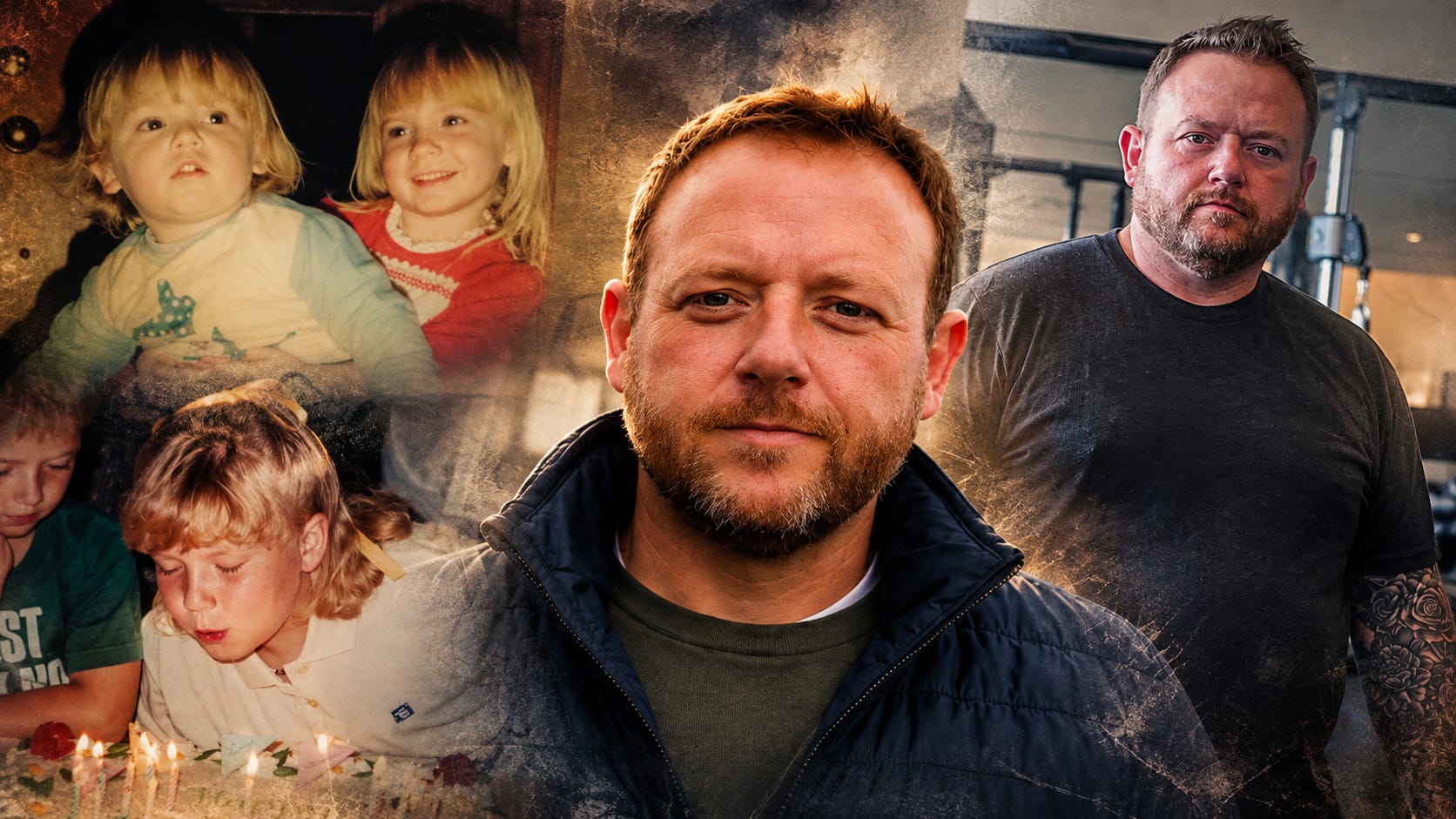
For starters, I lost a lot of weight on my own. It can be done. I found the most fell off quickly, and carnivore worked well, as did Keto if you stick with it. Plateaus are real, so when offered a shot, we so recently gave it a shot…literally.
When the diets really started was when my doctor wouldn't give me a 2-year medical card for truck driving. My pants were 40”, my suit jackets were 56 reg, my neck was 20”, and I wore big-and-tall shirts. We’re biscuit eaters down here in the South.
My triglycerides came back at 1,500. Normal is under 150. My bad cholesterol read 900. My liver enzymes were off. My doctor said everything was affected, and the thing he kept coming back to wasn’t my heart. It was my pancreas.
When triglycerides pass 1,000, the risk of pancreatitis climbs. Medical references put it at roughly 1 in 10 patients between 1,000 and 2,000. I was at 1,500. At my heaviest, I’d been 305 pounds. Most people told me I didn’t look it, because I’ve worked with my hands my whole life and I carry it. That didn’t change the lab report.
I knew what to eat. I’ve always known what to eat. My problem was never information, though some of it was ignorance. My problem was that food lived in my head rent-free, and the war it started up there was one I lost more months than I won.
Two houses, two kinds of hunger
I lived with my dad until I was about 3. Both of my parents were addicts, and I had problems when I was born because of it. Some would argue I still have issues from it. That house had no structure, and food was part of that. If you needed something, you hoped there was enough money to go get it. Sometimes there wasn’t, so you didn’t have it.
At 4, after my mother vanished, never to be seen again, my dad shot himself, and I went to live with my dad’s mother on a farm. It was the opposite world. We were early for everything. We were in church every time the doors opened. We ate three times a day, at 6, 11, and 4, with a healthy snack at 10 and another at 2. That was it. You never went without food, but you never got more than your share either.
Some nights we’d get a large Chanello’s pizza for the five of us. Two slices each. There was no third slice. If we maybe happened to go out to eat after church, we got $5, which meant the kids’ menu, and we drank water because water was free. We didn’t have sodas, and to this day I can’t stand them. We didn’t have chips, Little Debbie’s, or any snack food at all. These were farmers born in 1918 and 1940. They grew the vegetables and raised the meat, and supper was a meat, a vegetable, and a starch. If there was dessert, Nana baked it.
That farm gave me a lot. It also gave me a second lesson about food on top of the first one. The first house taught me food might not be there. The farm taught me food was rationed, on a schedule, by somebody else. I’d sneak down the hall and through the back living room at 8 or 9 at night to steal cheese, anything, so I wouldn’t go to bed hungry. I got caught. I got in real trouble. I did it anyway.
I was legally emancipated at 15. I’ve been feeding myself ever since, and for most of those years I ate like somebody who expected the food to run out.
Researchers have a name for part of that. They call it the insurance hypothesis: people who can’t count on food eat more when they have it, storing up against the next time they won’t. A 2017 study of children from food-insecure homes found they were five times more likely to be obese than kids with steady access, and that they ate when they weren’t hungry. Other work has traced a line from money stress to emotional eating to weight gain in adults. I’m not a psychologist, and I’m not going to diagnose myself in a trucking wellness article, but the research describes my life pretty well.
Ordering all three
Here’s what it looked like when I was a grown man. If I couldn’t decide between the Philly cheesesteak, the cheeseburger, and the pasta, I’d order all three. The plan was to leave what I didn’t eat. Most of the time, I ate it all.
It got worse when life got harder. In a bad month, a tight month, a month where the business or the bills were beating on me, I ate all the time, and I ate the worst stuff I could find. Soul food. Comfort food. Chips. My brain wasn’t hunting grapes and apples. It was hunting the thing it already knew would make it feel better for 10 minutes.
In the good months, I could do keto religiously. Then we got offered the short-term shot to try.
I’ve been diagnosed with Asperger’s, and I’ve got enough ADHD traits that I joke I’m half and half. The doctor who diagnosed me told me something I’ve never forgotten. People like me will buy things and consume things even when we know they’re hurting us, because we get locked onto them. We want them. We need them. We go after them like a task that has to be finished. When I wanted a certain food, it felt exactly like that. It wasn’t a craving. It was a work order, and it sat on my desk until I closed it.
The war
This is hard to explain to somebody who hasn’t lived it.
Every meal was an argument. One voice said, eat the burger. The other voice said, eat the lean steak, eat the apple, you know better. I didn’t want the apple. I wanted the burger. When I ate the burger, the second voice didn’t go quiet. It turned on me. Look what you did. You screwed up again. That’s why you’re dying.
That was the whole day. Want it, fight it, lose, get pissed off, start over. On a diet, the war got louder, not quieter, because now I was losing weight on willpower alone and every meal was a battle I had to win. I did lose a lot of weight on my own. I’m proud of it. I also remember what it cost, and I remember that the fight never stopped for a single day while I was doing it.
I’m not a religious man, but I’m a spiritual one, and I thought about this in those terms a lot. So much of scripture is about self-control. Know it’s wrong, don’t do it. Gluttony is on the list for a reason. I’d ask myself what kind of man knows something is hurting him, knows it’s wrong, and can’t stop. That question ate at me almost as much as the food did.
Then the shot
When my labs came back the way they did, numbers still high, needing to lose more weight, the option on the table was Zepbound, which is tirzepatide. It’s expensive. Lilly’s self-pay price for the vials runs $299 a month at the starting dose and $449 at the higher ones, and the pens list for a lot more without insurance. I figured I’d give it a shot anyway.
What I didn’t expect was the quiet.
It was the first time in 45 years that my mind was at peace about food…well, really about anything. I didn’t have to go to war with myself. The voice telling me to go get the thing just wasn’t there. I didn’t want it. I wasn’t white-knuckling past the drive-thru. I just didn’t care about the drive-thru. There was no shame, because there was nothing to be ashamed of. There was no fight, because nobody was fighting.
I can see how somebody could get hooked on that feeling. Not the drug. The peace.
I’m not on it anymore. I went on it more or less to see what it would do, and I found out. I lost weight on it for the short time we gave it a shot, for sure, and it was the most peaceful weight I’ve ever lost. No war. No white knuckles. No shame spiral after supper.
But it’s expensive, and I can’t stand here and tell every driver to go buy it forever. At $500 a month out of pocket, that’s a truck payment for some people. If that peace is worth that to you, fine. That’s your call and your doctor’s. I want you to know what you’re buying, and what happens when you stop. In Lilly’s own trial, people who came off tirzepatide after about eight months regained a big share of what they’d lost within a year. People who stayed on it kept losing. The peace is real. It’s also rented. I didn't gain much back, if anything. The idea is to learn what portions you should and could be eating and retrain yourself.
Here’s where I’ve landed. Nobody I’ve ever respected grew without suffering and struggle. Not in business, not in faith, not in family. The hard seasons are where people get built. So I’ve had to ask myself whether the war with food, that constant feeling of not being at peace with yourself, is part of the struggle I’m supposed to go through. Maybe that fight is doing something to me that the quiet can’t.
Then the other question comes right behind it. Are you willing to pay to have self-control? To buy your way out of the struggle, the heartache, and everything that comes with it?
I don’t think either question is dumb, and I don’t think the answer is the same for every driver. A man with triglycerides at 1,500 and a pancreas on the line may not have time to build character the slow way. A man 30 pounds over who’s fighting a fight he can win might be better off winning it. What I know is that the shot didn’t answer those questions for me. It gave me a few quiet months to think about them without the noise.
What the science says, and doesn’t
There’s a name for the noise now. Researchers and patients call it food noise: the constant, intrusive thoughts about eating that some people live with every waking hour.
In November 2025, a team at Penn Medicine published something close to a picture of it in Nature Medicine. They’d implanted electrodes in the brain of a 60-year-old woman with severe obesity and loss-of-control eating, a patient who had already failed bariatric surgery, medication, and behavioral therapy. They recorded activity in the nucleus accumbens, the part of the brain’s reward system that drives wanting. When she started tirzepatide, the signal tied to her cravings went quiet, and so did her preoccupation with food.
Then, about five months in, the signal came back, and so did the cravings.
I want drivers to hear both halves of that. The drug can turn the volume down. It isn’t a cure, and in at least that one patient it didn’t hold. One patient isn’t a study, and researchers are still working out how long the effect lasts and for whom.
The addiction side of this is moving fast too. In a randomized trial published in JAMA Psychiatry in February 2025, 48 adults with alcohol use disorder got either low-dose semaglutide, the drug in Ozempic and Wegovy, or a placebo for nine weeks. The semaglutide group drank less in the lab, reported less craving, and had fewer heavy drinking days. The smokers in that group cut back on cigarettes more than the smokers on placebo. The researchers said the effect looked bigger than what they usually see from the medications already approved for alcohol use disorder.
That trial isn’t about food, and it isn’t about me. It made me look at my own history differently. My parents’ fight was with drugs. My brother died of an overdose at 28; my sister died of a lifelong addiction to substances as well, in her late 30s. Mine was never drugs; mine was with a cheeseburger. The drug that quieted my fight is being tested on theirs. I don’t think that’s a coincidence, and I don’t think I’m the only person in this industry who’s going to recognize himself in it.
Why this belongs in a trucking discussion
Put that war inside a truck.
The last big federal survey of long-haul truck driver health, run by NIOSH at 32 truck stops, found 69% of drivers were obese and 17% were morbidly obese. For working adults overall, those numbers were about one in three and 7%. Diabetes ran twice as high. Half of them smoked, 51% versus 19% of working adults. That survey is from 2010. Nobody I know thinks it’s gotten better.
Now look at what the job does to a person with a food problem. You eat when the clock and the dock let you eat, not when you’re hungry. Your kitchen is a fuel island. The healthy option, if there is one, is in a cooler next to a hot case of fried chicken. You’re alone for 11 hours a day with nothing to do but drive and think, and if food is what your brain thinks about, that’s what you’ll think about. You’re under money stress, schedule stress, and family stress, and you just read how stress affects eating. Then you’re expected to pass a DOT physical, keep your blood pressure down, manage your diabetes, and stay awake on a 14-hour clock.
I’m not blaming the job for my weight. I’m telling you the job takes whatever relationship you brought with food and makes it worse.
That’s why Jeremy Reymer started Project 61. It’s a 501(c)(3) nonprofit founded by Jeremy Reymer, named for the age it says truck drivers die on average: 61. I’d love to tell you where that number comes from. Nobody can. It spread after then-Transportation Secretary Ray LaHood wrote on his official blog in 2010 that, according to the CDC, the average life expectancy for a commercial truck driver is 61. We had it linked to a government page once, and that page went dark. When Heavy Duty Trucking chased the number, the researcher whose work had been cited said he never did such a study, and FMCSA responded with a general statement about driver health instead of a source. The number is shaky. The problem it points at isn’t, and you just read the survey. Its whole model is eat, move, and rest, built for life on the road. It runs Offshift, an app with daily movement routines and nutrition and sleep tips made for CDL drivers, plus step challenges, coaching, recipes, and a video series. It’s free. In April, ATRI put driver health on its 2026 research agenda: a study of how medical certification status hits fleets, including fatigue, productivity, turnover, and how long drivers last in the career. Project 61 pushed for that.
If you’re a driver thinking about a GLP-1, FMCSA doesn’t ban them. Medical examiners look at them case by case. What they watch for is low blood sugar, especially if you’re also on other diabetes medication, stomach trouble, and dehydration. Tell your examiner, tell your doctor what you do for a living, and don’t start one on a Monday before a 2,000-mile run.
What I’d tell a driver who’s where I was
I am not in size 32 pants. I dropped from 40 to 34 before I tried Zepbound. My neck size went from 20” to 15”. My suit jackets went from 56 to 46 regular. My big and tall shirts went from barely an XL.
It isn’t a character flaw. I spent most of my life believing it was. I thought the war in my head meant I was weak, that a stronger man would just eat the apple. Then a shot changed the chemistry, and the war stopped. That tells me some of what I called willpower was never about will.
Science has watched the same wiring play out in people who never saw a drive-thru. The Hadza, hunter-gatherers in Tanzania, have eaten wild meat, berries, and tubers for as long as anyone can remember. When researchers asked them to rank their foods, honey came out on top, ahead of meat. Nobody taught them to want sugar. They just have to climb a baobab tree and take a few stings to get it. In 1984, an Australian researcher named Kerin O'Dea ran it the other direction. She took 10 Aboriginal men who had moved to town, eaten the Western way, and developed diabetes, and sent them back to the bush to hunt and gather for seven weeks. Their blood sugar dropped from diabetic range to nearly normal, their triglycerides fell hard, and they lost about 18 pounds apiece. Same bodies, different food, different results in under two months. The craving is built in. What we've changed is how easy it is to feed it.
That doesn’t mean everybody needs a drug. It doesn’t mean the drug fixes what put the noise there. The farm, the empty cupboards before it, the drug den I was born into, the ADD, ADHD, Asperger's, and the constant “go go go,” the late-night cheese heists, and the months of ordering all three were all still there when the noise went quiet. It means you should stop fighting it alone and stop measuring yourself by how many battles you lose. Get your labs done. Tell your doctor the truth about how you eat and why. Use the free stuff Project 61 has built for you. If you know a driver who eats like the food might run out, ask him about it.
For me, my life shaped my relationship with food. It wasn’t a good one. Nana gave me two slices and made me drink water, and I resented it for years. She was trying to teach me that enough was enough. It took me 45 years and a weekly shot to finally hear it. We lost weight, then we tried the shot and lost a little more to see what the fuss was about; now we’re off it. The peace it provided was real. I will say, while I haven’t gained more weight back, the noise returned.
For many of us, Zepbound isn't selling weight loss; it’s selling peace we’ve never had.
Great story, thanks for sharing. I was 270 and my doctor told me to lose 100 pounds, which I did, but I couldn’t keep it off. Gaining and losing 45 pounds is no fun, and I have done that a few times since I first lost 100 pounds nine years ago. And I totally relate to the food noise issue. I started Wegovy 3 1/2 years ago. It cost a little less than your Zepbound, $350 a month, and it’s a blessing that I can afford it, it has kept me around 170. The food noise hasn’t completely gone away, and you have to think of the shot as just another tool in the tool kit. But I am grateful for it.
I don’t get it. I will think about eating pizza and when I get it… I just zone out and gobble it without thinking about it. I do the same thing with healthy food too. But that little voice is always there. It makes the battle seem much more painful than it actually is.
It is my conviction the diet battle is fought exclusively in the mind, and that little voice is just straight emotion. And the man that gives himself over to his emotions is doomed.