

I renewed my hazardous materials endorsement last December. It’s my fifth one. That means fingerprints again, the knowledge test again, the TSA security threat assessment again, and the TWIC card on its own cycle. People ask me every time why I bother. I spend most of my days in litigation, risk control, investigations and crash reconstruction, not in a cab. I keep it because I was raised never to let a door close that I might need to walk through later, and because fewer people can walk through that door each year.
A press release that crossed the wire Nov. 4 out of Glendale, Arizona, put a number on the far end of that problem: only about 5,000 U.S. truck drivers can haul the country’s most sensitive freight. I’ve hauled a lot of what sits on that list, from molten sulfur and nuclear waste to munitions, LPG, LNG, CNG and fuel. The number is right. But it’s the narrow bottom of a much wider funnel, and the story is in how fast that funnel is draining.
In a May 6, 2026, Federal Register notice, the Transportation Security Administration estimated that 238,520 people apply for a hazmat endorsement every year, and that each driver applies about once every five years. Do the math and you land somewhere around 1.2 million active endorsements nationwide. That’s my estimate, because TSA doesn’t publish the total. TSA does publish the line that should stop every safety director in this country cold: about 52% of active hazmat endorsement holders opt not to renew when it expires.
Close to half the drivers who went through the background check, fingerprints, and test decide five years later it isn’t worth doing again. Back in 2005, when TSA first ran name-based checks on every licensed hazmat driver, it screened 2.7 million of them. Whatever the current count, it’s nowhere near that.
Some of those drivers retired, some moved to local work that never touches a placard, and some never needed the endorsement in the first place and got it because a recruiter told them to. All true. None of it explains away a renewal rate that low. The bigger reason is simpler, and every driver who has let it lapse will tell you the same thing: the endorsement seldom pays more. You take on the background check, the security risk, the liability and the knowledge burden, and the paycheck often looks a lot like the one for the driver who started last week.
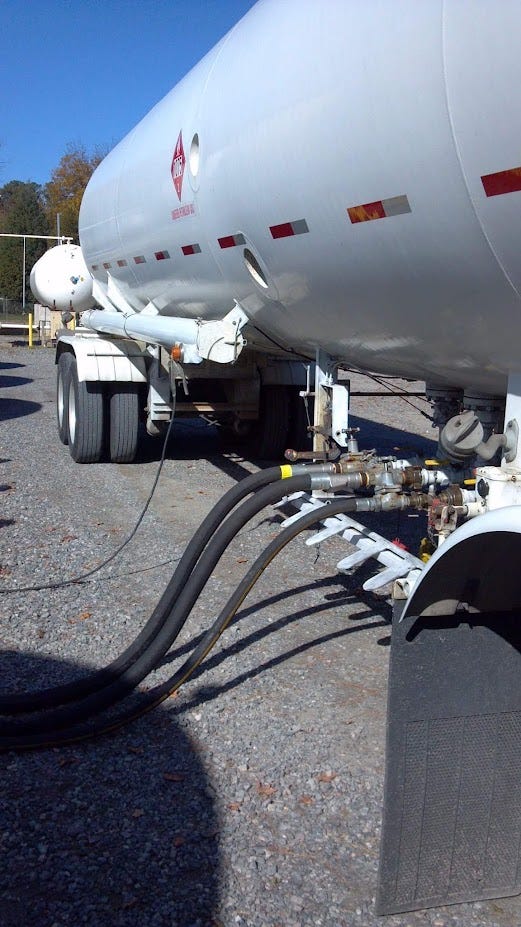
The knowledge burden is real. Here’s one example from my own career. Load an MC-331 propane tank on a 100-degree day in Virginia and you’d better understand thermal expansion, because the product in that tank is going to grow as it heats. Fill it to more than maybe 80-85%, AND YOU’RE THROWING AWAY YOUR CUSTOMER’S PRODUCT. Federal rules at 49 CFR 173.315(b) require filling LPG cargo tanks by weight, based on the tank’s capacity and the product’s specific gravity. That temperature will move the gauge’s volume reading. Get that wrong and you’ve built a pressure problem on wheels. That’s arithmetic and physics done on a loading rack, not in a classroom.
Most writers have to go to people and rely on others’ info because they’re writers; they have no experience in whatever it is they’re talking about. The same goes for many content creators and fleet tech vendors; they rely on experts who have done it or experienced it to know what to write and produce. I’m not that writer or content creator. I’m often the frontline expert from blue-collar America they go to. That doesn’t mean I don’t collaborate or even hire experts. I do, and I recognize my deficiencies, but so many in America today struggle with the very basics, like changing their oil. We’ve created a CDL driver population where about 70% of them only need to understand their length and how to push a button.
Most hazmat equipment is still manual. A lot of it has power take-offs, pumps, valves and connection points the driver runs himself. You have to understand how the engine, the transmission and the gearing work together to drive it, and you have to understand the product well enough to know what happens when something goes wrong. Compare that to the modern dock bumper in an automatic tractor with collision mitigation that will brake for him while he watches a game on his phone. Both hold a CDL. They don’t do the same job.
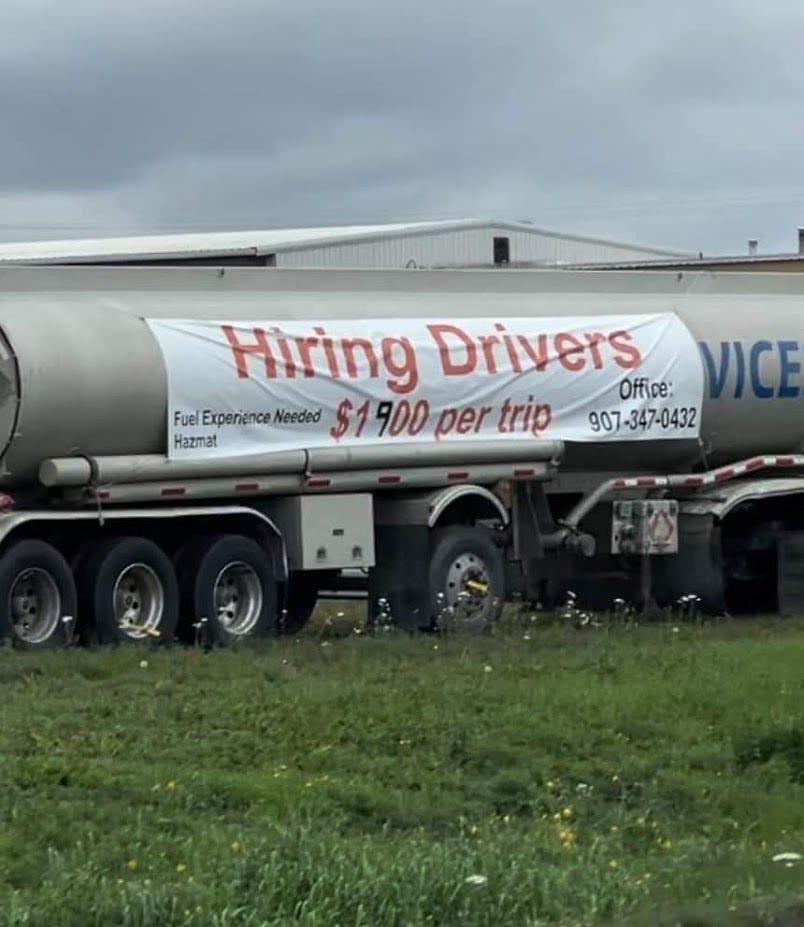
Washington has noticed the hazmat driver shortage. Its answer, at least once this year, was to lower the bar. In January, FMCSA published a final rule letting states waive the hazmat endorsement for Class A drivers hauling up to 1,000 gallons of aviation jet fuel for seasonal crop-dusting operations. In approving it, the agency cited commenters who said finding and keeping HM-endorsed drivers for seasonal work is difficult and costly. The National Tank Truck Carriers raised safety concerns. When you can’t find the qualified person, the easy move is to stop requiring the qualification.
Military arms, ammunition and explosives move under Transportation Protective Service rules set by the Surface Deployment and Distribution Command. TPS loads and 675 signature and tally freight require everyone who touches the load to sign for it; they aren’t supposed to be brokered or handed carrier to carrier. Carriers that want into AA&E freight have historically had to complete an incident-free year hauling general military freight, carry $5 million in liability coverage, and run team drivers cleared by the Defense Security Service. John Wilbur, CEO of Roadmaster Group, said about 800 trucking companies are approved Defense Department providers, fewer than 20 can haul AA&E, and only about five to eight carry the bulk of it. Roadmaster says roughly one applicant in a hundred meets its clearance and background requirements.
That tight pool exists for good reason, and it still fails. I know because I’ve spent this year putting the numbers in front of the people who run it. I’m vice chair of the National Defense Transportation Association’s Special Purpose Task Force on Freight Resilience, and from Oct. 26 to 29 in Grapevine, Texas, I walked Department of War and DOT leadership through our data in three sessions. When we pulled every roadside inspection in the federal record with a strictly military, defense, intelligence or nuclear-complex shipper on the bill, we found 3,594 inspections spread across 2,291 different carriers. Freight for the Army’s 841st and 842nd Transportation Battalions, the units that move cargo through the ports, drew 45 inspections, 147 violations and 37 out-of-service findings, and 42 different carriers were on those 45 stops. That’s spot-market churn on military freight, not a vetted fleet. Across the government freight we tracked earlier this year, Level I inspections ended out of service 49.6% of the time. Carriers were cited for hazmat violations on loads for the 841st in South Carolina and for Red River Army Depot in Texas. A carrier’s own post-accident inspection ties a fatal June 30, 2023, crash in Kansas to Defense Logistics Agency freight out of Fort Riley. When we matched the program’s approved carrier codes against FMCSA records, families of related codes sharing officers, phones and addresses won more than half the loads in eight months of awards. Someone I talked to in Grapevine described a carrier that got turned down on a load, then had the same woman call back six times under six different codes until one got the award. When the qualified pool is that small, whoever answers the phone fills the gap.
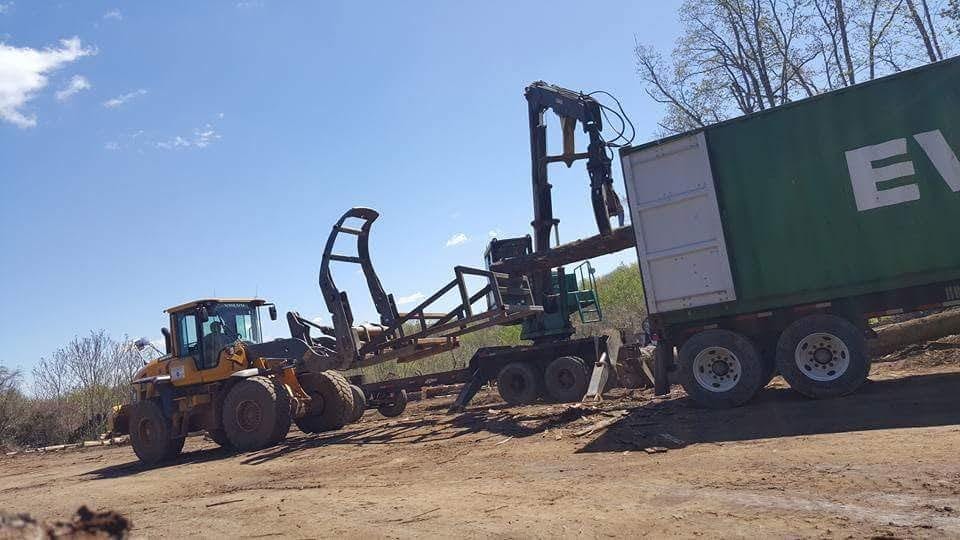
Yes, there’s a shortage of cleared, credentialed drivers who can move sensitive freight. Yes, there’s a shortage of hazmat drivers. But both of those are downstream of something bigger. We are short on mechanically inclined, self-taught, I’ll-make-it-work people, and trucking is only one place you see it.
Look at the diesel shop. Good diesel technicians are in demand right now because few people want that work, and the ones who do get hired by Caterpillar dealers and big corporate fleets. I watched one large equipment rental operation bring its old-school diesel mechanics back from retirement because it couldn’t get returned machines fixed fast enough to rent them out again. They doubled hourly pay in some markets. They let those men set their own hours. They bent as far as they had to, because a rental fleet that can’t be repaired is just an expensive parking lot.
Those guys are millwrights in the old sense. Not necessarily the trade title, but the type: somebody who can walk up to almost anything broken and figure it out. Blue-collar, frontline, fix-it. People will always need that person, because there will always be something to fix.
My grandparents, born in 1918 and 1938, raised me on a farm in Virginia. They made me work, and most of the time they worked right beside me and taught me as we went along. Wednesday afternoons I ironed. Every night I washed dishes, and nothing was left on the counter when you went to bed. Baseboards got scrubbed. Cows got fed, branded and butchered. I walked asparagus rows and cut them with scissors, and I learned that if you cut nine inches today and it rains tonight, the asparagus is there again tomorrow. When the plumbing broke, no plumber showed up. You were the plumber. When the car needed oil, you changed it. We were self-sustaining people, and nobody thought that was remarkable.
Somewhere along the way, a lot of America decided that kind of knowledge wasn’t worth carrying. Why learn it when you can call somebody? Right now people are paying $300 for a service call because the condensate drain line on their air conditioner clogged. The people who answer those calls have never been more in demand, and there have never been fewer behind them.
That’s why I don’t let things go. I still renew my Virginia DCJS tow truck certification. I might sit on a tow board in Virginia, but I don’t tow things anymore. The point is, if I want to, I can. I fix my own pipes, pour my own concrete and hang my own drywall. Last year I went back to community college to learn how back ends and user interfaces actually work, because I’ve advised on fleet technology for 20 years and knew what an API, a beacon and an integration were, but I didn’t know how to build one. I wanted to. So I went and learned it. Every credential I keep tells a carrier, a court or a client that I can still do the work, and none of them limit me to one corner of this industry.
That’s what frustrates me most. We have never had more education at our fingertips. You can learn nearly anything in this country, a lot of it for free. And we have rarely had fewer people who want to learn the manual, practical, keep-yourself-alive skills that used to come standard. We consume other people’s knowledge to solve our own problems and call that convenience.
So when someone tells me there’s a shortage of qualified truck drivers, I agree. There absolutely is. A CDL doesn’t make someone qualified, and neither does an endorsement. The drivers who can haul anything, in any mode, without restrictions, are the ones who grew up understanding how things work and refusing to quit when they didn’t. That’s the population we’re running out of.
The hazmat endorsement renewal rate is just the number that shows it. The question for the industry, and for the agencies paying top dollar to move freight they can’t afford to lose, is whether they’re willing to pay and recognize the people who can still do the hard version of this job, or whether they’ll keep waiving requirements and hoping the phone gets answered by somebody who knows what they’re doing. I’ll keep renewing because someone still be able to do it.