

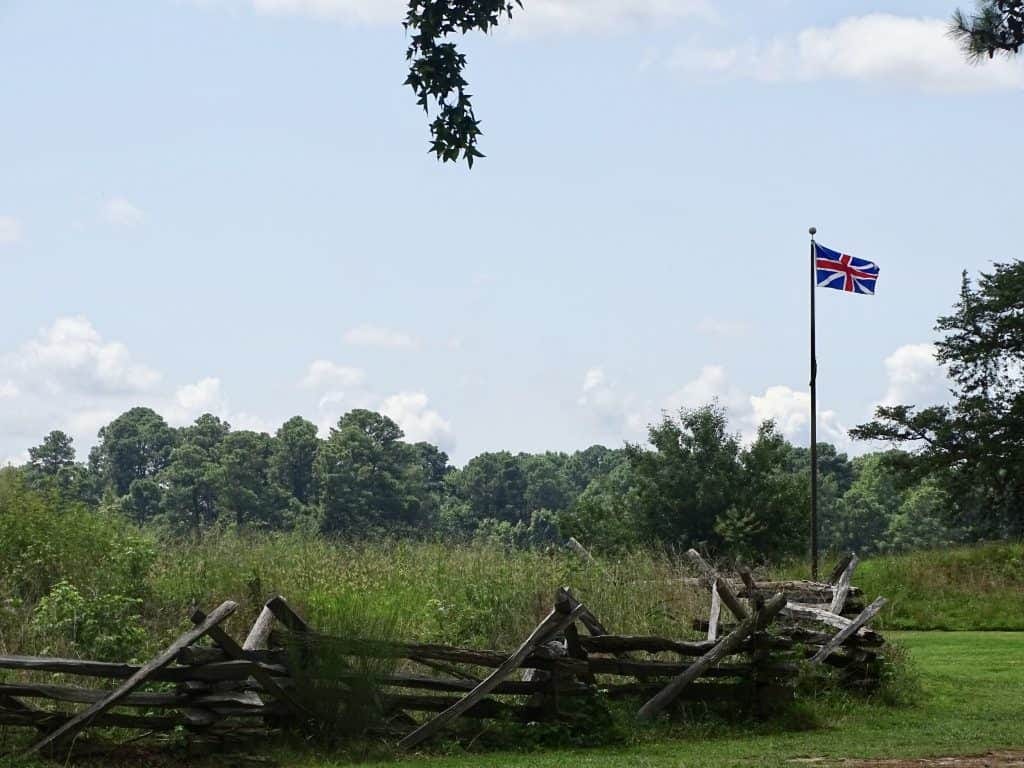
There is a scene in a movie about a gambler where an old loan shark explains the meaning of life to a young man drowning in debt. Get to a position of F&*% you, he says. Get enough behind you that nobody can touch you, and then the world can burn for all you care. Does somebody have the greatest navy in the world? F&*% you. It is a great scene. Every Fourth of July, somebody repurposes it for the country itself: America was founded on a mentality of F&*% you. You have the greatest navy on earth? F&*% you, we are doing this anyway.
I understand the appeal, and on this particular Fourth of July, the 250th one, I’ll tell you why it’s wrong and why getting it wrong matters more right now than it ever has. I did not learn my American history from a movie or a textbook. I learned it at a library table, looking for my mother. I became a genealogist at a library table 40 years ago and didn’t even know it, looking for a mother who left when I was three. I found something bigger: four hundred years of one family on one bend of one river, slaveholders and the enslaved-adjacent, founders and the ostracized, Union and Confederate, immigrants and natives, a tree that carries every sin and every glory this country ever produced. Today, on America’s 250th birthday, here’s what those records taught me about the difference between the America we found, the America we built, and the America we know, and why the people who signed us into existence were never in a position of F&*% you. They were in a position where they had everything to lose. That is the whole country, and forgetting it is how you lose it.
She left when I was three. That is the whole origin story, and for a long time it was the whole hole in me. A kid who does not know where his mother went eventually becomes a kid who does not know who he is, and some of those kids become drinkers or drifters, and some of them become troublemakers, and some of us become troublemakers with a little more investigation. Before I ever ran a freight fraud network or reconstructed a fatal crash, I was a troublemaker, but before that, I was a boy in the early 80s in a local library with phone books, microfilm, and courthouse indexes, running the only missing-persons case that ever mattered to me. I was looking for one woman. What I found was four hundred years.
The thing about being from Yorktown, Virginia: the records never left. Most of my family never left either. The searching that takes other Americans to Ellis Island manifests, and overseas archives took me to the county courthouse and the parish registers of a town founded on land patented by my ancestors. What those records hold isn’t so much heritage as it is an argument, and every side of that argument is where I come from and where this country was born.
The founders’ side, because it has the monuments. My 10th great-grandfather was Col. George Reade of Yorktown, a colonel and acting governor of colonial Virginia. He is also the 10th great-grandfather of Queen Elizabeth II. His father-in-law, Nicholas Martiau, was a French Huguenot, a Protestant refugee who fled religious persecution in Europe, arrived in Virginia around 1620, served in the House of Burgesses, and patented the land on which this town sits. George Washington descends from Martiau too; the general who won the war at Yorktown was, by blood, coming home to his immigrant ancestor’s ground to do it. Washington works out to my third cousin, six times removed. Through Reade and other lines, the family runs back to King John of England twice, through two different sons on two different sides of my tree, which means I descend from the king who was forced to sign the Magna Carta, the first document that told an English sovereign that even he was not above the law. Five hundred years later, the descendants of the men he ruled wrote a sharper version of the same idea and addressed it to another king.
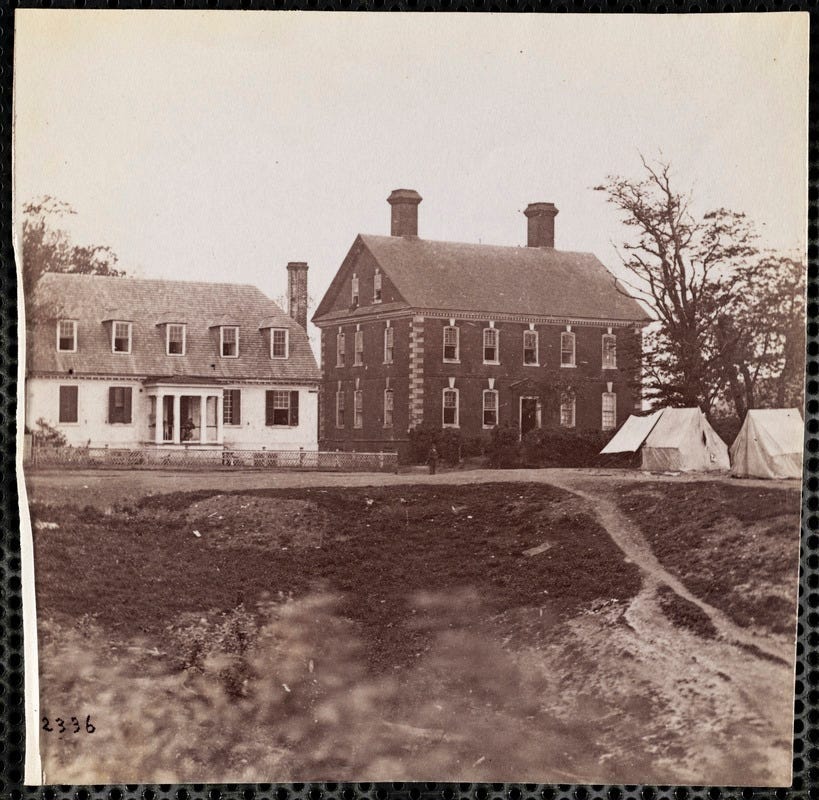
Now, the other side, because a family tree in Virginia is never just its monuments. Half my colonial family owned slaves. Many of them. The same records that give me governors and burgesses also give me inventories in which human beings are listed between livestock and furniture yet, in the same tree, on another branch, sits a family that colonial Virginia threw away: ostracized, written out of polite society, because one of ours was mulatto and married to a free Black spouse in a colony busy writing the laws that made that a scandal. My mother’s mother’s line carries the Old World entirely: Hungarian, Ukrainian from the Russian Empire, German, Polish, people who got here the hard way centuries after my Virginia people did, with nothing but the boat ticket. Her mother’s mother’s side goes the other direction into the deepest American past: colonial settlers who lived alongside the Powhatan people, and a family record of one who married a sister of Pocahontas, which means the tree holds both the people who were here first and the people who took the land, in the same generation, at the same table. My many-times-great-grandfather John Shield died at Yorktown in 1781, on the last day of the Revolution, just as Cornwallis was surrendering at the home of my other grandfather, Augustine Moore, within sight of the ground where the war ended, close enough to the finish line to touch it without crossing it. Eighty years later, the family split with the country: some wore blue, some wore gray, and my grandfather, Thomas Goode, was captured in Virginia by Union forces and died a prisoner of war at Elmira, the camp in New York the prisoners called Hellmira, where roughly a quarter of the men held there never came home. He starved to death.
So when I tell you I know American history, understand what I mean. I do not mean I read it. I mean I am it, all of it at once: the founder and the founded-upon, the enslaver and the ostracized, the immigrant and the colonist and the native-adjacent, the blue and the gray, the man who died winning the country and the man who died fighting to split it. There is no version of the American story I get to opt out of, no side I can pretend is somebody else’s ancestors. That is what genealogy actually teaches you, if you do it honestly. You go looking for one missing person, and you find out you are the whole argument. Today, after many generations of farmers, warriors, merchants, and transporters, they were still farmers and transporters.
From within that argument, here’s the case for this country on its 250th birthday: The America we found. The America we built. The America we know.
The America we found was not a promised land. It was a place where the first English settlement, run partly by my grandfather Raleigh Crowshaw, down the street from my house, lost the majority of its people to starvation and disease within a few years of 1607, a place already home to nations with their own politics and power, a place that killed the unprepared with casual efficiency. The people who came anyway were refugees like Martiau, second sons with no inheritance, religious dissidents, indentured servants selling seven years of their lives for passage, and, beginning in 1619 at Point Comfort just down the river from me, Africans who did not choose to come at all. The finding was brutal, the found were wronged, and the foundation carries both the highest ideas Europe ever exported and the worst crime it ever committed, poured into the same ground at the same time. My family tree is on that ground.
The America we built is the part the movie speech gets wrong, and this is the point of the whole piece. In November 1774, before Boston’s tea party had finished echoing, the people of this town held their own: Yorktown men boarded a ship in the York River and threw the tea over the side. Two years later, fifty-six men signed a document declaring independence from the most powerful empire on earth. The document is remembered for its second sentence, the self-evident truths, but it closes with a different kind of sentence, the one that tells you who these men actually were. They pledged to each other “our Lives, our Fortunes and our sacred Honor.” THEY AGREED TO GIVE ALL FOR COUNTRY AND FREEDOM.
That is not a man in a position of F&*% you. A position of F&*% you means you have enough that nothing can touch you. These men were the opposite. They were mostly rich, which meant they had the most to confiscate; they were signing their own arrest warrants for treason, which carried a rope; and they were doing it on behalf of a scattered coastal population with no navy, no treasury, no standing army, and no earthly reason to believe they would win. The loan shark’s philosophy is invulnerability. The signers’ philosophy was total exposure, accepted on purpose, for people they would never meet, meaning you and me. My grandfathers’ generation of that family did not say F&*% you to England because they had nothing to lose. They said it with everything to lose, and their everything was their lives and every future generation’s chance at a country, and they concluded the trade was worth it. That is not swagger. That is sacrifice wearing swagger’s clothes, and if you cannot tell the two apart, you don’t yet understand this country.
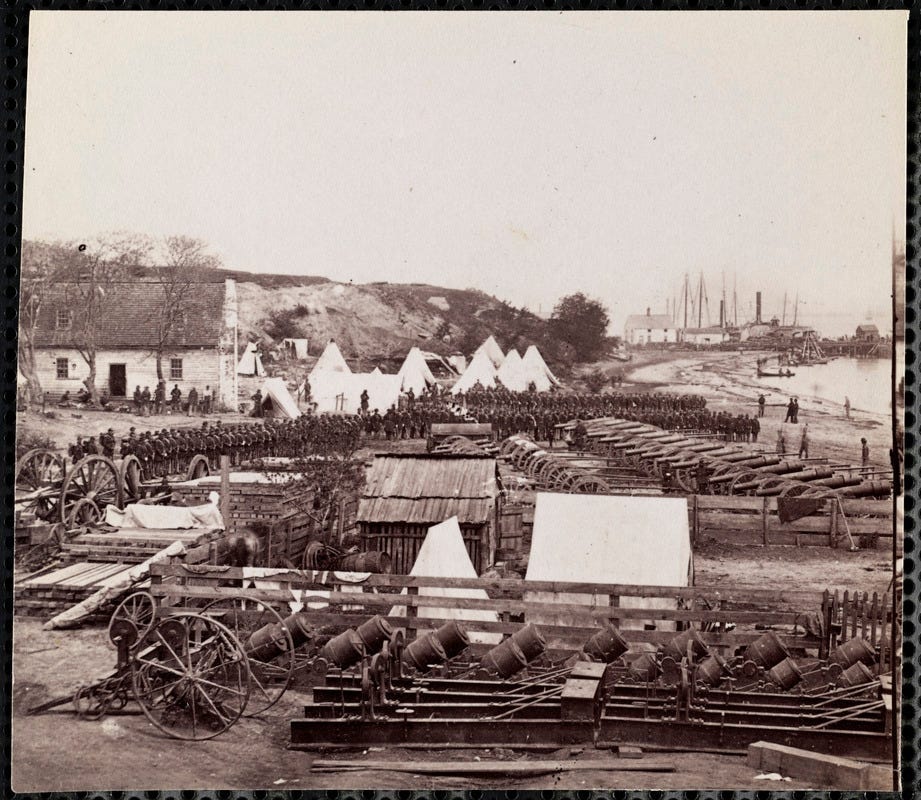
They should have lost. An unfunded rebellion against the greatest navy on earth, a Continental Army that spent whole winters barefoot, a currency so worthless “not worth a Continental” became the insult, a cause that at various points could not pay, feed, or clothe its own soldiers. Most rebellions like that end on a scaffold, and most republics that do manage to get born die young; the historical record of democracies is mostly a record of short lives and violent ends. This one came down, in the end, to one week in October 1781, in my town, when a French fleet held the mouth of the Chesapeake, Washington’s army dug siege lines through my family’s fields, and Cornwallis ran out of river. My ancestor John Shield made it to the last day of that siege and no further. The war that created the longest-running constitutional republic in the world ended on ground my family had farmed for a century and a half, and my house sits today on land that quartered a Revolutionary camp.
The America we know is the inheritance of all that, and the inheritance math is what you need to sit with on this birthday. Go back ten generations, to the founding era, and every one of us has 1,024 direct ancestors. Every single one of those people had to survive childhood in centuries when most children did not, survive war, famine, fever, crossing, childbirth, meet exactly the person they met, and have exactly the child they had, a thousand consecutive miracles per person now living. The odds against you personally existing are so absurd. Then multiply that improbability by the country’s: a republic that should have died at Valley Forge, that nearly died at my town twice, once birthing itself in 1781 and once tearing itself apart when the armies came back through Yorktown in 1862, that has buried its own sins and its own dead and amended itself, generation after generation, closer to its own founding sentence. You, here, in this country, on its 250th birthday, are two impossibilities standing on top of each other. The correct response to that is not entitlement; it is awe, and then gratitude, and then work.
This spring, at a press briefing, Secretary of State Marco Rubio was asked, at the end of a long day, what his hope for America was, and he gave the kind of answer that used to be common currency in this country but has become rare. My hope for America, he said, “is what it’s always been”: that this remains the place where anyone from anywhere can achieve anything, where the circumstances of your birth do not sentence you, and he said the thing that both parties used to know how to say: we are not perfect, our history is not perfection, but it is a story of perpetual improvement, each generation handing the next one a country freer and better than the one it received. The son of Cuban immigrants, standing at the government’s podium, describing the covenant.
My tree contains both the boat people and the Burgesses. The late Barbara Jordan, a Black congresswoman from Texas and one of the great constitutional voices this country ever produced, chaired the national commission on immigration in the 1990s, and she was unafraid of a word that now terrifies people: Americanization. She did not mean erasing where you came from. She meant that this country is not a location; it is a covenant, and joining it means adopting the story, the sacrifice, the argument, and the obligations, just as a family adopts and is adopted. Immigration without that adoption, she argued, serves no one, least of all the immigrant. And she was right. The threat to this country is not people who come here and fail to learn the story. It is everyone, native-born very much included, who holds the inheritance without knowing what it cost. My Hungarian, Ukrainian, Polish, and German people were not born to this covenant; they chose it, learned it, and became it, and they are as American as my burgess Royla slave blood. Meanwhile, I can show you tenth-generation sons of this soil who could not tell you what happened at Yorktown or why, who mistake freedom for the default setting of the universe instead of the most expensive purchase in human history. Blood does not make you American. My own tree proves blood makes you nothing but related. The story makes you American, and the story has to be known to be kept.
That is why I do what I do here. I am a member of the 1607 Society of historical donors supporting this ground, and the legislature appointed me to the York County Historical Committee. That’s the same missing persons case I opened as a boy, still running. I found who my Mother was and who she came from, the Old World lines and the tidewater lines, and in finding her, I found myself, which is what every genealogist is actually doing, whether they admit it or not. What I learned scaled all the way up: a person who does not know where he comes from is unmoored; a country that does not know where it comes from is unmoored; and unmoored things do not stay. Most democracies in history did not last long. Ours has made it 250 years, not because the land is lucky, but because enough people in every generation knew the story well enough to pay its maintenance costs: in blood sometimes, in vigilance always, in the daily, unglamorous work of being a citizen instead of a customer.
So here is my Fourth of July charge to you, and it costs nothing and everything. Go find out who you are. The real one, with the inventories, the prison camps, the ostracized cousins, and the boats. Sit at the library table. Pull the records. Find your slaveholders if you have them, and your enslaved, and your immigrants and your soldiers on the wrong side, and your John Shield who died a day short of the finish line. Hold all of it the way I hold mine, because a person who can hold his whole history is a person who cannot be lied to about his country, in either direction, by anyone selling either shame or fairy tales. Then look at this improbable, blood-bought, self-correcting, 250-year-old republic and understand what my grandfathers understood in 1776 with everything on the table: it was never a position of F&*% you. It was a position of everything to lose, and they bet it all on us anyway.
The camp under my house is quiet tonight. The river Cornwallis ran out of still bends around the town Martiau patented four centuries ago. Somewhere down the road, a kid who does not know who she is yet will walk into a library, the way I did, and start looking. This country was left to her by people who died a day short of seeing it. The least the rest of us can do is know their names.
Happy 250th. Go earn it.
This was wonderful! I really enjoyed reading how your family, with a little bit and sometimes a lot of involvement, helped this country grow. A family that was passionate for causes that sometimes were opposites. It wasn’t just one kind of person, it was all kinds.
It was the mix that caused growth, which sometimes looked like failure and other times victory. It was the back and forth that allowed them to help mold our country. Americans are mostly immigrants. Not to say there wasn’t indigenous people here already. But it was the mix of people, of ideals, of fighting and war, but also the dream of a free country, a country where freedom was first and hard fought to win.
America is each one of us,looking back to see our own history and following the paths that brought us to today. No path was an easy journey, no path was laid straight with no obstacles. And while our paths might have shared ideals, locations, and experiences, each one was unique. Each path crossing barriers and cultures. Passing through history in unique ways, bringing with them on their back pieces of history that were the building blocks of today’s America.
Some were good, many were not. Some were tolerated, many were not. Some were tyrants, many were not. Some were leaders, others were followers, we found we needed both. Every person, throughout this country’s history left their footprints. Those footprints allowed us to become great, and the same footprints brought shame or despair, both of which are necessary for continued growth.
It is our footprints now that will decide today’s fate, form our part of the story.
Today, as in the past, we see division, separate ideologies and resistance to the changes that tears at a nation. Some want to go back to more simple times, less law and order, more government oppression of differences. Others looking forward seeing the value in each life and championing the person. A nation that values the person, not ideals forced upon us by society or government. But at the end of the day, maybe through collaboration, maybe through decent and conflict, each person lays the unique footprints that brought us through our varied yet entwined pasts and are the foundations upon which this nation was founded.
I tend to believe that each person must be free to be who they are. I struggle to see why others see differences when I embrace it. But if you look back you will see a lineage that is both unique to you but filled with good and bad decisions, ideologies that are conflicting, and ideals that are in direct conflict with yours.
These are the things that our nation was built upon and how a nation grows. I guess our part of this history will be contentious and somewhat scary. Will we embrace our feelings and let that lead us? Will we buckle to an administration that wants to divide and challenge our constitution, will we choose to ignore things and let others decide? It will be up to us to decide what is next for this nation. To look back to see how far we have come and how it took actions to bring us to this point. Do we want what we had or do we want new options. It is the same fight. We are just still shaping what that means, just as our ancestors did before us.
I can say that there are significant differences dividing our nation. I believe the days of ignoring the problem must be behind us. The days of saying, no, I didn’t vote, I didn’t like either candidate or whatever, will haunt us in the future. I think that religion is a tool that can work for both sides, but that whats important is the actual right we have to express ourselves. I believe that it is important to be involved at some level and not expect someone else to carry us. People are smarter these days. Activate that and get up out of your chair. Listen to learn.
Nice work. That's faint praise because it's clearly so far short. I may read something else like it, but probably not today. Maybe never. Thank you.