

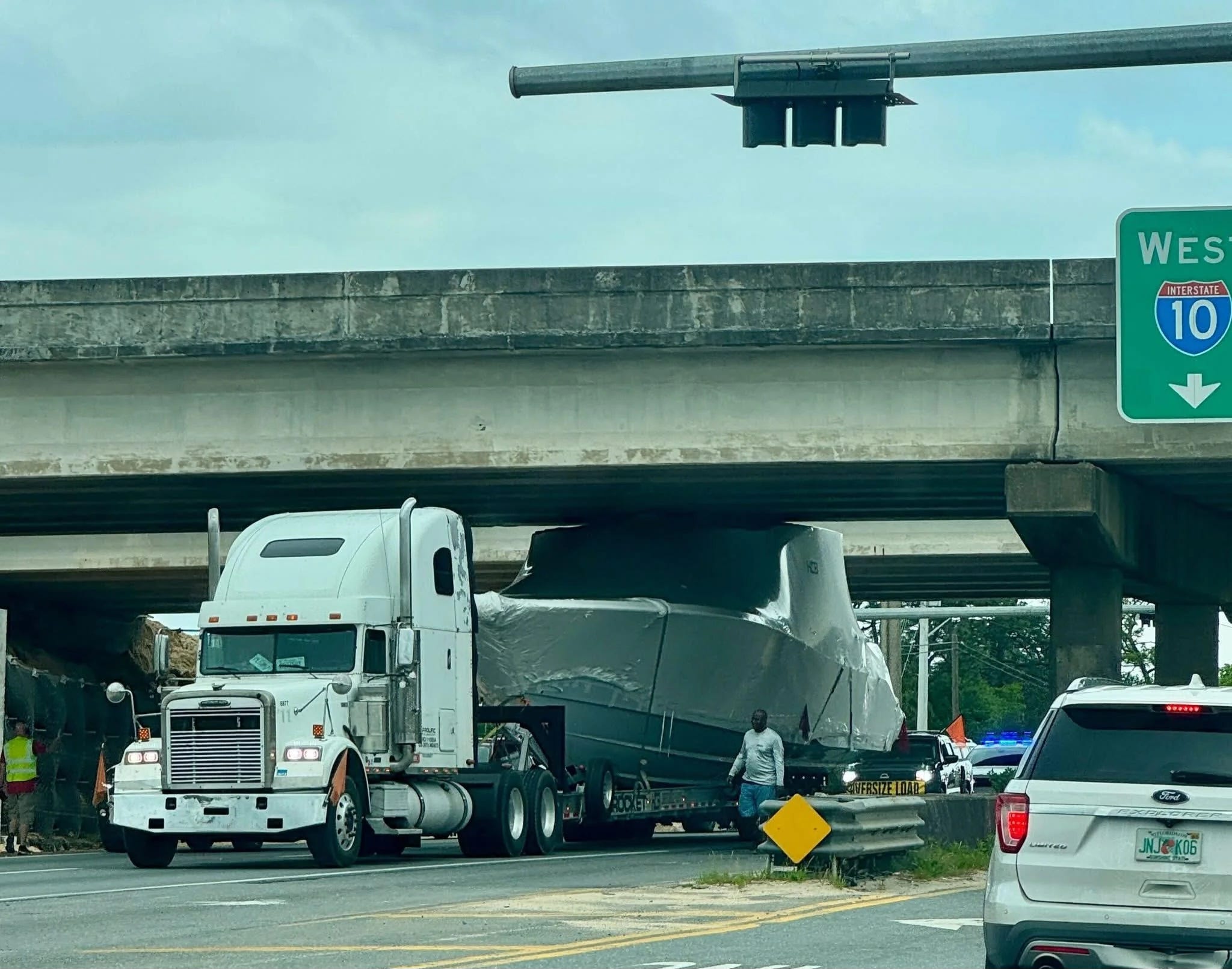
There’s an old line from the yard that fits the moment. The cheapest carrier on the board is the mistress, and the safe carrier is the wife. The mistress looks like the bargain on the rate confirmation and takes everything you have when it goes wrong. The marriage you’re actually in, the one that costs more every single month, was the cheaper deal the whole time. Brokers and shippers spent ten years chasing the rate confirmation mistress; now they want their wife back, but now shes demanding more money. A Court told them the crash is theirs too, and the market is already charging them for the difference.
On May 14, 2026 the Supreme Court ruled 9-0 that a broker who negligently hires an unsafe carrier can be sued, because the claim falls inside the safety exception to the Federal Aviation Administration Authorization Act, 49 U.S.C. 14501(c). Justice Barrett wrote for a unanimous Court, with a concurrence from Justices Kavanaugh and Alito. The preemption defense that let brokers throw out negligent-selection cases before a jury ever saw the file, the one the Seventh Circuit had blessed in 2023, is gone in all fifty states. Shawn Montgomery, who lost his leg on the shoulder of Interstate 70 in Illinois in 2017 when a C.H. Robinson-arranged carrier hit him, gets his trial.
That ruling landed on a freight market that had already started to turn. For the last decade, the cheapest truck on the load board was the one that got the freight. For the first time in that decade, the cheapest truck can’t find work, and the safe carrier is the one with pricing power. Contract truckload rates are up double digits year over year while volume is flat, which is the signature of a capacity base that has shrunk, not a demand boom per se. The carriers who survived the 2023 and 2024 washout on low-cost structure are the ones the market is now pricing out, and the operators who invested in maintenance, drivers, and real insurance are, for once, getting paid for it. Safety became a commodity you can sell. That’s new.
How the toxic pool got built
The structural cause of cheap freight was never a mystery, and it starts with the consumer. A decade of ultra-cheap imported goods trained millions of Americans to expect products to cost almost nothing and to ship for free. Large retailers with enormous logistics leverage pushed the consumer-facing cost of shipping toward zero, which suppressed the one market signal that tells a supply chain that moving freight a thousand miles costs real money. Suppress that signal at the register, and you suppress it everywhere behind the register. Shippers negotiate to it, brokers source to it, and carriers bid to it, all the way down until the rate only pencils for an operator who has compressed every cost he has, including the ones that keep people alive.
The numbers underneath that compression are documented. Carriers were taking spot rates in nominal terms roughly equal to the 2014 peak while the American Transportation Research Institute put operating costs up about 34 percent over the same stretch. Demand did its own damage from the other side. GLP-1 appetite drugs, Ozempic and Wegovy and Mounjaro and the class around them, now reach a meaningful share of American households, and the users cut caloric intake and grocery spending enough that analysts have tied it to hundreds of thousands of lost refrigerated truckloads a year, with Del Monte Foods citing a packaged-food demand decline on its way into 2025 bankruptcy. Food freight is the backbone of reefer volume, and it is compressing in a way that looks structural rather than cyclical. Tens of thousands of carriers left the industry in 2023 and 2024, and the ones who stayed were disproportionately the cheapest, which is a polite way of saying the ones who cut the most.
At the very bottom, below low-value freight, sits no-value freight. Garbage, municipal solid waste, scrap, material with zero commercial worth. Under 49 CFR Part 371, broker authority requirements attach to arranging transportation of property with commercial value, and certain solid-waste categories have historically fallen outside that framework entirely. You dont need broker authority, a surety bond, or FMCSA registration to arrange the movement of trash. The accountability chain that broker regulation builds in the legitimate market simply is not there, and the carriers working that space run at highway speed and full weight next to everyone else. The spot market at the bottom does not select for the worst carriers by accident. It manufactures them.
The three-box carrier that the ruling just repriced
For most of the spot market, verifying a carrier for a load meant four clicks. Confirm the DOT number exists in SAFER. Confirm the MC number is active. Confirm a certificate of insurance is on file. Confirm the carrier is not rated Unsatisfactory or Conditional. That process checks whether a carrier is permitted to operate. It says nothing about whether the carrier is safe to operate, which is a different question with a different answer, and the gap between the two is where people die. Most of the fleet carries no safety rating at all because most carriers have never had a compliance review, so the fourth box is usually blank anyway. A rating and an authority can be bought for about $1,200. Three hundred dollars, a rented truck, and an instant-issue, self-attested, non-underwritten policy, and you are a motor carrier.
That three-box process was standard for one reason, and Montgomery is the reason it can’t stay standard. Under the old preemption rule, a broker that put a carrier with four open alerts and canceled insurance on a load had no legal downside if that carrier killed someone. Confirm the three boxes, move the freight, collect the spread. The carrier’s minimum coverage paid what it could, and the broker’s exposure evaporated. After May 14, a broker that booked a bad carrier while public federal data showed 300 crashes and eight fatalities and a top-tier risk score is going to answer a hard question about what due diligence means when the tools exist, are public, and were not used. The Court was careful that this is accountability, not automatic liability: a broker who acts in good faith with a reputable carrier can still defeat the claim. The good actors were handed a defense. The three-box shops were handed a bill.
What the data shows about the two biggest brokers
I built a broker picture from the inspection record. When an officer stops a loaded truck, the report captures the broker, the shipper, and the carrier in a single line, and it captures what the officer actually found, not what anyone claimed. Across C.H. Robinson and Total Quality Logistics, the two largest brokers in the country, that data covers 1,730 carriers.
C.H. Robinson says it works with 450,000 contract carriers and moves 37 million shipments a year. The 923 of those carriers with inspection records in FMCSA carry the marks of the pool the spot market builds. Thirty of them had a fatal crash in the past 24 months, for 46 people dead. Seven hundred of the 923, a little over three-quarters, have never held an FMCSA safety rating because they have never had a compliance review. One hundred thirty-two run vehicle out-of-service rates at or above 50 percent, and 74 run driver out-of-service rates that high. TQL’s 807 carriers read the same way and worse on the fraud markers: seven fatal crash events and 18 dead, 91 percent never rated, and 44 carriers carrying an authority-transfer flag, THE TEA’s marker for a pattern consistent with an old operation reappearing under a new identity. Forty-four is more than seven times the six flags in C.H. Robinson’s pool, a concentration of chameleon-carrier risk inside a single broker’s documented freight.
The individual names are where the abstract stops. Twin Carrier LLC out of Georgia, DOT 3518735, ran 62 crashes in 24 months, two of them fatal, on three simultaneous SMS alerts, unrated, with $1,000 in coverage that had been canceled. Twin Carrier is one of the oldest carriers in the Super Ego network and carries two wrongful-death cases in Pennsylvania and Ohio. Clement Transport out of New Jersey, DOT 3371628, posted a 100 percent hazmat out-of-service rate, meaning every driver it put through a hazmat inspection came out of it parked. Contract Freighters out of Missouri, DOT 70289, ran 104 crashes in 24 months, four of them fatal, and held a satisfactory safety rating the whole time. Every one of these was in a major broker’s documented carrier history.
Cobra wasn’t the exception. Cobra was the book.
One name in that broker data is the thread that ties this whole thing to the insurance side. Cobra Inc out of Pennsylvania, DOT 3525693, ran 30 crashes, one fatal, unrated, and the insurer on file is Universal Casualty Risk Retention Group. When I first flagged that, it read as one bad carrier matched to one questionable insurer. It isn’t. The insurer exposure model, built on the federal financial-responsibility filings that every carrier files as a BMC-91, now scores 248 insurers by the safety records of the carriers they cover. Universal Casualty covers 641 carriers, and 81 percent of that book scores high-risk. Its average carrier risk is 86.2 out of 100. Cobra was not the outlier in Universal Casualty’s book. Cobra was a fair sample of it.
A risk retention group is an insurer owned by its own policyholders, chartered under the federal Liability Risk Retention Act, 15 U.S.C. 3901. That law lets the group write across state lines under one state’s charter, and it carves the group out of the state guaranty funds that stand behind ordinary insurers. When a normal insurer fails, a state fund pays the open claims up to a limit. When a risk retention group fails, there is no fund. The claims in flight become a line in a bankruptcy, and the injured party collects what’s left. A carrier can hold active authority, a filed policy, and a certificate that satisfies the federal minimum under 49 CFR Part 387, and still be one insurer failure away from a promise nobody is obligated to keep. Universal Casualty’s own instability score, built from its portfolio rather than its carriers’ crashes, is the highest of any risk retention group we track, and the book is still growing.
The next part runs the full list of 248, and the specialty insurance market is in retreat, shedding trucking policies faster than it writes them, which is what a hard market looks like from inside an underwriting shop. The risk retention groups carrying the worst instability scores are doing the opposite. Universal Casualty is growing. National Transportation Insurance Company Risk Retention Group is growing. The carriers the backstopped market is dropping are landing in the corner of the market that has no backstop. That is a migration, and it means the certificate of insurance stapled to a rate confirmation is doing less real work every quarter it goes unread. After Montgomery, the broker who didn’t read it owns part of what happens next.
The shippers on the cheap end of the same trade
The insurance model looks at who insures the bad carriers. A second model looks at who ships with them. Working from the same inspection records, we score a shipper by the safety records of the carriers its freight actually rode with, counted only where a shipper spreads freight across at least ten carriers, so the number reflects a selection pattern and not one odd lane. The caveat is that the shipper field on a bill of lading is dirty, filled with brokers and yard codes as often as real shippers, so this reads as direction, not as a precise ranking, and the measure that carries it is how far a shipper’s carriers run above the national average risk score rather than the raw number, which cancels the inspection bias that inflates every carrier the same way.
Two clusters sit at the top, and neither is a surprise once you’ve followed the cheap-freight chain down. Deep-discount retail is one. True Value, Dollar Tree, Family Dollar, and the dollar-store tier route freight through carriers running roughly 65 to 67 points above the national average, moving hundreds of shipments across dozens of carriers apiece. The oilfield sand business is the other, with Hi Crush, Superior Silica Sand, Freedom Proppant, and Black Mountain Sand all running 61 to 64 points high on a transient, high-turnover carrier base. This is the cheap-goods economy showing up as a safety number. Freight that has to move at the lowest possible rate moves on the carriers that only exist because the rate is that low, and now the record of who chose them sits on a public federal database that takes about ninety seconds to pull.
The bond that runs out at claimant 23
Ask the man in Tennessee what the accountability system produced for him. He runs one truck and has run it for twelve years. He took a load off DAT from a broker he hadn’t used, on a rate confirmation that looked clean, delivered on time, got a signed proof of delivery, and invoiced. Thirty days, nothing. Forty-five, nothing. The calls went to voicemail, and the emails bounced, and when he pulled SAFER, he found the broker’s authority had been revoked two weeks after he delivered. He filed against the $75,000 surety bond, which is exactly what the bond exists for. He was claimant 47. The bond was already gone. He got a check for $312.
The bond is inadequate by the numbers and by its history. The $75,000 figure was set in 2013 by MAP-21, after the requirement sat at $10,000 for forty years, and raising it to $75,000 still closed more than 7,500 brokerages that couldn’t get bonded at the higher amount. A broker running 50 loads a month can carry well over $100,000 in outstanding carrier payables at any moment, so when one collapses, the $75,000 splits across everyone in the queue. FMCSA data shows more than 400 brokers hit bond drawdowns a year, nearly one in five with total claims that blow past the bond, and the average recovery lands somewhere around $1,900 because carriers have learned that filing against an exhausted bond produces a $312 check. The fraud layer sits on top of that. Double-brokering and identity operations buy aged MC numbers with clean histories, spoof the phones, run a few weeks of loads without paying anyone, then dissolve and reappear. The bond, if there was one, was written against an entity that barely existed. The trail ends with whoever made the call.
The Super Ego network is the visible version of the same condition. The 60 Minutes investigation I did into that Serbia-connected operation, and which FMCSA Administrator Derek Barrs called one of the most notorious chameleon schemes on the road, documented drivers told to physically alter the DOT numbers on their doors and rate confirmations changed to cut driver pay by hundreds of dollars a load. Underneath all of it, the freight kept moving, because somewhere a broker confirmed three things on a SAFER screen and booked it.
What to do now that the tide has turned
If you run one truck or a small fleet on spot freight, the regulatory system still won’t protect you, so protect yourself. Verify broker authority on SAFER before you pick up, not after. Treat the $75,000 bond as a last resort that may already be pledged to 46 carriers ahead of you. Look hard at trade credit insurance: Allianz Trade, Coface, and Atradius write receivables coverage that pays 80 to 90 percent of an invoice on a broker default for roughly a fifth of a percent to one percent of insured receivables, and some non-recourse factoring programs bundle the same protection. Build shipper-direct relationships wherever the work allows, because the difference between contract freight with a shipper you know and spot freight from a stranger on a board is the difference between a business relationship and extending credit to someone you’ll never find again.
If you’re a broker or a shipper, the ruling changed your job description. Carrier selection used to be a procurement decision. It’s a documented legal exposure now, and the record of how you made it is public. That means checking real safety data, not a certificate, and keeping the paper that shows you did. The carrier vetting tools are not exotic and not expensive. The FMCSA SMS system, SAFER, crash history, out-of-service rates, authority-transfer indicators, and insurance quality that goes past confirming a certificate exists are all available today. The question the Court answered is whether there’s a consequence to choosing not to use them when the carrier you hired kills someone, and the answer is yes.
The market got to the same answer before the Court did. Safe carriers are a commodity that finally commands a price, and the cheapest operators on the board are running out of loads. The cheapest carrier was never the cheapest. It only looked that way on the rate confirmation, right up until the crash, or the unpaid invoice, or the insurer with no fund behind it, made you pay the rest of the bill. The wife cost more every month. She was the cheaper deal all along, and now the law and the market agree on it.
you got one of them overpasses too?
I think NYS is going for the record.