

“Freight execution is no longer a benign administrative function. It is part of the operational kill chain, contested persistently and often invisibly.”
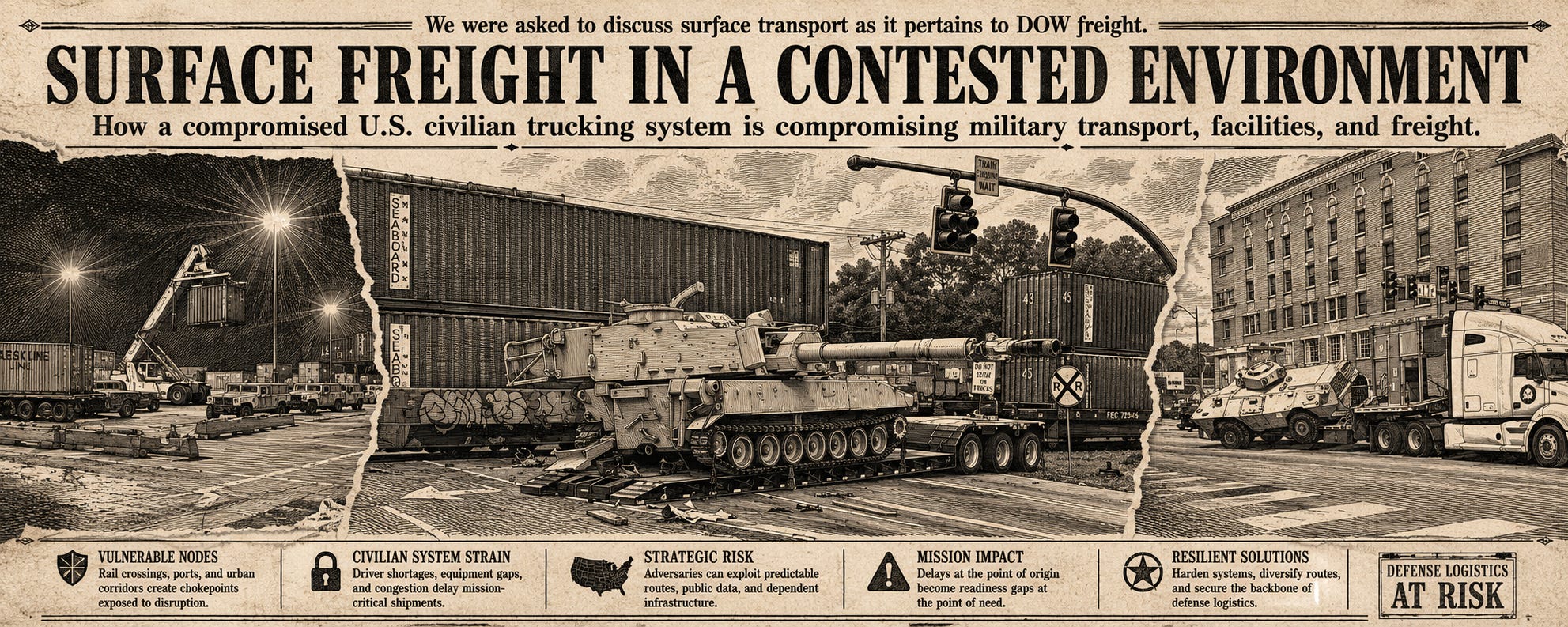
You can find and download my Surface Transport Department of War and Federal Freight Assessment State of DOW Freight here.
The session was for the Irregular Warfare Center after General Dorman invited me to speak with a panel drawn from the Army’s surface deployment command. Serious people in a serious room, asking whether this country still trusts the movement of its own freight?
Not the cargo. Not where it’s going. The act of moving it. The most ordinary thing any of us in this business does, and the people who plan how America projects force is now calling it contested ground.
There is no separate, hardened, military-only road network in the lower 48. The truck hauling a Joint Light Tactical Vehicle out of Oshkosh runs the same I-75 you do. The Department of War moves billions in freight every year through the exact same civilian system you and I work in. That system is broken just about everywhere you care to look. I pulled 8 million inspection records to find out how bad it was.
The civilian system is already gone
Set the military piece aside for a minute and just look at the industry we live in.
The license is for sale. FMCSA has closed 550 training schools and pulled 3,000 third-party testers off the registry, with another 4,500 on notice. That’s the supply chain for the credential itself. One examiner used gold envelopes containing $520 in cash for a passing score, and when his graduates were retested honestly, eight in ten failed. A Massachusetts trooper rigged CDL tests for guys he called “brain dead” in text messages, in exchange for a driveway and a bag of Twizzlers. His code word for a fixed test was “golden handshake.” My own reporting tied more than 6,000 fraudulent licenses to thirteen deaths.
The medical card isn’t much better. A single fraud-mill bust invalidated 6,000 driver certifications at once. A real DOT physical runs 30 to 45 minutes. The examiners cranking out hundreds a month out of a McDonald’s Dining Room in Northern CA aren’t examining anybody. They’re selling paper, and the drivers walking out with it are carrying the sleep apnea and the heart conditions that a real exam is supposed to catch before they get behind 80,000 pounds. Some of these Doctors are literally based in gas stations.
The logging device on your dash was never tested by anyone. There are 1,133 registered ELDs and the registration is self-certification. The maker says it complies, the agency lists it, that’s the whole process. No government testing, no cybersecurity review. Revoked makers re-register under a new name within days, with the same firmware behind a new logo. It’s 60% white label, close one, open a dormant that’s lying in wait. That box is wired into your truck’s CAN bus, the network that runs your brakes and steering, on a 1983 protocol with no authentication. Researchers have already shown they can take over braking and steering through that bus. Nobody’s tested whether somebody can do it to a truck under a military load, because self-certification means nobody ever has to. I took a class through SAE for less than $1,000 that showed exactly how to hack the CAN bus.
The companies don’t even stay dead. A carrier gets shut down on a Friday, files a new authority the next week, or has an authority lying in wait under a name one letter off the old one, and is back on the road with the same trucks out of the same lot by month’s end. CBS called Super Ego Holding the most notorious chameleon scheme the agency has ever dealt with. FMCSA found 400 to 500 carriers registered to addresses with no trucks at them, including roughly 700 companies stacked into one 2,000-square-foot building in Signal Hill with a “No Trucks Allowed” sign in the parking lot. Super Ego didn’t just reincarnate after my 60 Minutes segment and investigation; it reincarnated the same week as Sky Blue Leasing and turned to none other than Lawyers Limited to be their BOC 3 agent. Lawyers Limited is a ghost agent. Why? Because they want to limit the ability of people they hurt or kill to serve them in civil litigation. They want to slow accountability. They also got smart and registered in Delaware this time, so now there’s no “Alexander Mimic” clearly on the face, just a Lawyers Limited agent. They pay “influencers” foreign ones, of course, like Rate per Mile TV and Chris Kuna Drive, to push the lease and in-house financing so they can pad their base of exploited drivers without them recognizing the Super Ego name.
Theft went digital while we were all watching the road. The FBI’s April 30 bulletin put cyber-enabled cargo theft at $725 million for 2025, up 60 percent. The play is simple: hack a broker’s email, post fake loads, hijack a real carrier’s FMCSA profile, swap out its contact info and insurance, and reroute the freight. Two separate $30 million government shipments of computer chips went that way and were never recovered.
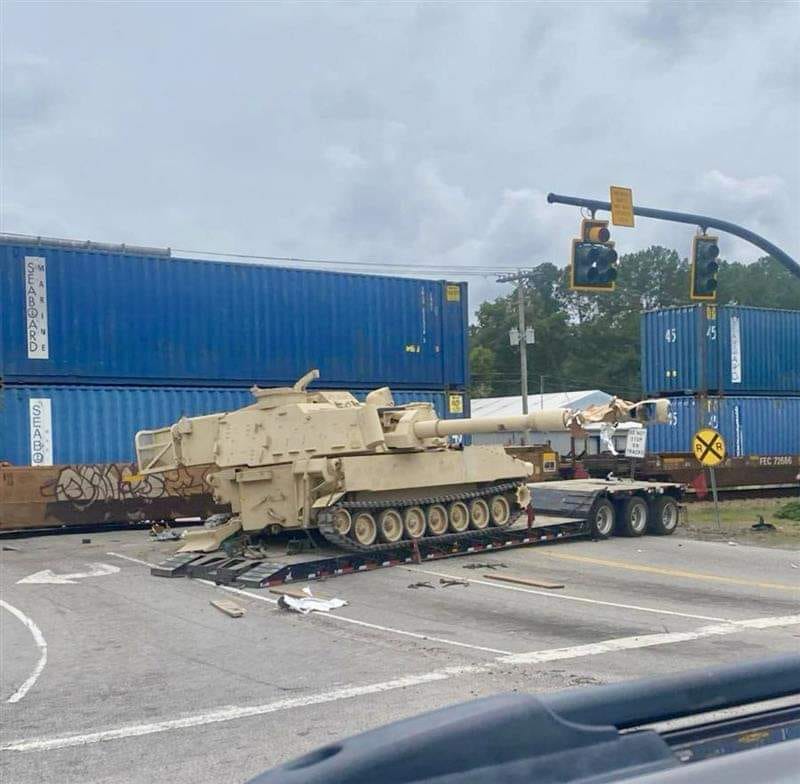
That’s our system. Now watch what happens when defense freight gets loaded onto it. My statement to those watching and listening from the Department of War? “Our entire civilian trucking surface transport system is comprised end to end, and these are the carriers and drivers you’re sourcing to move military and federal loads.
Same trucks, defense load
When a certified inspector runs a full Level I inspection, the 37-step inspection, the one where somebody actually crawls under the truck, measures the brakes, checks the frame, pulls the logs, on a government freight vehicle, 49.6 percent get put out of service. Half.
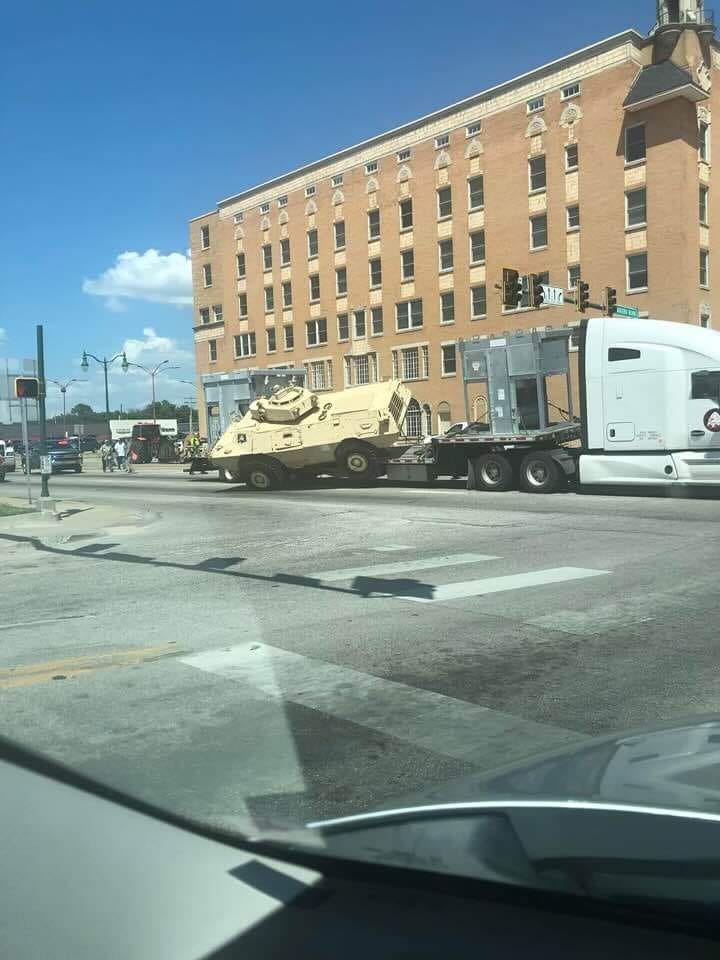
If you’ve ever crossed a scale on a Level III and rolled on after they glanced at your logbook, you know why the “average” number looks survivable. A Level III never touches the truck. It’s a paperwork check. The aggregate hides the fact that the minute someone looks for real, one in two government loads is on equipment that shouldn’t be moving.
Narrow it to pure military freight and the installation numbers get wild.
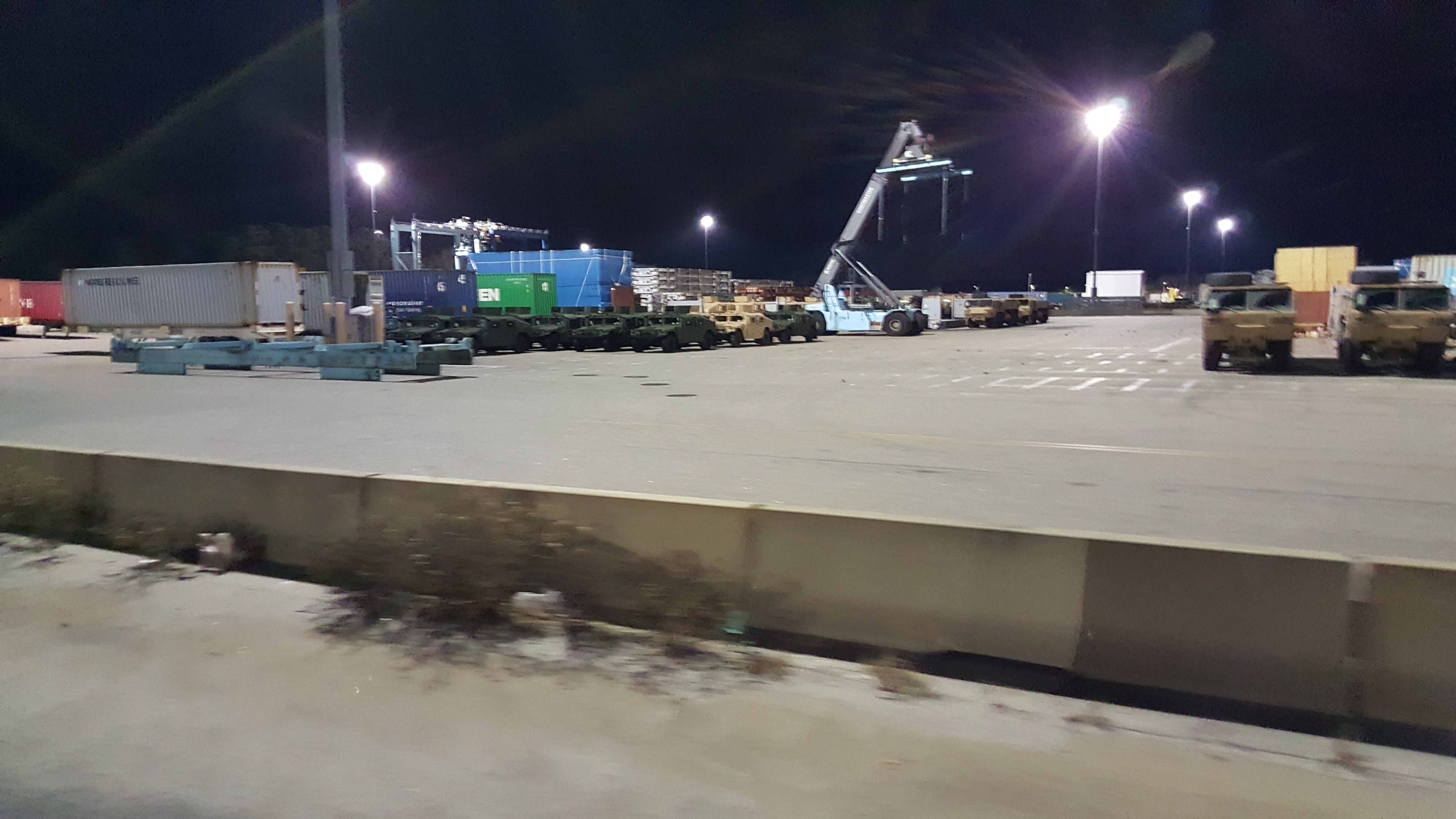
The SDDC 841st Transportation Battalion, the Army unit that runs force projection through the Charleston Strategic Seaport, the port we’d actually deploy through, came back at a 100 percent out-of-service rate. Ten carriers, eleven inspections, 76 violations, not one clean truck. Oshkosh Defense, the company that builds the JLTV and the heavy tactical fleet our brigades fight from, had its loads moved by carriers failing between 43 and 62 percent. Red River Army Depot, the Army’s only organic repair base for combat wheeled vehicles, sat at 47.6. Total Military Management, which moves service members’ households during PCS season, ran 54.5 percent. More than half.
Then there’s the subcontracting. The shipper “US ARMY” appears in my data, attached to 251 different carriers across 306 inspections. A new, unknown company for damn near every load. No continuity, no relationship, no safety baseline, because the carrier hauls one Army load and disappears. “US MILITARY” shows 173. “US NAVY” shows 73. The National Guard: thirteen carriers, thirteen loads, zero repeats.
The prime here is the Defense Freight Transportation Services contract, $2.3 billion over seven years, run by Crowley. Over the first contract, Crowley grew its carrier network 500 percent. By the time a driver pulls up to the depot gate, he can be four or five layers of subcontracting below the prime, and the honest answer is that neither Crowley nor USTRANSCOM necessarily knows who he is. A clearance at the top of the stack is worthless when a stranger shows up to take the load.
The drugs. Every controlled-substance hit on a DOD carrier was an automatic out-of-service. One carrier hauling for the Department of Defense got cited four times in eighteen months. Narcotics. Amphetamines. Alcohol on duty. Drugs again. It still holds a Satisfactory rating. Nobody pulled its defense work after the first, the second, or the third.
This is happening on your interstate
This isn’t a story from some far-off theater. It’s on the road in your county right now.
December 9, a Chinese national who’d crossed the border illegally in 2023, gotten work authorization, and been handed a New York commercial license eight months earlier, rear-ended a tractor-trailer on I-40 in Tennessee while watching a video on his phone. He killed Kerry Smith, a 31-year-old American driver. When the troopers gave him an English proficiency test, he failed it.
In November, ICE picked up an Uzbek national wanted since 2022 for membership in a terrorist organization. He was driving commercially on a Pennsylvania non-domiciled CDL. A Real ID. The federal verification system had cleared him. The same credentials we hand to people moving defense freight cleared a wanted recruiter.
Since June, more than 9,500 drivers have been put out of service for failing an English standard that sat on the books, unenforced, for nearly a decade. People working the gates at installations have described drivers handing over a bill of lading they couldn’t read and running the whole conversation through a phone translator. On hazmat. On classified loads. The security protocol is a stage play when the driver can’t read the paper or talk to the gate.
McVeigh rented a Ryder truck. The man who killed eight on the West Side Highway held a CDL and operating authority. There are eleven million trucks on American roads, and TSA’s trucking security program has been unfunded since 2009. Five hundred twenty-one thousand interstate carriers, no required security training, none.
Why it’s a security problem and not a paperwork problem
Take any one of these findings on its own, and it’s a compliance data point. A bad OOS rate. A chameleon flag. A drug hit. An expired authority. By itself, each one gets a shrug. When the same carriers, the same addresses, the same insurers and ownership webs keep surfacing across crashes, theft, insurance churn, identity swaps, and severe violations, that overlap stops being noise. It becomes a picture.
The reason no one sees the picture is that it’s filed in pieces. FMCSA’s safety data, the DOD procurement system, the DFTS carrier network, the insurance system, and the authority registry each hold a fragment, and none of them talk to each other. The contracting officer can’t see the crash record. The FMCSA analyst can’t see the political donations. They were built in isolation, and the isolation is exactly where an adversary lives.
That’s what Dorman meant by contested below the threshold of conflict. You don’t need a missile to degrade American logistics. You need a shell company, a hijacked carrier profile, a $30-a-week log-spoofing service, somebody’s advertising on Facebook, and a regulatory system too fragmented to catch any of it. Stack on top of that the Chinese-operated terminals at our ports, the Chinese-built cranes standing over most of them, including ten Strategic Seaports, a logistics platform with visibility into what’s moving, and you have an adversary that can see and shape our freight without firing a shot. There is still no routine screening of defense carriers against the 1260H Chinese military companies list. None.
May 14, the Supreme Court ruled 9-0 in Montgomery v. Caribe Transport that brokers can be sued under state law for picking unsafe carriers. Kavanaugh wrote that preemption can’t create a black hole where nobody answers for safety. That ruling runs straight through the DFTS brokerage chain, and the carrier data I just walked through, the 125 percent OOS rates, the four-alert carriers, the drugs in the cab, is now evidence in a negligent-selection case. The courts are about to demand what the procurement system should have required long ago. I now personally handle over 25 broker liability expert witness cases, only 10 of which I had before the verdict.
What actually has to happen
I don’t write fifty-page assessments to scare anybody. There’s a fix, and most of it isn’t complicated. Verification has to ride the load, not just sit on the contract. The clearance at the prime has to follow the freight down through every subcontractor, and the government bill of lading needs to name the carrier that actually shows up, not just Crowley.
Cap the subcontracting at one layer below the prime, with the subs disclosed and approved in advance. Unlimited, undisclosed subcontracting is the hole through which everything else crawls.
Screen every carrier and owner-operator against the 1260H list automatically when the load is tendered, not in some after-action review six months later.
Kill ELD self-certification and require real third-party cybersecurity testing, with CAN bus standards on defense vehicles. That box is the least-examined attack vector in the whole picture.
Fund TSA trucking security. It’s been dark since ‘09. The Postal Service is already pushing unvetted, non-domiciled drivers out of its network, which means it is ahead of the Department of War on this. Let that sit for a second.
The reason I can put these numbers in front of you is the platform my team built, sitting on millions of carrier records, and the inspection and crash data I’ve been quoting all the way down this page. The verification piece, LoadVerifi, is a cryptographic chain-of-custody tool that confirms at every pickup and handoff that the driver is the one who was dispatched, the credentials, the truck, the plate, are real and current, the truck matches, and the load didn’t get passed to some carrier nobody approved. A hash at every step, a court-admissible trail at the end, sixty seconds, and a text link for the driver, but that’s not all. We track your load end-to-end, regardless of which telematics vendor you use and have in your truck, and we issue a hash chain QR-coded BOL to the parties in the hash chain transaction. We do all that for well under $50 per shipment. Knowing the driver, the truck, the carrier, the IDs used, and the location of the load are real and unchanged is huge for peace of mind, and it is the solution. We built it for tobacco, firearm, and alcohol clients who were having loads compromised or stolen. We built it for sensitive and high-value shipments and our own customers, but there’s no reason the military and every other shipper right now moving anything of value isn’t developing it or using ours. I’ll give you the code for you to copy. You don’t even have to use ours. Just do it.
I’m not a neutral party on that last one, and I’m not going to pretend to be. I built it because I got tired of documenting a problem that nobody had the tools to close. The recommendation holds whether the answer is my platform, somebody else’s, or something a contractor stands up in-house: you have to be able to prove who moved the freight. Right now, for 251 different carriers hauling under one Army shipper name, nobody can.
The stagecoach robber filled out a form
I keep landing on the same line from my book. The road agent who knocked over a Wells Fargo stage in 1875 had one thing going for him: nobody could verify identity across territory lines. Cross into the next jurisdiction, and you were whoever you said you were. We’re literally running 2026 freight the same way Wells Fargo did in 1875.
The chameleon carrier who kills a DOT number on Friday and kicks off a new one the following week is the same criminal working the same weakness, separated by 150 years of technology and not much else. The deregulation that gave us cheaper, faster, more flexible freight in 1980 also quietly removed the friction that used to screen out the bad actors. We went from 17,000 carriers under the old regime to more than 800,000 now, overseen by an agency of about 1,000 people.
The stagecoach robber crossed into the next territory and started fresh. Today, he fills out a form online. The crime didn’t change. The scale did. That scale is now riding on the same trucks that carry our ammunition, our tactical vehicles, sensitive federal freight, and hazmat.