

CBS pushed this out from Evan Conrad. Dallas Texas. Lights on. Air horn going, and the guy just keeps strolling, totally checked out, no idea there’s a police car two feet off his heels. The dog knows. The dog keeps glancing back. Finally, the officer announces, “The dog has more situational awareness than you.” The guy snaps out of it and moves.
That clip is the entire country right now. Go to a Costco on a Saturday and count how many times you almost, or actually do, get hit. People back a cart out without a glance. They walk the wrong way down the aisle staring at a phone. They stop dead in a doorway. Not one of them is being rude on purpose. They’ve just genuinely forgotten that other people exist in physical space, that things move, that the next second hasn’t happened yet, and they might want to be ready for it. We didn’t use to be like this. So what happened, and is it something you can actually fix? This comes up frequently from fleet owners and managers and stakeholders…”Can you teach situational awareness to my drivers?”
What situational awareness is
Most people think it means “paying attention.” It’s more specific than that, and the people who study it for a living broke it into parts a long time ago. I actually only got into the space to figure out why I can’t grasp sarcasm, but hyper-focus on everything else around me. I was trying to figure myself out and how some can be hyper-aware while others seem to lack the ability to recognize risk, or even that other people exist on this planet.
The standard framework comes from Dr. Mica Endsley, who was Chief Scientist of the Air Force and spent her career studying how pilots and air traffic controllers keep from killing people. She defines situational awareness in three levels. Level one is perception: you actually take in what’s around you. The car, the curb, the guy in the bulky coat, the temperature of the oil in the pan. Level two is comprehension: you understand what those things mean together, not as separate facts, but as a picture. Level three is projection: you run that picture forward in time and see what’s about to happen before it does. The levels stack. If you whiff on perception, you can’t comprehend, and you’ve got no shot at projection. Miss the first thing, and the whole chain falls apart. The guy with the dog never made it past level zero. Most don’t, and it might be because Hard men create good times, good times create weak men, and weak men create hard times and I’d argue from my perspective that is our issue. We’ve created an environment where entire generations have lived in the “good times” created by hard men, and they have no perspective or comprehension of the next shoe dropping and what true risk or hard times are.
The tactical world has a simpler version of the same idea, and many folks in trucking, law enforcement, and the military already know it. Colonel Jeff Cooper, a Marine, developed what’s known as the color code. Condition White is switched off, oblivious, phone in your face. Condition Yellow is relaxed but aware, no specific threat, just generally reading the room and the road. Yellow is where Cooper said you should live anytime you’re out in the world, and he insisted you can stay there all day without it wearing you out. Condition Orange is when something specific gets your attention, and you start forming a plan. Condition Red is when you act. The whole point of the system is to keep you out of White, because White is where people get caught flat…and sometimes dead. Our entire society, since maybe 2010, lives in a progressive state of Col Cooper’s White Zone.
Cooper said the easiest way to spot a person in Condition White is to look for the one on their phone at the restaurant, on the sidewalk, behind the wheel, with zero idea what’s going on around them. He wrote that before the smartphone existed. He’d have a field day now.
Data reiterates what society tells you
This isn’t just grumbling about kids and phones. The numbers are ugly. NHTSA says 3,208 people were killed in crashes involving a distracted driver in 2024, and more than 315,000 were injured. Distraction is badly underreported. A driver isn’t going to volunteer to the officer that he was texting, and if he’s dead, nobody can ask. Some analyses that try to correct for that underreporting put the real distraction-related death toll several times higher than the official count.
Over the last decade, the share of drivers holding a phone to their ear has dropped, which sounds like progress until you look at the other column. The share of drivers actively manipulating a handheld device, scrolling, typing, and swiping, jumped from 2.2 percent in 2015 to 4.5 percent in 2024. Doubled. We stopped talking on the phone and started staring into it, which is worse, because it pulls your eyes off the road, your hands off the wheel, and your head out of the game all at once. Send one text at 55, and you cross the length of a football field with your eyes closed. And the attention doesn’t snap back the instant you look up. Research on what they call the hangover effect found that your head stays partly checked out for up to 27 seconds after you put the phone down.
This was never just about driving. Researchers at Ohio State analyzed emergency room data and found that injuries to pedestrians distracted by their phones more than doubled over a five-year stretch, even as total pedestrian injuries were falling. People walking into traffic, off curbs, into poles, off train platforms, while looking at a screen. The lead researcher figured the true number was wildly underreported for the same reason as the cars: who admits the reason they walked into a sign was a group text? Surveys have found that around half of pedestrians say they talk on the phone while crossing the street, a quarter say they text, and most know it’s dangerous while they’re doing it.
They know. They do it anyway. That’s not an information problem. You can’t fix that with another PSA. It’s deeper.
Where it actually comes from
This is not simple. I don’t think situational awareness is a skill you sit down and learn. I think it’s mostly a byproduct of the life you’ve lived. Hard knocks and learning the hard way are maybe the only real ways to learn this.
Awareness is built from perspective, and perspective is built from exposure. If you’ve never been bitten, or you’re grossly uninformed or even naive, you don’t flinch. If you’ve never had the floor come out from under you, you walk across it as if it’ll always hold. The person who grew up safe, fed, warm, and loved, who’s never cleaned up after real chaos, has no reason to expect the worst, because the worst has never shown up. That’s a blessing. It’s also a blind spot. They’re in Condition White, and they don’t even know there are other colors.
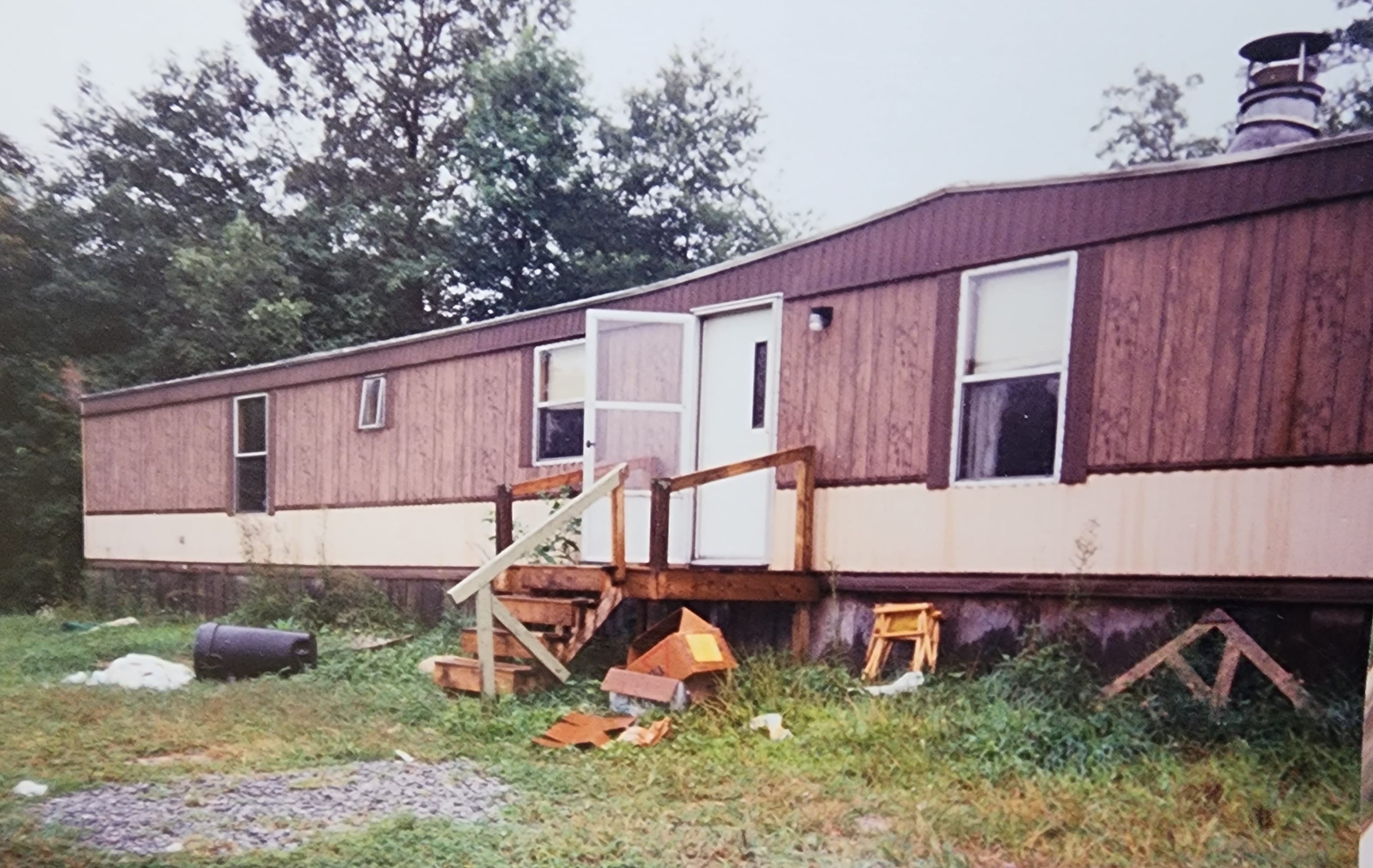
I’ll tell you where mine came from, because it’s the clearest example I’ve got. I didn’t have steady food or clothes until I was about four years old. I was born to two addicts in a rural Virginia county, in a rundown old trailer that was more of a party house than a home, with people drifting in and out at all hours. My mother left when I was three. My sister was five, and my brother was six months old. People who knew her were surprised she didn’t do worse than leave because she completely lacked motherly instinct. My father came apart after that, shooting himself in the living room area, one held his face on while the other ran for help. We didn’t have phones in crack trailers in the early 80s. For a while, it looked like all three of us were headed for foster care, and nobody much cared whether we did.
What saved us were my dad’s mother and her husband, who were right on the edge of retirement and about to enter the easy part of their lives. Instead, they took on three feral kids and moved us out to the farm her father owned. My great-grandfather, Jack Emerson, was born in 1918, built ships and worked steel when he wasn’t working the land, and I never once saw the man smile. He was quiet, played zero games, and he carried a low hum of worry all the time. Too much rain, not enough rain. We drank out of the same glass. We never bought anything new. That was just the air I learned to breathe.
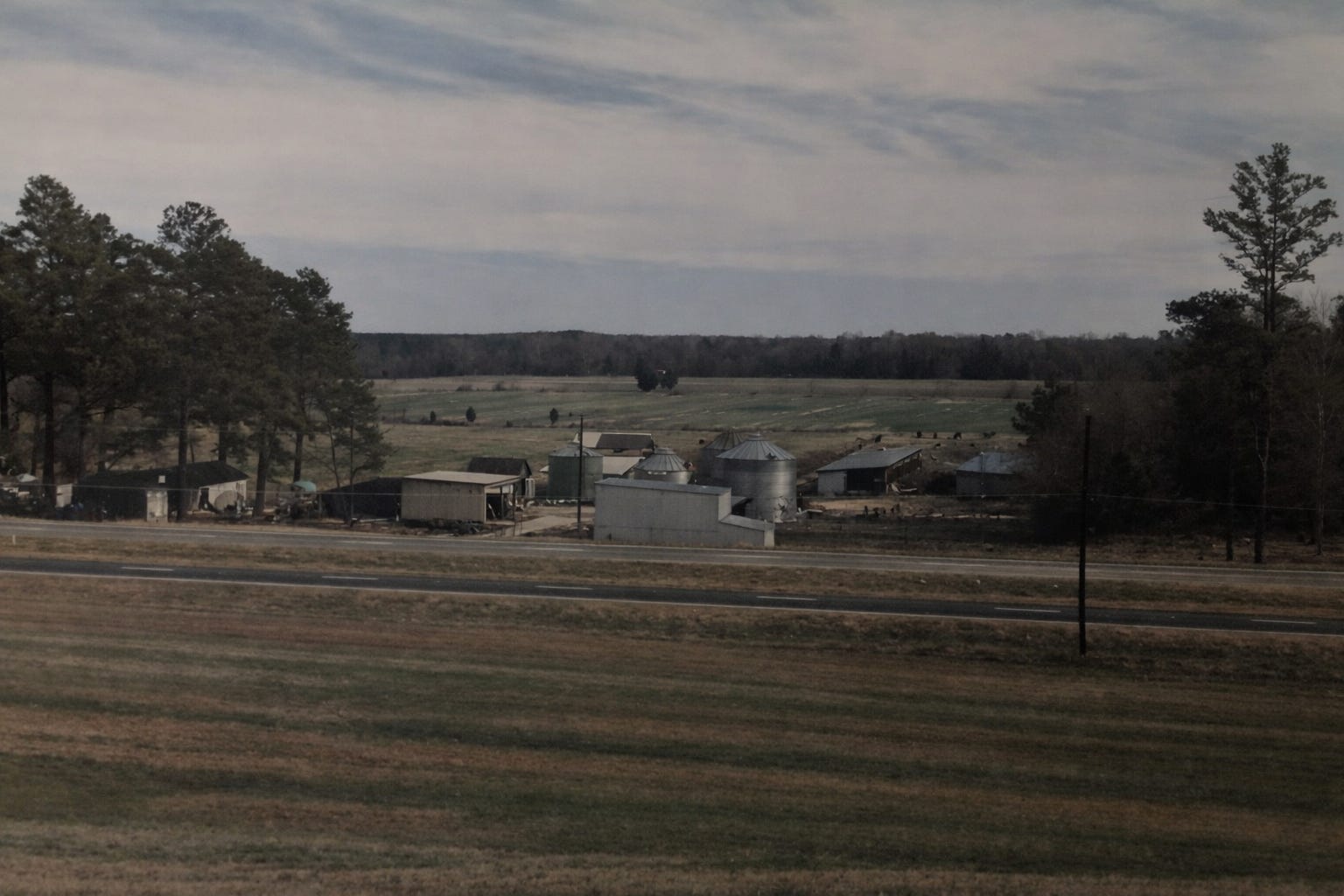
I had to be taught how to be a person. At four and five, I was learning my numbers, my letters, how to read, how to eat at a table, real food with utensils, how to talk to people, how to be touched without bracing for it. I’d never seen a doctor or a dentist. My grandmother took me to a psychologist because they’d try to hug me and tell me they loved me, and they’d get nothing back. I’d sit on her couch and stare out the window across the fields at the highway, for days, then weeks, then off and on for years, watching for my mother to come back up that road. She was never really a mother. She was just the only person I’d known for the first three years, and a little kid’s wiring doesn’t care about the distinction.
You learn a lot about people in a house like the one I started in. You figure out fast who’s safe and who isn’t, who’s lying, who’s about to turn, who to get away from before anything happens. Then you grow up on a farm, and you learn how fragile everything is. Animals get sick and die. You shoot some in the head, drain, and slaughter the ones you raise. People get hurt. My father floated back through a few times a year between the drugs, the women, the jobs, and the jail, and never did get right. I got myself legally emancipated at fifteen after abuse, confinement, and even torture in some cases. Emancipation was something nobody had heard of a kid doing, and I just kept working, because work was the only thing I’d ever known. I still pull 120-hour weeks that most people wouldn’t believe. I still don’t really know what a vacation is.
To this day, when people not accustomed to death and chaos need something put down and possibly buried, we still get the call, and I still show up for fallen horses, etc. I’ve cleaned up bodies from humans to all kinds of animals.
The outdoor cat. The survivalist. Feral. Raised by wolves, my wife says. I’m not telling you that for sympathy. I’m telling you because it’s the engine under the thing everybody asks me about. People say I notice everything, that I can tell them the plate, the make, the color, the description of the driver of a car we passed a block ago. I do that because some part of me is always waiting for the next shoe to drop, and it’s waiting because, for my entire life, the shoe always dropped. The pessimism is a read on reality that got carved in early. PTSD, ASDII, Asperger’s, Conditioned Emotional Response, life creates familiarity and perspective, and that familiarity often dictates your level of response to chaos and happenings.
The part that psychologists can explain
I can shake your hand, look you in the eye, and see who you are, how you got here, and what you’re capable of. There’s real science under all this. When a kid grows up in a chronic threat, no mother, no father, no security, lacking, neglect, abuse, survival, the brain tunes itself to the environment it’s in. The threat-detection machinery, centered on the brain, gets strengthened and turned up. For years, probably over a decade, researchers studying me and other maltreated and trauma-exposed children find what they call an attention bias toward threat: those kids spot the angry face faster, lock onto it harder, and have more trouble looking away. The brain decides that no one can be trusted and that scanning for danger is its most important job, so it runs that program in the background forever. That’s perception and projection, Endsley’s level one and level three, wired in before the kid can even name them. It’s situational awareness installed by force.
Now, because the internet loves the line “hard times create strong men.” That phrase isn’t ancient wisdom, by the way. It’s from a 2016 novel by G. Michael Hopf, and the rest of it runs in a cycle: strong men make good times; good times make soft men; soft men bring the hard times back around. There’s something to it, but trauma is not a reliable training program. It breaks far more people than it sharpens. The same wiring that makes me scan a room makes plenty of other people unable to sleep, unable to trust, unable to function. Post-traumatic growth is real, and so is the much more common version where the person just gets hurt and stays hurt. So when I say my awareness came from my childhood, I’m not recommending the curriculum. I got something useful out of something that should never happen to a kid. Most don’t.
There’s also a behavioral side to this that’s worth understanding. Chase Hughes, a retired Navy chief who trains intelligence and law enforcement folks in behavior, teaches that you read people by first establishing their baseline, their normal, and then watching for the deviations from it. The cluster of cues that means something’s off. When I say I can shake a man’s hand, look him in the eye, and tell you roughly who he is and what kind of life he’s lived, I’m not claiming a magic trick. I’m describing baseline reading that I started doing involuntarily at three years old in a house full of dangerous adults, because back then getting it wrong had a cost. I have dental implants for a reason.
For what it’s worth, somewhere along the way I got handed a stack of labels. Asperger’s, what they’d now call ASD level two. Conditioned emotional response. PTSD, depending on who you ask. I always thought the PTSD folks I met were hypersensitive, jumpy, and everything spiked them. Mine went the other way. I went flat. Nothing much registers as a crisis anymore because the system has been conditioned to treat damn near anything as normal input. I put a gun to a living being for the first time at 5 and shot it in the head. I’ve cleaned up bodies and worked wrecks and been hurt and been confined, and the needle barely moves. That’s not tough, that’s a thermostat that got set wide open and never reset. It happens to be useful for the work I do. It came at a price.
In East Point, GA, a gas station was getting robbed around 2021, and the man had a pipe. I fought the man, took the pipe, and nearly beat him to death with it. The lady I was trying to pay cowered behind the counter. Two people reacted very differently to the same event, which was perceived in two different ways. One was shocked and fearful, the other was so excited that this had happened. I cut my finger off in a log splitter in October. My twelve-year-old looked at me from the machine’s switch as blood went everywhere and said, “OMG, Dad, did I cut it off?!” My response: I looked at him, smiled, and said, “Yes, son, you did, turn the machine off, and got in the car.” We drove to the hospital. My son was shook. Worried the entire way. Some go into shock. Some passout. I got there, took the glove off, dangled the finger in front of the receptionist in hopes we could get back there faster and get this over with, and guess what, she was so freaked out it worked. We all handle these things differently because our experiences condition us over time.
So can you teach it?
This is the question I get in trucking all the time. Rob, can you come train my drivers in situational awareness? And I always stall, because the honest answer is complicated. I can teach the framework. I can hand a driver Cooper’s color code and Endsley’s three levels and drill the habits, the mirror checks, the space management, and the what-ifs. Those are real, and they help. There’s even a Marine program called Combat Hunter, and a book based on it called Left of Bang, built entirely around teaching troops to read a baseline and catch deviations before the bomb goes off. So it can be taught to a degree.
I can’t hand a man my perspective, and perspective is the part that makes awareness automatic instead of effortful. You can know the color code and still drift into Condition White the second you stop consciously trying, because nothing in your gut is pulling you back to Yellow.
Which makes me think the military already figured this out, and it’s why boot camp exists and why Ranger, SEAL, Green Beret, and Force Recon (MARSOC Raider…whatever they call it now) selection looks the way it does. You can’t give a kid a hard childhood on purpose, and you shouldn’t want to. So instead, they manufacture controlled hardship. Stress, exhaustion, fear, consequence, hunger, authority, screaming and verbal abuse, physical pain, commands, all volunteer, all on a schedule, with instructors and a structure around it so it forges instead of just breaks. It’s adversity with the wreckage engineered out. They’re not teaching facts. They’re installing the perspective by dragging people through a dose of the trenches that the trenches usually hand out for free, and a lot crueler.
I don’t have a clean bow to tie on this. Maybe the survivor wiring is born, maybe it’s bred, maybe some of it’s just fabricated by a brain doing its best with a bad hand. I can’t tell you exactly where mine came from. I can tell you that the easiest lives tend to produce the lowest awareness, that we’ve built the easiest life in human history, and are watching awareness drain out in real time, one cart, one crosswalk, one football field at a time, with the eyes closed. The dog in that video isn’t smarter than the man. The dog just still expects the world to be dangerous. Somewhere along the line, most of us quit expecting that.
Case in point: Europe in the late 80s. GIs were being stalked by terrorists, killed and their IDs were being stolen for the terrorists to get on base and plant bombs. So we were instructed to scan for the same face as we were moving around. I traveled with a gaggle from my squadron to Stockholm for a staff assistance visit and when we were walking around town I kept seeing the same face. He was an older guy and didn’t fit the profile and I finally figured out he was assigned by the Swedes to watch after us because there were a couple senior officers in our group. Sure enough, when we went to a restaurant for dinner he was two tables away sitting alone facing us. Later we were sitting at the airport to depart and I casually mentioned how it was funny the Swedes had assigned us a baby sitter and he wasn’t trying very hard to keep us from knowing and my CO and the rest of the gaggle freaked out because none of them had noticed. How could they miss it?!
Loved this. You’re a writer! 🏆 I think some of this can be passed down as well. Good & bad. Intuition? Who knows. But, I notice things on a regular. All things, good & bad, and I had a pretty great childhood. My mom was a little unpredictable & she was raised with a legitimate unhinged father. She was never abused physically, but watched her brothers get punched by her dad “ like a bar fight.”
He would knock his construction worker off a roof with a 2 X 4 if they stopped working. 🤦♀️
She saw this everyday. It becomes part of your DNA maybe? Anxiety, Fear, Love, & Security, at different levels, all make us stronger & more perceptive.
Thanks for sharing this. Your grandma was your Angel. 😇 It happens so often now, people aren’t even surprised. It’s usually drugs that cause it. Kids adapt the best they can. My daughter places kids that have no relatives in this scenario. There are many angels around, willing to take kids & care for them. 💕💕