

Yesterday, on July 9, 2026, the Environmental Protection Agency signed a proposed rule that would stop new diesel engines from cutting a truck’s speed when the emissions system throws a fault. Instead of a derate, the driver gets a beep and a light. There is a virtual hearing on July 29 and 30, and written comments close August 29.
Sixteen years after the Environmental Protection Agency required manufacturers to develop a strategy to slow a loaded truck to 5 mph on an interstate shoulder, the agency now proposes replacing that strategy with noise. The agency decided that the thing it forced into every diesel engine in America was, in its own words on its own website, causing needless frustration, operational delays, and real economic hardship.
Six days before that proposal, the President pardoned nine men who went to federal court for defeating the exact system the agency now admits is broken. The pardons were not the story.
Who actually got pardoned?
Ryan LaLone, Wade LaLone, Matt Geouge, Tim Clancy, Mackenzie Spurlock, Joshua Davis, Barry Pierce, Aaron Rudolf, Jonathan Achtemeier, Adam Kidan and Jack Harvard.
Nine of those eleven were Clean Air Act cases. Two were not. Adam Kidan is Jack Abramoff’s former business partner. Jack Harvard is a ranch owner. The White House praised him for letting American and NATO forces train on his land at no cost. So when you hear “eleven pardons for the diesel guys,” the accurate number is nine, and the batch was mixed with unrelated white-collar clemency.
Now look at Mac Spurlock. Wasilla, Alaska. Owner of Matanuska Diesel. Husband, father, and a veteran of the Alaska Air National Guard. In June 2022 the federal government sent roughly thirty armed EPA agents into his shop. Sen. Dan Sullivan of Alaska described it as a military-style tactical raid. Spurlock’s shop had modified emissions systems so trucks would not shut down at forty below. Thirty armed agents. For exhaust.
Spurlock broke the law as it was written. So did the LaLones. So did Troy Lake, the Wyoming mechanic who did seven months at FCI Florence and turned 65 inside, and whose Bureau of Prisons work assignment, in one of the more perfect details of the American administrative state, was the prison diesel shop. The men who wrote the law that put them there have now spent eighteen months quietly conceding that the law was wrong.
So why didn’t everyone get a pardon? Pardon the men prosecuted under Biden, leave alone anyone charged under Trump, and the weaponization story holds? No. There may be something to it though.
Troy Lake, Elite Diesel, Wyoming. EPA raided the shop in 2018, during Trump’s first term. He pleaded guilty in June 2024, was sentenced that December, and reported to FCI Florence in February 2025. Pardoned November 2025.
Ryan and Wade LaLone, Diesel Freak, Gaylord, Michigan. Ryan LaLone says roughly thirty agents came through the door on November 2, 2018. That is Trump’s first term. The indictment did not land until 2023. Both pardoned.
Matt Geouge, Spartan Diesel Technologies, Hendersonville, North Carolina. EPA issued him a notice of violation in 2015, under Obama. It hit him with a roughly $4 million fine in 2017, under Trump. He pleaded in early 2022 and Chief Judge Reidinger sentenced him in June 2022 to a year and a day, a $1.3 million civil penalty to EPA and $1.2 million in restitution to the IRS. Pardoned.
Kory Willis, PPEI, Lake Charles, Louisiana. EPA enforcement activity in the fall of 2019, under Trump. He halted sales that fall. Pleaded guilty in March 2022 and was sentenced in December 2024. Not pardoned.
Every single investigation opened under Obama or under Trump’s first term. Every single charge landed under Biden. The ordinary lag in a federal environmental criminal case is three to six years, from a raid to sentencing. The National Compliance Initiative that made defeat devices an enforcement priority launched in 2019, under Trump. The Air Enforcement Division report that counted 550,000 deleted pickups came out in November 2020, under Trump.
Nobody on the pardon list was charged during Trump’s first term because almost nobody was. The machine Trump built took four years to produce defendants, and it produced them on Biden’s watch. Pardoning “the people Biden prosecuted” is, on these facts, pardoning the people Trump’s own EPA investigated. The sequencing theory collapses on math. I have voted for Trump twice. I’m a diesel guy. It’s just the facts.
So what actually separated the pardoned from the rest? Go back to Geouge’s case in the Western District of North Carolina. It was a conspiracy with four men. Geouge wrote the tunes. John Slagel of Fairbury, Illinois, manufactured the tuners and got three years' probation and a $150,000 fine. Joshua Davis of Metamora, Illinois, got three years' probation and a $50,000 fine. Spade Bailly of Hendersonville got three years’ probation and a $10,000 fine. Same indictment. Same conspiracy. Same conduct. Same judge. Same administration. Geouge was pardoned. Davis was pardoned. Slagel and Bailly were not.
Here’s the difference, Troy Lake, after his own pardon, built an outfit called the Diesel Freedom Coalition. A Wyoming lobbyist named Jeff Daugherty and a Colorado attorney named Stewart Cables worked with it. Cables told Cowboy State Daily that the two of them represented five of the six men in the first batch. Sen. Dan Sullivan carried Spurlock. Sen. Cynthia Lummis carried Lake.
Kory Willis, the largest tuner in the country, whose $3.1 million, 175,000 vehicles, and EPA-calculated 100 million excess pounds of NOx make him the hardest man in this story to defend on a cable segment, is still a felon under a consent decree he cannot escape.
The variable is not which president was in office when the indictment came down. The variable is whether you had a lawyer, a lobbyist, a senator, and a sympathetic file. Freedom often has a retainer. Two men from the same indictment walked into the same courtroom, and only one of them came out of July 3 with his name back, and the thing that decided it was the phone number of the man he hired.
That is not the weaponization of justice. It is something older and more ordinary, and in a republic, it should bother us more.
The one who is still a felon
The name that was not on the July 3 list, Kory Willis. Willis founded Power Performance Enterprises in Lake Charles, Louisiana, in 2009. According to the government’s accounting in his plea documents, PPEI tuned more than 175,000 vehicles, sold well over a million dollars of product a month, and Willis described it as the largest custom tuning company in the world, doing 500 vehicles a week. He and PPEI pleaded guilty in March 2022 in the Eastern District of California to conspiracy and to Clean Air Act tampering with emissions monitoring devices. On December 17, 2024, Judge John A. Mendez sentenced him to 10 months of home confinement as part of a 3-year probationary term. Willis and PPEI jointly pay a $1.55 million criminal fine. With the civil settlement, the total is $3.1 million.
Willis stopped selling the products in the fall of 2019, six years before a President decided the conduct was persecution. He was not pardoned on July 3. Even if he had been, it would not have freed him. The criminal case is only half of what happened to Kory Willis. The other half is a civil consent decree, entered in the Western District of Louisiana, in which Willis and PPEI agreed never again to manufacture, sell, or install any device that defeats emissions controls. They agreed to destroy the remaining inventory. To stop honoring warranties on products already sold. To notify their own customers and dealers, in language the government wrote, that the products those customers had bought violate federal law. To never sell or transfer the intellectual property.
A presidential pardon reaches federal criminal punishment. It does not reach a civil judgment or a consent decree. That is not a policy preference. It is a constitutional limit. The pardon power runs to offenses against the United States, not to a contract a defendant signed with a federal agency to end a civil suit.
So the man who built the largest tuning operation in the country is bound, today, by an injunction he cannot escape, enforcing a rule the government has stopped believing in, over conduct the Department of Justice will no longer prosecute anyone else for, while nine other men who did the same thing walk clean.
Willis is not sitting still about it. He has been in front of a microphone for months. He sat down with Carson Jorgensen, the former Utah Republican Party chairman and sixth-generation rancher who runs about 4,500 head of sheep. He is now organizing grassroots industry opposition to the mandate itself, not just its enforcement.
A working mechanic and sheep rancher are genuinely dangerous things for a federal agency. That is the coalition that will decide whether this mandate survives.
The system, tier by tier
On-highway. In 1998, seven engine manufacturers signed consent decrees with the EPA and the DOJ over defeat software that shut off emissions controls during highway cruise. The first industrial-scale defeat device scandal in American diesel was the OEMs and it cost them over a billion dollars. Then came exhaust gas recirculation with the 2002 to 2004 engines, routing exhaust back into the intake to knock down peak combustion temperature and cut NOx. Then, 2006 ultra-low-sulfur diesel reduced fuel sulfur from 500 parts per million to 15. Then the 2007 particulate standard, which placed a ceramic honeycomb in the exhaust stream and required it to be periodically burned clean at around 1,100 degrees. Then the 2010 NOx standard, which in practice required selective catalytic reduction and a tank of urea. Then greenhouse gas Phase 1 and Phase 2 across the 2014 to 2027 model years. Then EPA 2027, which cuts NOx to 0.035 grams per horsepower-hour, better than eighty percent below today, and which EPA reaffirmed in late 2025 it will not delay.
Nonroad. Tier 1 phased in from 1996 to 2000. Tier 2 from 2001 to 2006. Tier 3 from 2006 to 2008. Tier 4 Interim from 2008 to 2012. Tier 4 Final beginning 2013, complete by 2015, demanding roughly ninety percent NOx and particulate reduction and dragging DPF, SCR and DEF onto farm tractors, excavators, generators and skid steers.
A lot, right? Well, there are two different Tier 4s. The nonroad Tier 4 above, finished in 2015. Then a separate, newer Tier 4, the light-duty and medium-duty criteria pollutant standards promulgated in EPA’s March 2024 Multi-Pollutant Rule, scheduled to phase in from model year 2027 through 2032. That is the Tier 4 currently in play. On May 14, 2026, EPA proposed Part 1 of a two-part reconsideration, pushing the phase-in from MY2027 to MY2029 and holding everyone on Tier 3 in the interim, on the stated grounds that the standards were built on electric-vehicle market-share assumptions that never materialized. Comments closed July 6. Part 2 is coming, and that's where the EPA said it will revisit the standards themselves.
Anyone who wants those standards rescinded rather than delayed needs to be in the Part 2 docket. That is the fight. It has not started yet.
Now the exemptions, because the exemptions are the argument. Nonroad Tier 4 does not apply to locomotives. It does not apply to marine engines under 37 kilowatts. It does not apply to hobby engines. It does not apply to engines used in underground mining equipment, which are instead regulated by MSHA under a completely separate regime in Title 30, written by people whose actual job is keeping human beings alive in a hole in the ground.
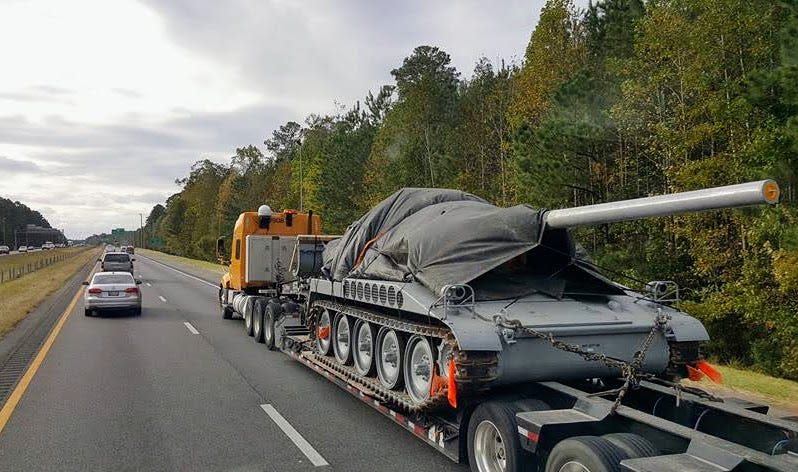
Tactical military vehicles, engines and equipment can be exempted from EPA emission standards entirely, under the national security exemption at 40 CFR 1068.225 and 40 CFR Part 85, Subpart R. There is a companion provision, 40 CFR 1090.605, that exempts the fuel those vehicles burn from federal fuel standards, including fuel for non-exempt equipment that has to run on the same fuel for readiness purposes, which the regulation defines to include training and deployment overseas.
The United States government has written into the Code that when a diesel engine absolutely must start, absolutely must make full power, and absolutely must not shut itself down in the cold or the dust or the salt, the emissions equipment comes off, and the fuel rules come off with it. For decades. It just has not said it about you.

If the derate is safe, exempt nobody. If the derate is dangerous, then the question is not whether the M1083 gets a waiver. The question is why a Freightliner Cascadia hauling ammunition from an Army depot to a seaport does not.
I wrote in the Surface Freight Security Assessment I presented at the NDTA Surface Force Projection meeting alongside ARTRANS and USTRANSCOM leadership, that the Department of War does not own the freight network it depends on. It rents it. On the order of 90% of Defense Department domestic freight moves on commercial carriers, on commercial equipment, under commercial contracts, driven by commercial drivers. The Defense Freight Transportation Services program does not run a fleet. It runs a marketplace.
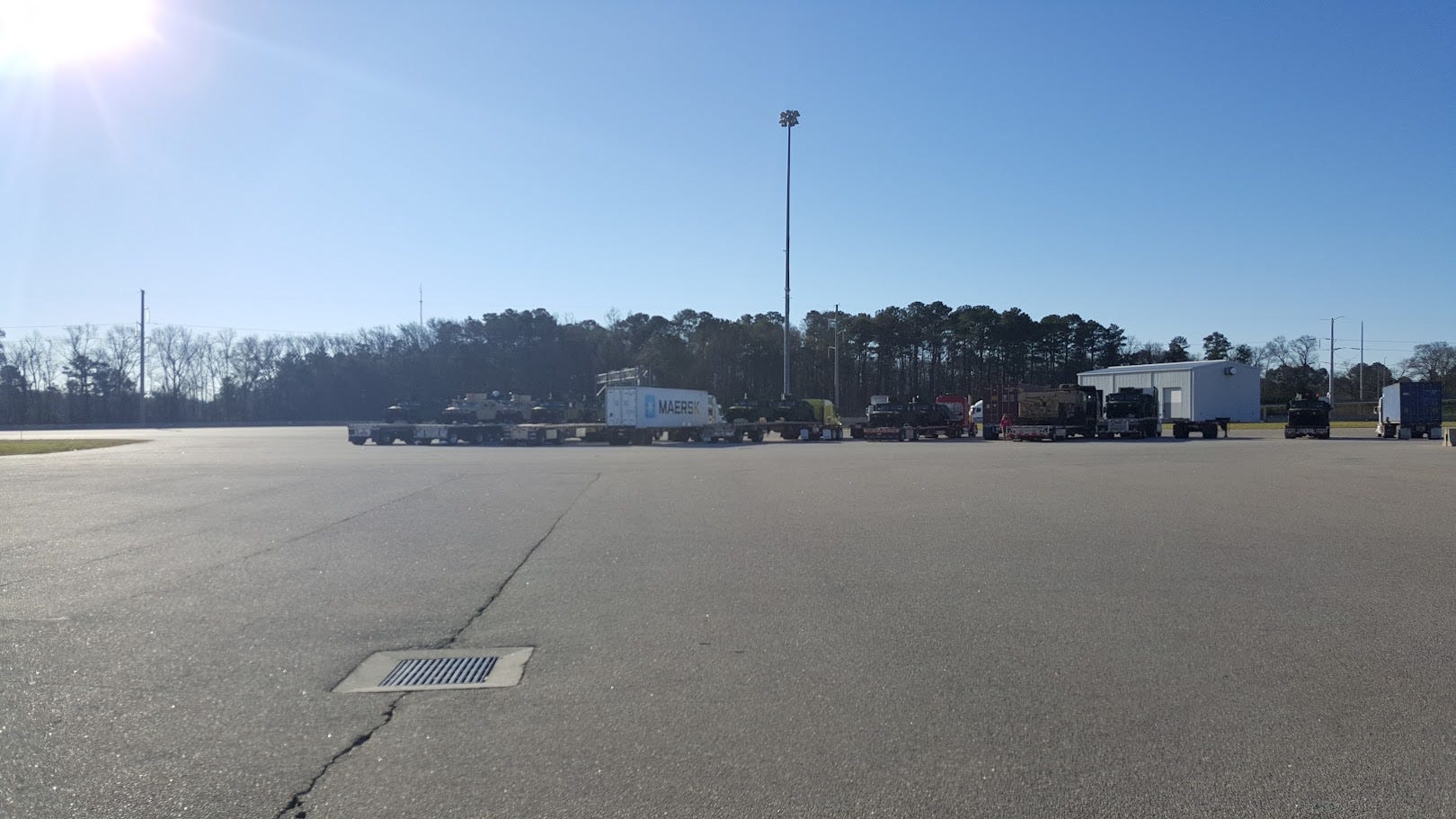
Which means the sealift and airlift the country plans around begins with a small carrier, a used tractor, and a diesel particulate filter with 600,000 miles on it. Deployment does not fail at the port. It fails on the road to the port, at a scale.
The military tactical vehicle sitting on the flatbed is exempt. The tractor pulling the flatbed is not. The tractor will derate. The tractor will drop to 5 mph in an interstate lane during a surge because a $200 sensor decided the urea concentration was wrong.
Under the current inducement rules at 40 CFR 1036.111, an engine must begin derating on a signal indicating that a catalyst is missing, on DEF quality failing the manufacturer’s concentration spec, and on open-circuit faults in the DEF tank level sensor, the DEF pump, the DEF quality sensor, the SCR harness, the NOx sensors, the dosing valve, or the tank heater. Any one of those. Not an emissions exceedance. A sensor. The regulation derates the truck for a broken wire.
That is the part I need people at DOT and at the Department of War to actually absorb. This is not an environmental question that happens to touch freight. This is a readiness question wearing an environmental costume. Secretary Duffy, your agency’s own crash data will tell you what a truck doing 5 mph in a 70 mph lane does. Secretary Hegseth, your movement plans assume commercial capacity that is one urea sensor away from immobilization, on a system whose military twin you exempted in writing. Administrator Barrs, FMCSA writes the out-of-service criteria; nobody has ever asked whether a federally mandated speed derate on a live interstate is a defect.
The debarment reported
Kory Willis has a second problem. Section 306 of the Clean Air Act, codified at 42 U.S.C. 7606, says that no federal agency may contract with any person convicted of an offense under 42 U.S.C. 7413(c) for goods, materials, or services performed at the facility where the violation occurred, if that person owns, leases, or supervises the facility. It is not discretionary. EPA administers it under 2 CFR Part 1532, Subpart J, and the disqualification is automatic by operation of law the moment judgment is entered. The name and the facility go into the governmentwide exclusions system. Willis pleaded guilty under 7413(c)(2)(C).
The prohibition continues until the Administrator certifies that the condition giving rise to the conviction has been corrected. Not until the sentence ends. Not until probation runs. Not until the President signs anything. Reinstatement runs through EPA’s Debarring Official, on a written petition, with the burden on the petitioner.
So a diesel shop convicted of a Clean Air Act tampering offense is, by statute, cut out of federal contract and subcontract work performed at that shop. Government fleets. GSA. Federal grantees. By the ordinary operation of the Federal Acquisition Regulation flowdown, the defense logistics chain.
A pardon extinguishes punishment. It has never been understood to erase the historical fact of a conviction, and Section 306’s trigger is the conviction, not the sentence. Reinstatement under Subpart J is a certification by the Debarring Official that the underlying condition is corrected. So, the nine men pardoned on July 3 may still be sitting in the exclusion system, statutorily disqualified from federal work, because no one at the EPA has certified anything.
Which brings me back to the freight
This is so much more than a diesel story. The tactical vehicle on the flatbed is exempt under 40 CFR 1068.225. The tractor pulling it is not. The commercial carrier moving DoD freight is a small business. The shop that keeps that carrier’s aftertreatment alive is a smaller business. If that shop ever received a Clean Air Act conviction for doing the thing that kept the truck moving, Section 306 would remove it from the federal supply chain by operation of law. The government criminalized the repair, then debarred the repairman, then contracted with the fleet that needed him.
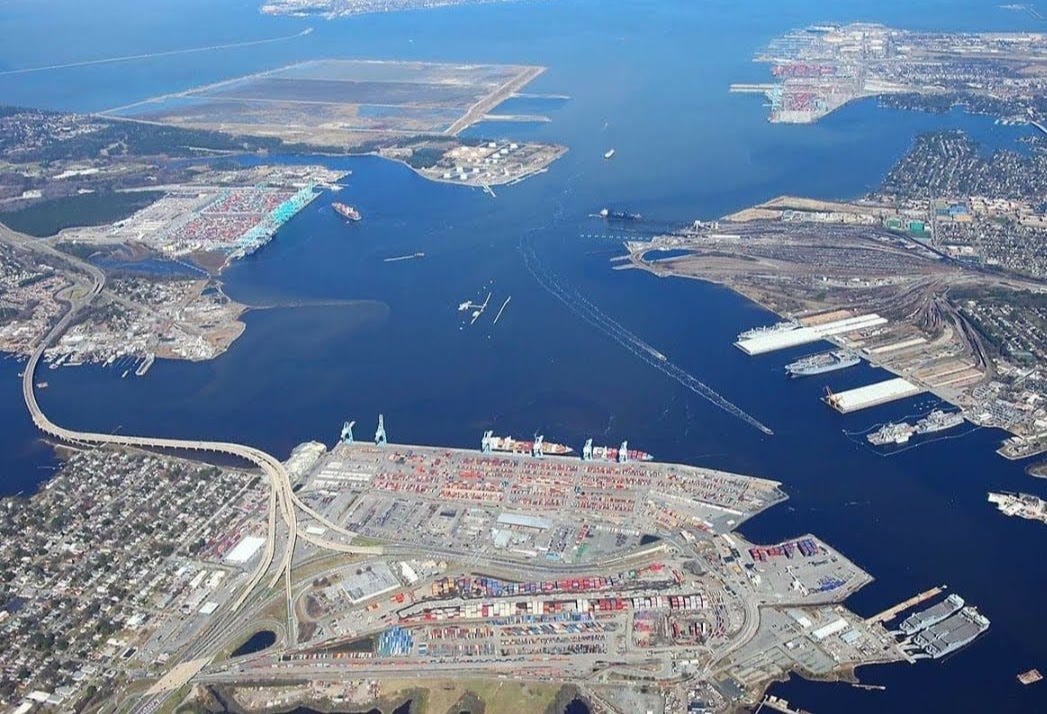
That is not an environmental policy failure. That is a self-inflicted wound in the mobilization base, and it is sitting in the United States Code where anybody could have read it.
Delete. Physically removing the DPF, the EGR cooler and valve, and the SCR, and replacing them with straight pipe and block-off plates.
Tune. The ECU reflash that stops the onboard diagnostics from noticing. This, and not the wrench work, is the defeat device in the eyes of the law. It is what Willis sold. It is what Geouge sold. It is what Achtemeier pleaded to.
Bulletproofing. Hardening the known failure points so the emissions system survives. Better EGR coolers, head studs, oil coolers, sensors. Fully legal. Fully legitimate.
The perversity is that bulletproofing costs more than deleting and doesn’t work near as well. The legal fix competes with an illegal fix that solves the problem better and more cheaply. When a rule creates that spread, you get a black market, and then you get prosecutions of the black market, and then you get pardons of the prosecutions, and you never once fix the thing that made the spread.
EPA’s Air Enforcement Division found in 2020 that roughly 550,000 diesel pickups, about fifteen percent of the certified population, had been deleted over the prior decade. Enforcement never touched a meaningful fraction of those trucks. It touched the shops. That is why mechanics got felonies while the trucks kept rolling.
What it costs, and how I get there
Everybody throws numbers. Start with the government’s own figures. In its December 2022 final rule for EPA 2027, the agency estimated a per-truck technology cost of $4,827 in 2017 dollars for a long-haul combination tractor, and separately estimated a lifetime DEF cost of $3,612 per truck at a three percent discount rate. Adjusted forward: roughly $6,200 and $4,700. Industry projected the all-in figure for a 2027 tractor at $20,000 to $25,000. After the EPA signaled it would pull back the extended-warranty and useful-life provisions, the projections came down to about $8,000 to $15,000 per truck.
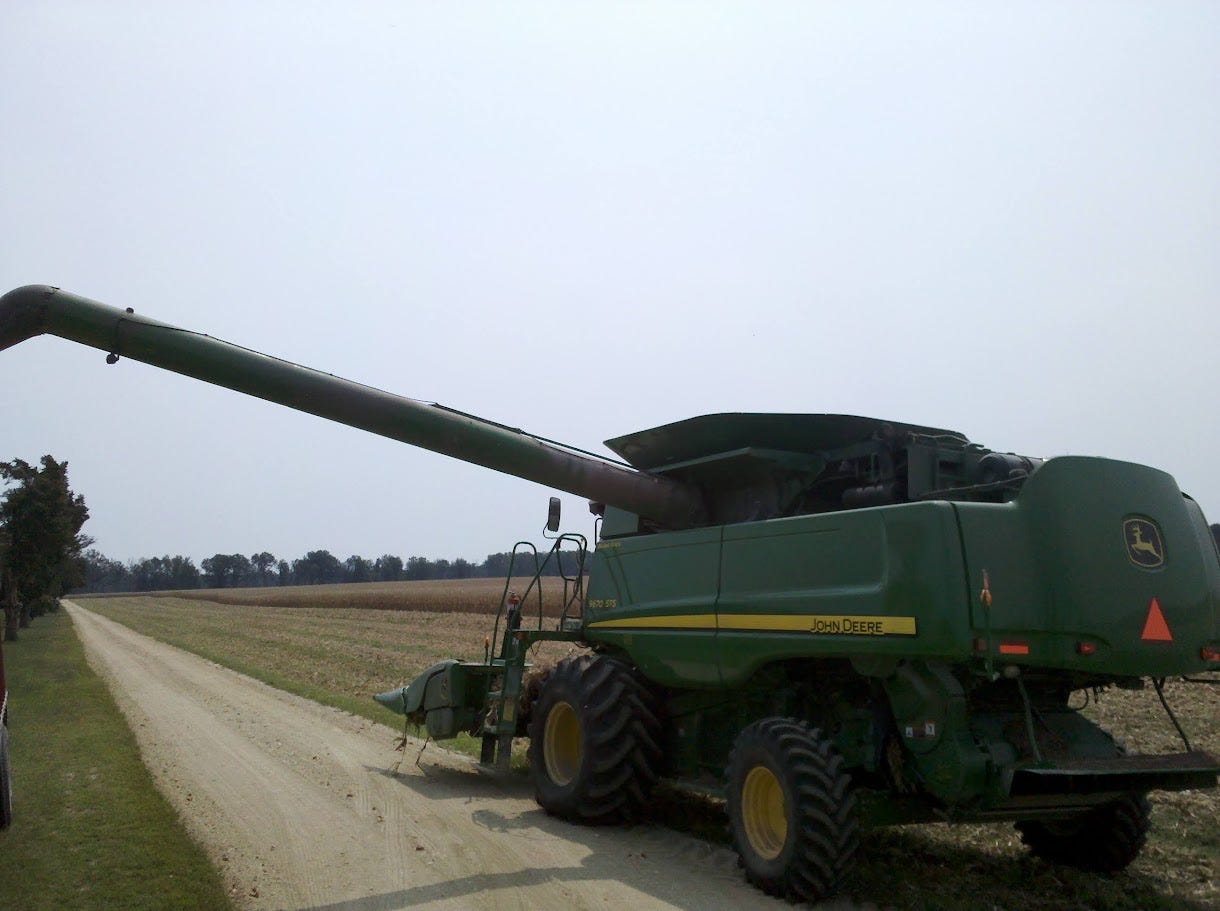
Then, on March 27, 2026, at the White House Great American Agriculture Celebration, EPA removed the DEF sensor requirement for all diesel equipment. The press release cites a number, sourced to the Small Business Administration: $4.4 billion a year saved for farmers and $13.79 billion a year in savings for Americans.
That is EPA and SBA, jointly, on the record, valuing the removal of one sensor requirement at nearly fourteen billion dollars a year. Not the DPF. Not the SCR. Not the EGR. A sensor.
ATRI’s 2025 operational costs report covers 178,091 combination tractors running 14.08 billion miles, which is about 79,000 miles per truck per year, at 19.8 cents per mile in repair and maintenance, so roughly $15,600 a year in R&M on an average tractor.
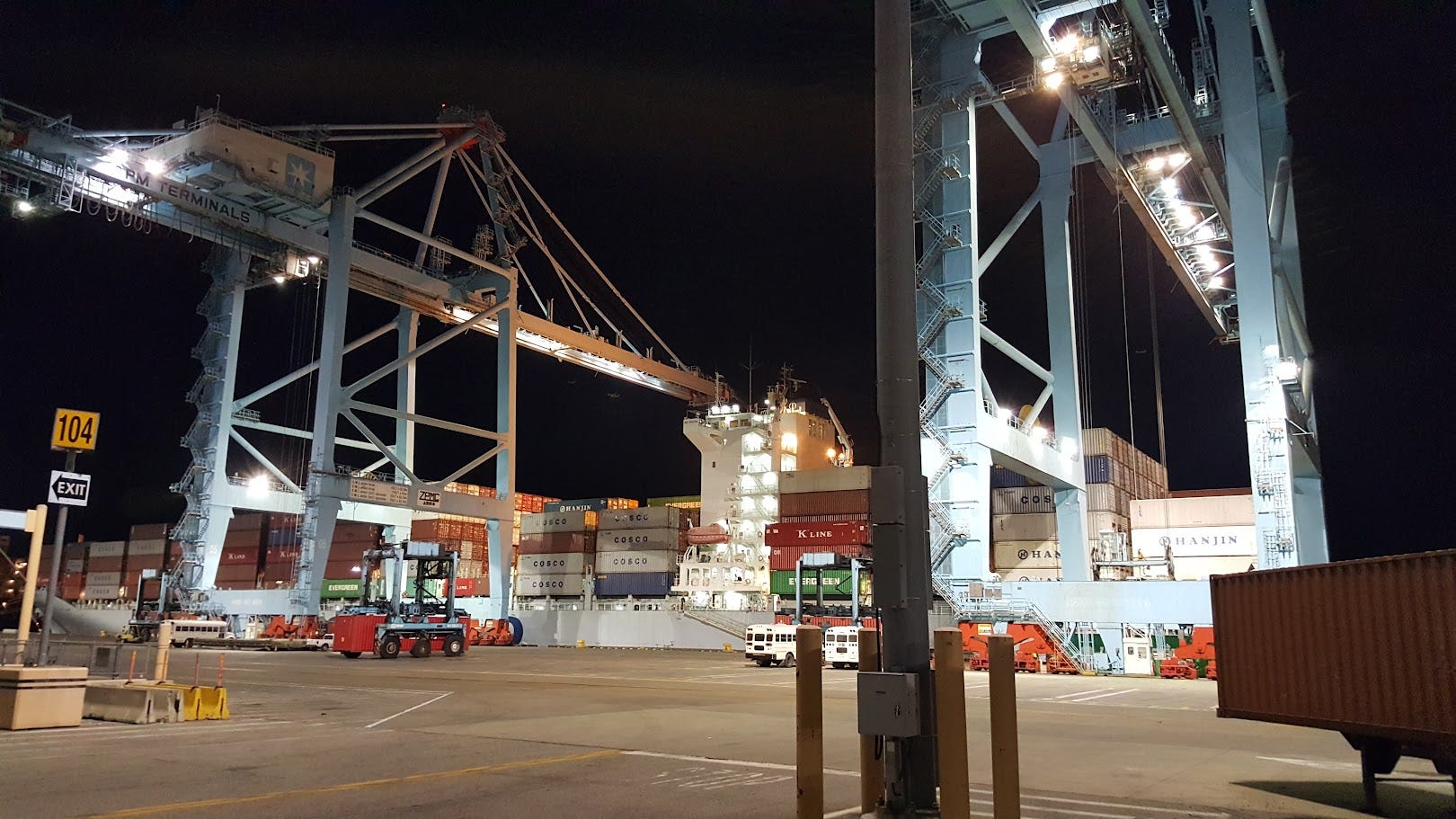
At 6.5 mpg, that truck burns about 12,150 gallons of diesel. DEF consumption runs two to three percent of fuel burn. Call it 2.5 percent, or about 304 gallons. At pump prices, that is a bit over $1,000 a year in urea. Active regeneration carries a fuel penalty in the one to three percent range, depending on the duty cycle. At 1.5 percent, that is another 180 gallons, call it $680.
So before a single part fails, an average over-the-road tractor pays roughly $1,700 a year in consumables that exist only because of the 2007 and 2010 rules. Then add the failures. A DPF alone runs $3,000 to $7,000 on a Class 8 truck, more with labor and sensors. NOx sensors, DEF pumps, dosing valves, tank heaters, EGR coolers. Amortize a single aftertreatment event across a replacement cycle that ATRI now measures at 7.3 years and you clear $2,000 a year without trying, and you have not yet counted a minute of downtime, a missed appointment, a lost load, or a tow.
Nobody publishes a clean aftertreatment line item because OEMs have no incentive to do so, and fleets bury it in R&M. That is not an accident. My own truck is the retail version of this arithmetic. A 2023 RAM with a Cummins. A DPF failure at 68,000 miles required a complete emissions system replacement. The engine underneath it would have outlived me. The truck cost over $65,000 new. And the price of a delete kit for my model year, which I am not buying, went from about $1,800 for 2022 and older to $7,000 for 2023 and newer because manufacturers have been locking down the ECU at EPA’s direction. The 2027 rule, section by section, directs manufacturers to further limit tamper-prone access to electronic pollution controls. Whatever the DOJ does, the window closes in the iron.
The benefit side of the ledger vanished. EPA erased it
Every one of these rules survived cost-benefit review the same way. The agency projected costs in the low billions, then claimed benefits in the tens of billions, and almost all of those benefits came from co-benefits: incidental reductions in fine particulate matter and ozone, monetized as avoided premature deaths. Not the pollutant the rule targeted. The pollutant that happens to fall alongside it. In some rules, co-benefits have accounted for more than ninety-nine percent of the monetized benefit.
In January 2026, EPA published its own position that estimating PM2.5 and ozone co-benefits for regulations aimed at other pollutants is inappropriate because those pollutants already have national ambient standards set at a level the Administrator has judged protective with an adequate margin of safety. Resources for the Future published a rebuttal on January 30. On February 18, 2026, EPA finalized the rescission of the greenhouse gas endangerment finding and the motor vehicle GHG standards at 91 FR 7686. And in the Tier 4 Part 1 docket, Benjamin Zycher of the American Enterprise Institute filed a comment arguing that the $72 billion a year in monetized climate benefits EPA claimed for the 2024 rule is an illusion, and that the actual criteria pollutant reduction, measured against total emissions rather than against the light-vehicle baseline, is somewhere between zero and about 3.8 percent.
If PM2.5 and ozone co-benefits cannot be monetized, then the benefit column of the 2007 DPF rule, the 2010 NOx rule, and the EPA 2027 is a fraction of what was published. The costs do not move. EPA’s own estimate for a 2027 tractor was $4,827 in technology and $3,612 in lifetime DEF, while industry estimates range from $8,000 to $25,000. Those numbers are real; they are paid at the dealership and by the smallest operator in the fleet.
The agency has, in the space of thirteen months, said that the benefits were overstated, that the enforcement was overreach, that the derate is unacceptable, that the sensor was a mistake worth $13.79 billion a year, and that people should be free to fix their own equipment.
It has not said that the mandate was wrong. That is the only sentence left, and it is the only one that matters. Somebody at that July 29 hearing should read EPA’s January 2026 benefits memo into the record and then ask the agency to rerun the 2027 rule’s regulatory impact analysis using its own new methodology.
The strongest case against my case
EPA’s testing says a fully deleted truck emits 310 times the NOx, 1,400 times the non-methane hydrocarbons, 120 times the carbon monoxide and 40 times the particulate matter of a compliant one. Those are not modeled numbers. Those are dynamometer numbers. The 550,000 deleted pickups will emit an estimated 570,000 tons of excess NOx over their lifetimes. EPA calculated that PPEI’s delete tunes sold between 2013 and 2018 alone will cause over 100 million excess pounds of NOx. Mobile sources account for roughly 58 percent of national NOx emissions. NOx makes ozone, ozone puts children in emergency rooms, and the people breathing it in a nonattainment county did not consent to anybody’s tune.
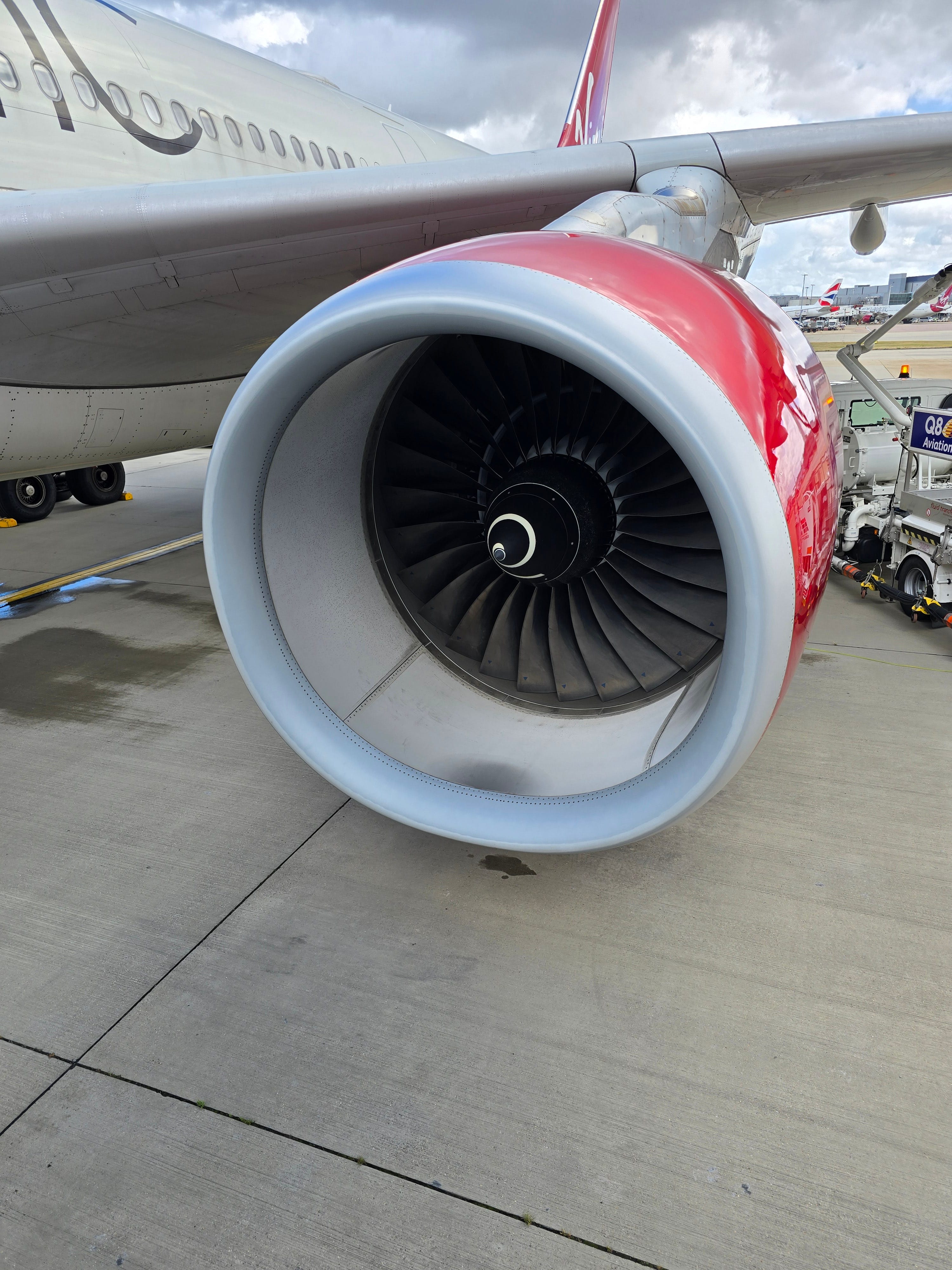
That is a serious argument. It deserves a serious answer, and the serious answer is not that the pollution does not matter. It is that a rule producing 310x deletes at fifteen percent penetration is a failed rule, and it failed for a reason: it made compliance a solvency threat for the smallest operators and then criminalized the only affordable response.
The honest counter to me runs the other way. Reliability studies do not support the internet’s claim that everything fails all the time. Modern aftertreatment on a long-haul duty cycle, kept hot, largely works. The failures cluster where the duty cycle is wrong: low speed, low temperature, high idle. School buses. Ambulances. Plow trucks. Farm equipment. Alaska. The exact vehicles that keep appearing in the criminal cases.
Which is not a defense of the mandate. It is an indictment of a mandate written as though every diesel in America runs I-40 at 63 mph.
In 2023, Burke and colleagues published in Nature what happened to American air while we were prosecuting mechanics. Wildfire smoke has influenced PM2.5 trends in nearly three-quarters of the contiguous states since 2016, eroding roughly twenty-five percent of decades of progress, the equivalent of four years of air quality gains, and more than fifty percent in many western states. In June 2026, a study in Science found the same thing for ozone: surging wildfire emissions have reversed progress toward the ozone standard.
PM2.5 and ozone. Those are precisely the two pollutants EPA monetized as co-benefits to justify every diesel rule since 2007. The agency spent fifteen years and a criminal enforcement program chasing the last marginal increment of NOx out of a truck fleet, and the West burned the gains back out of the sky faster than the trucks could give them up.
That does not make deleting legal, nor does it make 310x acceptable. It means the ledger the whole program was built on has a hole in it the size of a national forest, and nobody in the room on July 29 has to take my word for any of it. It is in Nature. It is in Science. It is in EPA’s own January 2026 memo.
The government already conceded the argument
Derates are dangerous. The government has told us three times, in writing, and in each case, it told only some of us.
First. Emergency vehicles. EPA carved out ambulances and fire apparatus from the inducement scheme years ago, in a direct final rule and in 40 CFR 86.007-11(c), so that an emergency vehicle in the middle of a call would not derate due to a clogged filter. The agency understood, in 2012, that a vehicle losing power on the way to a trauma center was an unacceptable outcome.
Second. In the stationary and nonroad engine proposal now moving, EPA proposes to allow owners to temporarily override performance inducements when the engine is needed to respond to an emergency posing a risk to human life. Fires. Floods. Hurricanes.
Third. Tactical military equipment. The national security exemption, above.
If you are a fifty-two-year-old owner-operator dropping from 65 to 5 mph in the left lane of I-81 outside Roanoke with 44,000 pounds behind you, at night, in the snow and ice, because a DEF quality sensor is reading 21 percent instead of 32.5, then the government’s position, as expressed in binding regulation, is that this is an appropriate incentive to maintain your equipment. That is not an environmental policy. That is a moral judgment about whose death is priced in.
EPA’s stats show that emergency vehicles account for less than 1% of the annual air emissions from the heavy-duty diesel fleet. Less than one percent. The agency still wrote them a special rule, a set of auxiliary emission control device allowances and field modifications, because it understood that a fire truck losing power at a structure fire was bad news.
EPA has conceded in a rulemaking that the emissions stakes for this class of vehicle round to nothing and the safety stakes do not. It reached exactly the right conclusion for the ambulance. It has never explained why the same reasoning stops at the ambulance.
The absence of the body is not the vindication of the rule. It is the artifact of a carve-out that everybody else was denied.
Illegal is still illegal
Nothing that happened in January, in June, or on July 3 repealed one word of the Clean Air Act.
The Blanche memo is prosecutorial discretion. It is a policy. It can be reversed by the next Deputy Attorney General with a one-page memo on a Tuesday, just as this one arrived. The reasoning underneath it, that an onboard diagnostic system may not be a monitoring device “required to be maintained” under 42 U.S.C. 7413(c)(2)(C), is a defense theory floated in the Ninth Circuit that the Ninth Circuit has not ruled on. EPA’s own career attorneys wrote an internal memo disagreeing with it. That memo still exists.
Civil liability never went anywhere. $45,268 per tampered vehicle or engine. $4,527 per defeat device sold. Per-day penalties for recordkeeping. The Freedom to Fix memorandum directs EPA to consider deprioritizing civil tampering enforcement against people restoring their own vehicle in good faith. Consider. Deprioritizing. Good faith. Restoring to the original configuration, which is the opposite of a delete.
EPA’s November 2020 tampering policy explicitly carves out onboard diagnostic repairs from the reasonable-basis safe harbor, meaning conduct affecting an OBD system may be enforced regardless of its emissions effect. As far as anyone can tell, nobody has revoked that.
Consent decrees are untouchable. Every shop operating under one, including PPEI, is bound today.
This is decriminalization, not legalization, and we have run this movie before with marijuana. The conduct remains unlawful. The federal posture becomes a mood. Businesses cannot capitalize on a mood. Banks will not lend against one. Insurers will not underwrite one. A plaintiff’s lawyer standing in front of a jury in a wrongful death case does not care what the Deputy Attorney General thinks. He cares that your tractor was illegally modified, and he will put that in front of twelve people who already do not like trucks.
Meanwhile, California has not moved an inch. CARB’s enforcement apparatus operates under its own authority and budget and does not consult the DOJ's mood. Nine men got their names back. The statute that took them is untouched, loaded, and sitting on the shelf.
Permission
Underneath all of this, I grew up around farm equipment, and I have spent more than two decades behind the wheel of a truck. In both of those worlds, a machine you paid for is a machine you fix. Not a machine you ask about. You buy it, you pay tax on the purchase, you pay tax on the fuel, you pay a twelve percent federal excise tax on top of the sticker if it is a heavy truck, you pay to register it, you pay to insure it, you pay to inspect it, and at the end of all of that, it is supposed to be yours.
Except it isn’t, and everybody in this industry knows it isn’t; we all just got used to it. Troy Lake is 65 years old. He is a diesel technician. He spent seven months in a federal prison and turned 65 inside it, and the Bureau of Prisons put him to work in the prison diesel shop, fixing the same faults that put him there. Not for hurting anybody. Not for stealing. For exhaust.
I keep turning that over. A man went to federal prison over exhaust pipes. The same government that sent him there decided, fourteen months later, that the conduct was not worth prosecuting, that the derate was unacceptable, that removing a single sensor requirement was worth almost fourteen billion dollars a year, and that Americans should have the freedom to fix their own machines. Every one of those conclusions was available to them in 2018. None of them required a mechanic to do a day in Florence.
This country started because of a tax on tea. It is worth thinking about how far the distance is between that and a nation where a citizen wonders whether he is permitted to modify the exhaust on a truck he owns outright. We ask permission to hunt. We ask permission to fish. We ask permission to build on our own land, to run a business out of our own garage, to repair our own tractor with our own hands. Somewhere in there, “the government may not do this to you” quietly turned into “you may do this if the government lets you.”
I understand the answer. Your exhaust does not stay in your driveway. Air is shared, and shared things get rules. The Clean Air Act gave us ultra-low-sulfur diesel. It cut particulate and NOx by 90% before anybody bolted a filter to anything, and it did so by making engines better rather than by making them fragile. The government had to have more.
So the objection is not to the existence of a rule. The objection is to a rule that stopped being about air and became about its own compliance. A truck that derates over a broken wire is not emitting anything. It is sitting on the shoulder. The onboard diagnostic system was never a pollution control. It was a supervision system, and the federal crime that put Troy Lake in prison was tampering with the supervision, not with the pollution.
That’s the whole thing. We did not criminalize dirty air. We criminalized not being watched. A free republic can regulate emissions. It should. What it cannot do, and stay what it says it is, is build a machine that strands a working man on an interstate to enforce a paperwork condition, prosecute the person who unstrands him, then pardon that person eight years later without repealing a word of the law that made him a felon, and call the whole cycle governance.
Wade LaLone thanked God and the President. I do not begrudge him one second of it. But nobody should have to be grateful for the return of something that was never supposed to be taken.
What Washington owes
The federal government mandated this equipment on every diesel sold in America. It collected the compliance cost from every buyer through the sticker, the excise tax charged on top of the sticker, the DEF, the regen fuel, and the repairs, and passed the whole stack down the supply chain into the price of a pallet of lettuce.
It is now walking away from enforcing that mandate while leaving the hardware, the failure modes and the repair bills exactly where they were.
We know how this government changes what people drive. It writes checks. The federal EV credit pays up to $7,500 per vehicle. Billions in direct subsidy, on purpose, for a powertrain Washington preferred. Set aside what you think of EVs. The precedent is the point. When the government wants a different outcome from the fleet, it subsidizes the change. It does not imprison the mechanic.
So apply the same logic, and here is what I am asking for, in order of how much I believe in it.
One. Kill the derate outright, for every engine, in use and new. EPA’s July 9 proposal replaces derates with notifications for newly manufactured engines and says it is “considering” a guidance path for in-use engines. Considering is not a plan. There are millions of trucks on the road today with the old inducement logic in the ECU. Order the fix, fund the flash, and set a deadline.
Two. Appropriate the money. The pardons made nobody whole. Knote v. United States, decided in 1877, settled that a pardon confers no right to a refund of a fine already paid into the Treasury, because money does not leave the Treasury without a congressional appropriation and a pardon is not an appropriation. The Diesel Truck Liberation Act, as filed, vacates sentences and expunges records and appropriates nothing. Willis paid $3.1 million. Every dollar of it stays paid, while the government that took it calls the taking persecution. Congress can fix that in one sentence. It has not.
Three. Subsidize the repair. If the equipment matters, help people keep it working. A federal aftertreatment repair and bulletproofing credit for owner-operators and small fleets is cheaper than the EV credit, cheaper than the enforcement program, and it points at the actual problem. In Troy Lake’s case, the court routed $12,500 to a Colorado program that repairs emissions systems for low-income drivers. That instinct was right. The number needed six more zeroes and a line in an appropriations bill, not a restitution line in a criminal judgment.
Four. Cut the consent decrees loose. Congress can direct DOJ to move to modify or terminate consent decrees premised on a criminal enforcement theory the department has abandoned. If it will not prosecute the conduct, it should not issue an injunction against it.
Five. Run the Section 610 review. The Regulatory Flexibility Act requires an agency to periodically review rules that have a significant economic impact on a substantial number of small entities and to consider whether to amend or rescind them. SBA’s Office of Advocacy exists to force that question. Advocacy has already flagged the Tier 4 Part 1 proposal for small business comment. It should be conducting a full Section 610 review of the 2007 particulate rule, the 2010 NOx rule, the 2023 heavy-duty rule and nonroad Tier 4 Final, and it should be doing so using the aftertreatment warranty data EPA collected in February. This is a statutory mechanism that exists, has not been invoked, and requires no act of Congress.
Six. Fix the parts pipeline. An aftermarket manufacturer currently spends on the order of $18,000 to $25,000 and waits months for California certification to sell a compliant part in all 50 states, because CARB’s process was the only one the EPA recognized. The Freedom to Fix memorandum called it by name. EPA then recognized SEMA’s SC-E program as an alternative certification authority. Good. Now make it real, publish the timeline and the fee, and stop letting Sacramento decide what a legal exhaust component is in Louisiana. The people building the durable, compliant, bulletproofed parts that would actually solve this problem are the ones the certification bottleneck has been starving.
Seven. Answer the national security question. Somebody with subpoena power should ask, why 40 CFR 1068.225 exempts the tactical vehicle and not the commercial tractor that carries it. The Surface Deployment and Distribution Command should be asked what happens to a port surge when three percent of the contracted commercial fleet derates in the same week. Generals asked me for a surface transportation assessment for civilian fleets operating to haul Department of War freight, I’m telling you it’s one of the biggest threats our US Surface Transportation command faces. .
Nineteen days
July 29 is doing double duty, and I do not think that is an accident. It is the thirtieth day after the President signed the Freedom to Fix memorandum on June 29, which is the deadline he gave EPA to issue guidance on what a citizen may lawfully do to his own emissions system. It is also, to the day, the opening of EPA’s public hearing on killing the derate.
EPA’s proposal to kill the derate is open. Docket EPA-HQ-OAR-2026-0728. The virtual public hearing runs on Wednesday, July 29, starting at 9 a.m. Eastern, and on Thursday, July 30, at 10 a.m., with a possible third session on July 31. To testify, you must register by emailing EPA-HD-MobileSource-Hearings@epa.gov by July 22. Written comments close August 29.
Nineteen days to register. Every fleet manager, every owner-operator, every rural fire chief, every farmer who has watched a tractor drop to a crawl in the middle of a harvest window has standing to speak into that record, and the record is the only thing that survives an administration.
The plea
President Trump: You pardoned nine men and told the country you did it because they were arrested for fixing their car. Then finish it. A pardon is a mercy. It is not a policy. Ask Congress for the statute. Ask the DOJ to release the consent decrees. Ask EPA to flash the in-use fleet, not consider it.
Administrator Zeldin: Your agency has now said, in its own press releases, that DEF failures are a nationwide problem and that removing one sensor requirement saves nearly fourteen billion dollars a year. Then tell us what the DPF costs. Tell us what the EGR costs. Publish the aftertreatment line item that ATRI cannot get and the OEMs will not give. You have the warranty data. You demanded it in February and eleven of fourteen manufacturers handed it over. Release it.
Secretary Duffy: A federally mandated speed derate on a live interstate is a highway safety issue that belongs to you, not to EPA. Say so.
Secretary Hegseth: The freight that moves your force is hauled on equipment your own regulations exempt from. Fix the asymmetry or fund the fleet.
Administrator Barrs: FMCSA sets the out-of-service criteria and the crash file. Nobody has asked whether a mandated derate is a vehicle defect. Ask.
To the Sierra Club, and to everyone who read the first paragraph of this and decided I am carrying water for polluters: I am not asking you to accept 310x NOx. I am telling you that you already have it, at fifteen percent of the light-duty diesel fleet, because your rule made the crime cheaper than compliance. You did not lose to the tuners. You lost to math. If you want the emissions back, you'll have to pay for the repair, just as you did for the EVs.
Eleven pardons ended eleven ordeals. Kory Willis is still enjoined. The Clean Air Act is still loaded. The trucks are still deleted. The systems are still failing. On July 29, for two days, in a Zoom room, the government will take testimony on whether a truck should still be allowed to stop itself in the middle of the road.
Show up.
Chronology: how we got here
1970. Congress enacts the tampering prohibition and, in the same law, Section 306, which automatically disqualifies anyone criminally convicted under the Act from federal contracts at the facility that violated the Act. Pub. L. 91-604.
1990. Congress broadens Section 306 to reach the whole of 42 U.S.C. 7413(c), and lets EPA extend the disqualification to a convicted person’s other facilities. Pub. L. 101-549, sec. 705.
October 22, 1998. DOJ and EPA settle with seven heavy-duty engine manufacturers over software that shut off emissions controls during highway cruise. More than a billion dollars. The first industrial-scale defeat device scandal in American diesel belongs to the engine makers.
2002 to 2004. Exhaust gas recirculation arrives on highway engines.
2006. Ultra-low sulfur diesel. Fuel sulfur drops from 500 parts per million to 15.
2007. The particulate standard. The DPF.
2010. The NOx standard. In practice, selective catalytic reduction and a tank of urea.
August 7, 2012. EPA’s direct final rule for emergency vehicles takes effect, freeing ambulances and fire apparatus from the derate.
2015. EPA issues a notice of violation to Matt Geouge of Spartan Diesel Technologies. Obama administration.
2017. EPA fines Geouge roughly $4 million. He sells the shop. Trump administration.
November 2, 2018. Roughly thirty agents enter Diesel Freak in Gaylord, Michigan, according to Ryan LaLone. Trump administration.
2018. EPA raids Troy Lake’s shop in Wyoming. Trump administration.
2019. EPA launches the National Compliance Initiative, Stopping Aftermarket Defeat Devices for Vehicles and Engines. Trump administration.
Fall 2019. PPEI halts sales of the specified delete devices following EPA enforcement activity. Trump administration.
November 2020. EPA’s Air Enforcement Division reports that roughly 550,000 diesel pickups, about fifteen percent of the certified population, have been deleted. EPA’s tampering policy of the same period carves out onboard diagnostic repairs from the reasonable-basis safe harbor. Trump administration.
December 2021. Geouge signs a plea agreement.
March 15, 2022. PPEI and Kory Willis plead guilty in the Eastern District of California and settle a parallel civil case in the Western District of Louisiana. Three point one million dollars and a consent decree.
June 2022. About thirty armed EPA agents raid Matanuska Diesel in Wasilla, Alaska, per Sen. Dan Sullivan. Biden administration.
June 23, 2022. Chief Judge Reidinger sentences Geouge to a year and a day, a $1.3 million civil penalty to EPA and $1.2 million in restitution to the IRS. Co-defendants John Slagel, Joshua Davis and Spade Bailly get probation and fines of $150,000, $50,000 and $10,000.
2023. United States v. Diesel Freak LLC et al., case 1:23-CR-48, Western District of Michigan. Eleven individuals plus companies.
August 2023. GDP Tuning, Gorilla Performance and Barry Pierce plead guilty in Idaho. One million dollars.
Fiscal 2020 through 2023. EPA finalizes 172 civil defeat-device cases, imposing $55.5 million in penalties. Civil judgments and consent decrees are constitutionally beyond the pardon power.
June 2024. Troy Lake pleads guilty.
November 2024. John and Joshua Owens are indicted in the Eastern District of Washington.
December 2024. Lake is sentenced to a year and a day. On December 17, Judge Mendez sentences Willis to ten months of home confinement within three years of probation, with a $1.55 million criminal fine paid jointly with PPEI, and places PPEI on five years of probation, subject to the consent decree.
February 2025. Lake reports to FCI Florence. The Bureau of Prisons assigns him to the prison diesel shop.
August 11 and 12, 2025. EPA issues revised SCR inducement guidance. Zeldin announces it at the Iowa State Fair. SBA estimates $727 million in annual savings for family farms.
September 2025. Sen. Cynthia Lummis writes to the President about Lake.
October 2025. Lummis introduces the Diesel Truck Liberation Act.
November 2025. Trump pardons Troy Lake.
January 2026. EPA states that monetizing PM2.5 and ozone co-benefits for rules targeting other pollutants is inappropriate. Resources for the Future rebuts it on January 30.
January 21, 2026. DOJ announces on X that it will no longer pursue criminal Clean Air Act charges based on tampering with onboard diagnostic devices. The Blanche memo reaches more than a dozen pending cases and roughly twenty open investigations.
February 2, 2026. EPA affirms farmers’ right to repair their own nonroad equipment.
February 3, 2026. EPA demands DEF failure data from manufacturers of more than 80% of DEF system products under Section 208(a) of the Clean Air Act. Eleven of fourteen comply.
February 18, 2026. EPA finalizes the rescission of the greenhouse gas endangerment finding and the motor vehicle GHG standards. 91 FR 7686.
March 26 and 27, 2026. EPA removes the DEF sensor requirement for all diesel equipment. SBA puts the savings at $4.4 billion a year for farmers and $13.79 billion a year for Americans.
May 14 and 18, 2026. EPA proposes Part 1 of its Tier 4 reconsideration for light and medium duty vehicles, pushing the phase-in from model year 2027 to 2029. Comments close July 6. Part 2, which will address the standards themselves, has not been proposed.
June 29, 2026. The President signs the memorandum, Lowering the Cost of Living by Promoting the Freedom to Fix, giving EPA thirty days to issue guidance. Thirty days is July 29.
July 3, 2026. Eleven pardons. Nine are Clean Air Act cases. Two are not.
July 8 and 9, 2026. EPA signs and announces the proposed rule that would replace SCR derates with visible and audible notifications on new engines. Docket EPA-HQ-OAR-2026-0728. Hearing July 29 and 30. Registration closes July 22. Comments close August 29.
Still outstanding. The Clean Air Act. Civil penalties of $45,268 per tampered engine and $4,527 per defeat device. Every consent decree. Every Section 306 disqualification. CARB. And the Ninth Circuit, which has never ruled on the theory the Department of Justice folded to.
Sources and documents
- EPA, Proposed Rule: Amendments and Nonconformance Penalties for MY2027 and Later Heavy-Duty Highway Engines and Amendments to Inducement Provisions for SCR-Equipped Diesel Engines (signed July 8, 2026): https://www.epa.gov/regulations-emissions-vehicles-and-engines/proposed-rule-amendments-and-nonconformance-penalties
- 42 U.S.C. 7606, Clean Air Act Section 306: https://uscode.house.gov/view.xhtml?req=(title:42%20section:7606%20edition:prelim)
- 2 CFR Part 1532, Subpart J, statutory disqualification and reinstatement: https://www.ecfr.gov/current/title-2/subtitle-B/chapter-XV/part-1532/subpart-J
- EPA, Suspension and Debarment Program: https://www.epa.gov/grants/suspension-and-debarment-program
- Burke et al., The contribution of wildfire to PM2.5 trends in the USA, Nature (2023): https://www.nature.com/articles/s41586-023-06522-6
- Fires reverse progress toward ozone air quality standards in the United States, Science (2026): https://www.science.org/doi/10.1126/science.aed3197
- Resources for the Future, rebuttal to EPA’s 2026 position on monetizing benefits: https://www.rff.org/publications/reports/how-the-us-environmental-protection-agency-got-it-wrong-about-monetizing-benefits-of-air-pollution-regulations/
- EPA, Revision of Tier 4 Criteria Pollutant Standards, Part 1: https://www.epa.gov/regulations-emissions-vehicles-and-engines/revision-tier-4-criteria-pollutant-standards-part-1
- DOJ W.D.N.C., sentencing of Geouge and co-defendants Slagel, Davis and Bailly: https://www.justice.gov/usao-wdnc/pr/hendersonville-man-sentenced-prison-violating-clean-air-act-selling-thousands-illegal
- Cowboy State Daily, Troy Lake, the Diesel Freedom Coalition, and the representation of five of the first six: https://cowboystatedaily.com/2026/07/06/wyomings-famous-diesel-mechanic-pushes-for-and-wins-pardons-for-others/
- EPA, Public Hearing and Comment page, Docket EPA-HQ-OAR-2026-0728: https://www.epa.gov/regulations-emissions-vehicles-and-engines/public-hearing-and-public-comments-amendments-and
- EPA, Diesel Exhaust Fluid landing page and DEF action timeline: https://www.epa.gov/regulations-emissions-vehicles-and-engines/diesel-exhaust-fluid
- EPA press release, DEF sensor requirement removed, SBA savings figures (March 27, 2026): https://www.epa.gov/newsreleases/trump-administration-announces-latest-action-address-diesel-exhaust-fluid-def-system
- EPA press release, Freedom to Fix implementation and SEMA certification recognition: https://www.epa.gov/newsreleases/epa-delivers-presidents-freedom-fix-memorandum-vehicles-and-equipment
- White House, Presidential Memorandum, “Lowering the Cost of Living by Promoting the Freedom to Fix” (June 29, 2026): https://www.whitehouse.gov/presidential-actions/2026/06/lowering-the-cost-of-living-by-promoting-the-freedom-to-fix/
- Arnold & Porter, analysis of the memorandum and the surviving November 2020 tampering policy OBD carve-out: https://www.arnoldporter.com/en/perspectives/blogs/environmental-edge/2026/07/new-presidential-memorandum-and-epa-guidance-on-vehicle-tampering
- DOJ ENRD case page, United States v. Power Performance Enterprises, Inc., et al.: https://www.justice.gov/enrd/case/united-states-v-power-performance-enterprises-inc-et-al
- EPA, PPEI and Kory Blaine Willis Clean Air Act settlement and consent decree: https://www.epa.gov/enforcement/power-performance-enterprises-inc-and-kory-blaine-willis-clean-air-act-settlement
- CBS News, DOJ order to drop defeat device criminal cases (January 2026): https://www.cbsnews.com/news/justice-department-auto-emissions-cheating-cases/
- CBS News, pardon announcement and confirmation of eleven names: https://www.cbsnews.com/news/trump-announces-pardons-pollution-violators-fixing-their-car/
- Fox News, pardon list and Sen. Sullivan statement on Mac Spurlock and Matanuska Diesel: https://www.foxnews.com/politics/trump-pardons-9-people-convicted-tampering-emission-controls-diesel-engines
- CNN, pardons including Achtemeier, Clancy and the LaLones: https://www.cnn.com/2026/07/03/politics/trump-pardons-emissions-pollution
- 40 CFR 1036.111, inducement triggering conditions: https://www.ecfr.gov/current/title-40/chapter-I/subchapter-U/part-1036/subpart-B/section-1036.111
- 40 CFR 1090.605, exemptions for national security and military use: https://www.ecfr.gov/current/title-40/chapter-I/subchapter-U/part-1090/subpart-G/section-1090.605
- DieselNet, US nonroad diesel standards and Tier 4 exemption categories: https://dieselnet.com/standards/us/nonroad.php
- ATRI, An Analysis of the Operational Costs of Trucking, 2025 Update: https://truckingresearch.org/2025/07/an-analysis-of-the-operational-costs-of-trucking-2025-update/
- Overdrive, EPA’s own 2027 per-truck cost estimates from the December 2022 final rule: https://www.overdriveonline.com/equipment/article/15678767/how-high-will-class-8-truck-prices-go-with-epas-2027-regs
- CCJ, EPA holding the 2027 timeline: https://www.ccjdigital.com/regulations/emissions/article/15771994/epa-rejects-trucking-industry-plea-will-keep-2027-nox-rule-timeline
- SBA, DEF guidance and family farm savings estimate: https://www.sba.gov/article/2025/08/12/sba-epa-announce-new-guidance-ease-diesel-exhaust-mandates-small-businesses
- SBA and USDA MOU citing the $4.4 billion DEF sensor figure (July 2, 2026): https://www.sba.gov/article/2026/07/02/sba-usda-sign-mou-combat-lawfare-against-farmers-ranchers-small-businesses
This is excellent, and I think the article I submitted to the Guardian would add an intriguing element as well. I think it will be in the fall release, but essentially it’s looking at the fire occurrences that have increased since this program began, along with the skyrocketing total losses, due to heat. After sitting down with a family member who worked for years as an engineer for an American automaker, with first hand knowledge of the systems, I have gained knowledge that there is a known issue, what I can’t find YET is why it hasn’t been corrected. I think the costs associated from the additional risk, to life, property, and environment layered with your very clear and convincing stance on the overall program, should demand that the government holistically look at its impact. It’s a failure.
I was part of ATA TAG back in the Clinton years when Carol Browner’s EPA told us in meetings with them ‘they didn’t care how much it cost the industry’ to comply with their mandates. Not much has changed, even though we expressed ultimately trucking companies pass this cost along to consumers and the general public.