

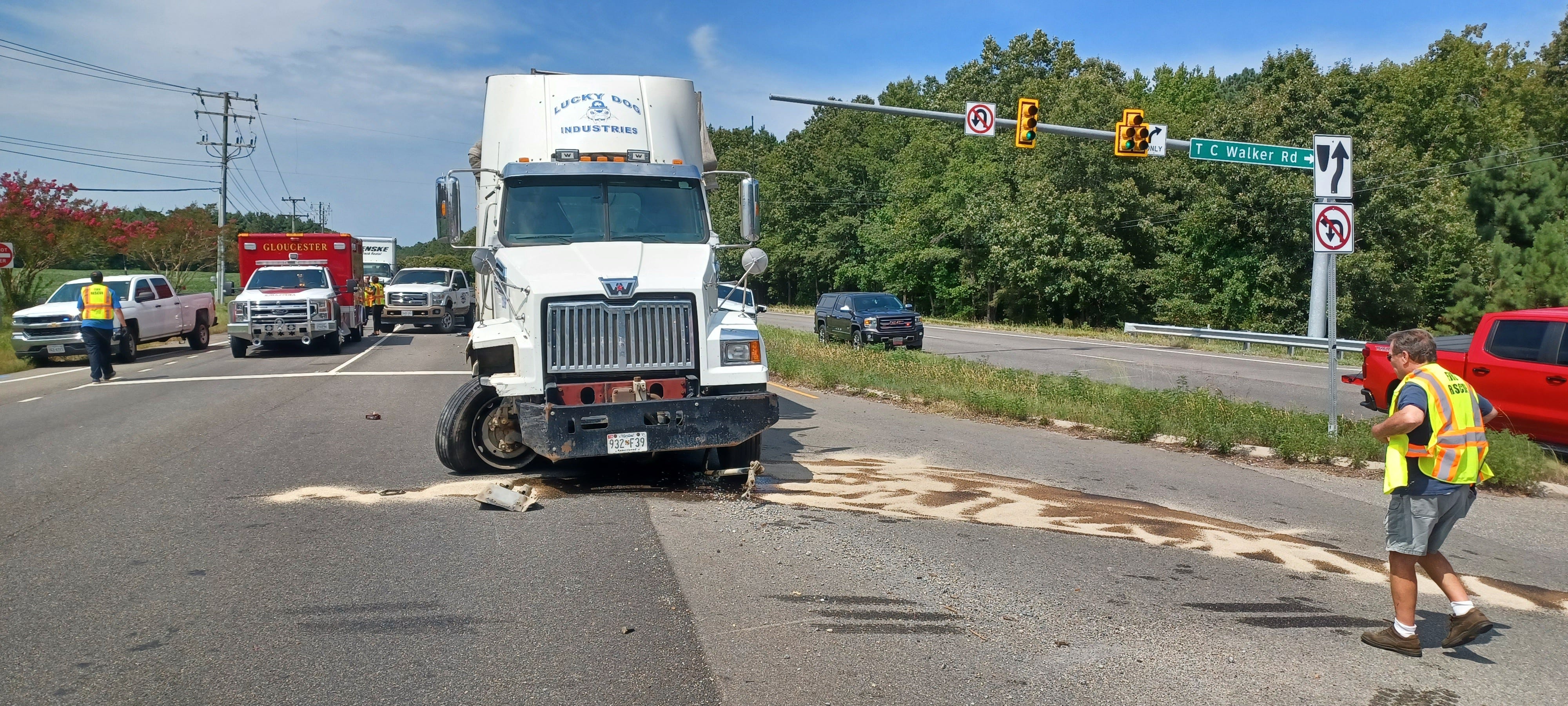
Fifteen seconds before Ashley Chapman died, she made the most ordinary decision a driver makes. She was southbound on Route 17 in Gloucester, Virginia, in the right lane, and she moved her Chevrolet Caprice into the left lane ahead of a white GMC pickup. The pickup then made his decision and merged right to fill the space she left. Two routine lane changes, the kind every one of us makes a dozen times a day without a thought, and they swapped the fate of two strangers. The GMC driver, who had been running directly ahead of a loaded trash truck, was now out of its path. Ashley Chapman was now in it. She rolled up to a red signal and stopped behind a line of vehicles, one of them a Ford pickup pulling a gooseneck flatbed, and waited for the light like everybody else at that intersection.
Behind her, Richard Wright was asleep with 80k lbs. I know that because I watched him on the forward-facing and driver-facing cameras mounted in the cab of the tractor-trailer he was driving for Lucky Dog Industries under a hauling contract with Republic. I watched his entire day behind the wheel, start to finish, and what you find out pretty quickly watching that footage is that he was fatigued long before Route 17. The head drops come early, and they come often. In the final approach to that signal, he’s nodding off at the wheel of roughly 80,000 pounds, and the truck’s dashcam system didn’t register a forward collision warning until he’s approximately a foot from the back of Chapman’s car. It never warned him he’d fallen asleep at all. When the alert finally hits, he wakes and jerks the wheel left, and his right front bumper catches the driver’s side rear of the Caprice. The impact rotates her car sideways and drives it into the back of the gooseneck flatbed stopped ahead of her, driver’s door first. The people in the Ford were minding their own business, waiting for a green light. So was she.

That is what the last fifteen seconds look like. The reason I keep coming back to this case, and to the dozens like it I’ve worked, is what the last fifteen seconds never show you: the years of decisions stacked underneath them. A fatal commercial crash almost never has one storyteller. It has a chain of them, and the chain is usually visible in the records long before anyone bleeds or dies.
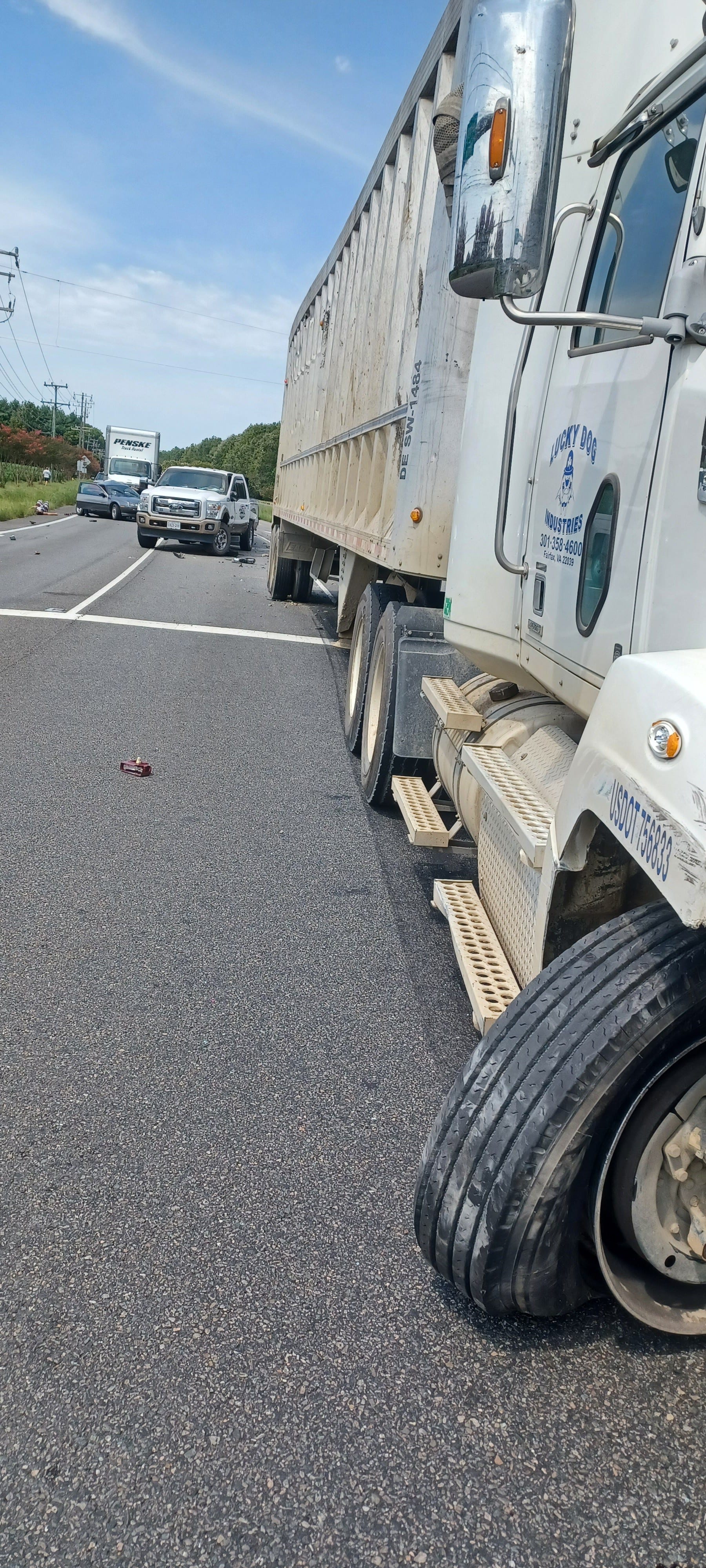
The science of what happened in Wright’s cab is settled, and unforgiving. A fatigued driver doesn’t drift into sleep the way you do on a couch. He drops into microsleeps, involuntary lapses lasting four or five seconds, and at highway speed a four-to-five-second microsleep carries a vehicle the length of a football field with nobody at the controls. The National Safety Council and NHTSA both publish that figure, and the driver-facing footage in this case is a live demonstration of it. The scale of the problem is bigger than the crash reports admit. Police-reported data attributes under 2% of fatal crashes to drowsiness, while the AAA Foundation for Traffic Safety, using in-depth crash investigation data, estimated in 2024 that 17.6% of fatal crashes from 2017 through 2021 involved a drowsy driver, roughly 30,000 deaths over five years and about ten times the reported number. The gap between those figures exists because sleep leaves no skid marks and no blood alcohol content, and unless there’s a camera in the cab, a dead or shaken driver rarely volunteers it. In this case, there was a camera in the cab. What it usually takes an expert weeks to infer from ECM data and crash profiles, I watched in real time.
Do I blame Richard Wright? Sure. He got behind the wheel tired, kept driving tired, and a professional driver’s first obligation is to refuse the trip his body can’t safely make. That answer satisfies exactly nobody who understands how his day was built, and the chain runs a long way above his seat. Lucky Dog ran short-haul operations, which put it inside the exception at 49 CFR 395.1(e), the carve-out covering the sizable share of the industry, by my estimate 30 to 40% of it, that never installs an ELD because drivers stay within the air-mile radius and the carrier keeps simple time records showing start time, end time, and total hours. No electronic log means no independent record of how hard a man is actually running, and the time card says whatever the time card says. Waste hauling then adds a squeeze you won’t find in general freight. Landfills and municipal disposal facilities keep banker’s hours, open 7 to 4 or 8 to 5, five or five and a half days a week, so every load has to move inside that window, or it doesn’t move at all. Wright, like most municipal waste drivers, was paid by the load. The industry term for that structure is piece-rate compensation, and its effect on a driver is basic math: income, payables, and budget: every hour the gate is open is an hour you’re either turning a load or losing money, so you run as fast and as hard and as heavy as the day allows, five days a week, and fatigue is the tax you pay. Three pressures, one outcome. The pay system rewards speed, the facility hours compress the workday, and the regulatory exception removes the instrument that would have documented what the first two were doing to the driver.
The oversight layer had a hole in it too. Lucky Dog operated out of Chesterfield, Virginia, but its address of record was a Maryland headquarters where the accountants and HR staff sat. When the compliance review came, it came from Maryland; the auditor met the company at the Maryland office, and because the review was Maryland-focused, the sample of drivers and vehicles pulled for examination came from the equipment working out of that location, a minimal sample and, in my read of the file, the best-presenting slice of the fleet. The carrier passed. My opinion, having reviewed the operation, is that a Richmond-based review sampling the Chesterfield trucks and the Chesterfield drivers doesn’t produce a passing grade, and the address of record is what determined which version of the company the government looked at. Auditors audit what’s in front of them. A compliance review samples a fraction of a fleet; a new auditor doesn’t know what the last one saw, and a carrier that controls which fraction gets sampled controls the outcome. Nothing about that mechanism requires anyone to lie to a federal official. It only requires understanding how the sampling works better than the sampler does.
Above the carrier sits the company that hired it. Republic held the contract, and the records available to any party selecting a hauler- the inspection history, the violation patterns, the crash record- told a story about this carrier for years before Route 17. I’ve written at length in other contexts about what carrier selection exposure means after Montgomery v. Caribe Transport II, so I’ll state the principle once and leave the application to the lawyers: when your waste ends up on a truck whose public record was poor and got worse, the decision to keep tendering to that truck was itself a decision in the chain, renewed every contract cycle. Contracting decisions are made annually. Their consequences arrive on a Tuesday at a red light. The trash they’re hauling has no value, so it’s exempt from broker regulations and authority requirements.
James Reason gave safety science its standard picture for this: the Swiss cheese model, where every layer of defense has holes and a catastrophe happens only when the holes line up. Diane Vaughan gave it a second concept from the Challenger investigation, the normalization of deviance, where an organization drifts into treating each small unsafe practice as acceptable because it hasn’t killed anyone yet. This case holds both. The exception in 395.1(e) is a hole. Piece-rate pay against landfill hours is a hole. The address-of-record audit is a hole. A camera system that alerts one foot before impact is a hole. A contract that survives an abysmal record is a hole. Every one of those holes was drilled deliberately or tolerated knowingly, by people optimizing revenue, cost, or convenience, and each one looked survivable on its own because on most days it was. On this day they lined up, and the last two holes were the only innocent ones in the stack: a pickup driver’s lane change and a young woman’s lane change, made a mile from a traffic light by two people who had no way of knowing that the left lane was the one with a sleeping driver closing on it.
The conclusion I’ve been forced to over years of working these files, watching this footage, and standing on these scenes is that seldom is anything about these crashes unpredictable. They present as lightning strikes, and they are almost always culminations, the compound interest on decisions made with revenue first and the moral, ethical, and professional obligations somewhere behind it, right up until the moment the bill comes due and lands on someone who owed nothing on the account. Ashley Chapman did not contribute a single link to that chain except the ordinary act of driving on a public road. The everyday decisions- the merge, the gap you leave, the light you stop at- determine only where you’re standing when someone else’s accumulated decisions arrive. Hers put her in the left lane. The rest of it had been decided for years. The decisions of who to contract with, how to run your business, what drivers to hire, and ultimately who and what you decide to put on the highway are decisions that can cost everyone else on the highway everything. It’s all about the decisions….
nowhere this dangerous to life but as a consultant I have observed millions (potentially tens of millions) of dollars in losses due to flaws during development of financially-centered software...
...and been fired off projects for reporting those deep, deep flaws
Every catastrophic event is a series of individual meaningless events that occur in alignment.
Lots of blame in this one.