

There’s a set of railroad tracks that run through my hometown, stretching from the waterfront where the old Amoco refinery once stood to destinations all across this country. I drove past those tracks this weekend, and it hit me: I can’t remember the last time I actually had to stop for a train.
We used to complain about it. Lord, did we complain. You’d be running late for work or trying to get the kids to school, and you’d find yourself sitting there watching dozens of crude oil tankers roll by, one after another, holding up your entire day. It wasn’t one or two cars. It was a parade of commerce that could stretch your patience thin while simultaneously stretching your community’s prosperity.
That was the sound of money. We just didn’t know it at the time.
When the Smokestacks Went Silent
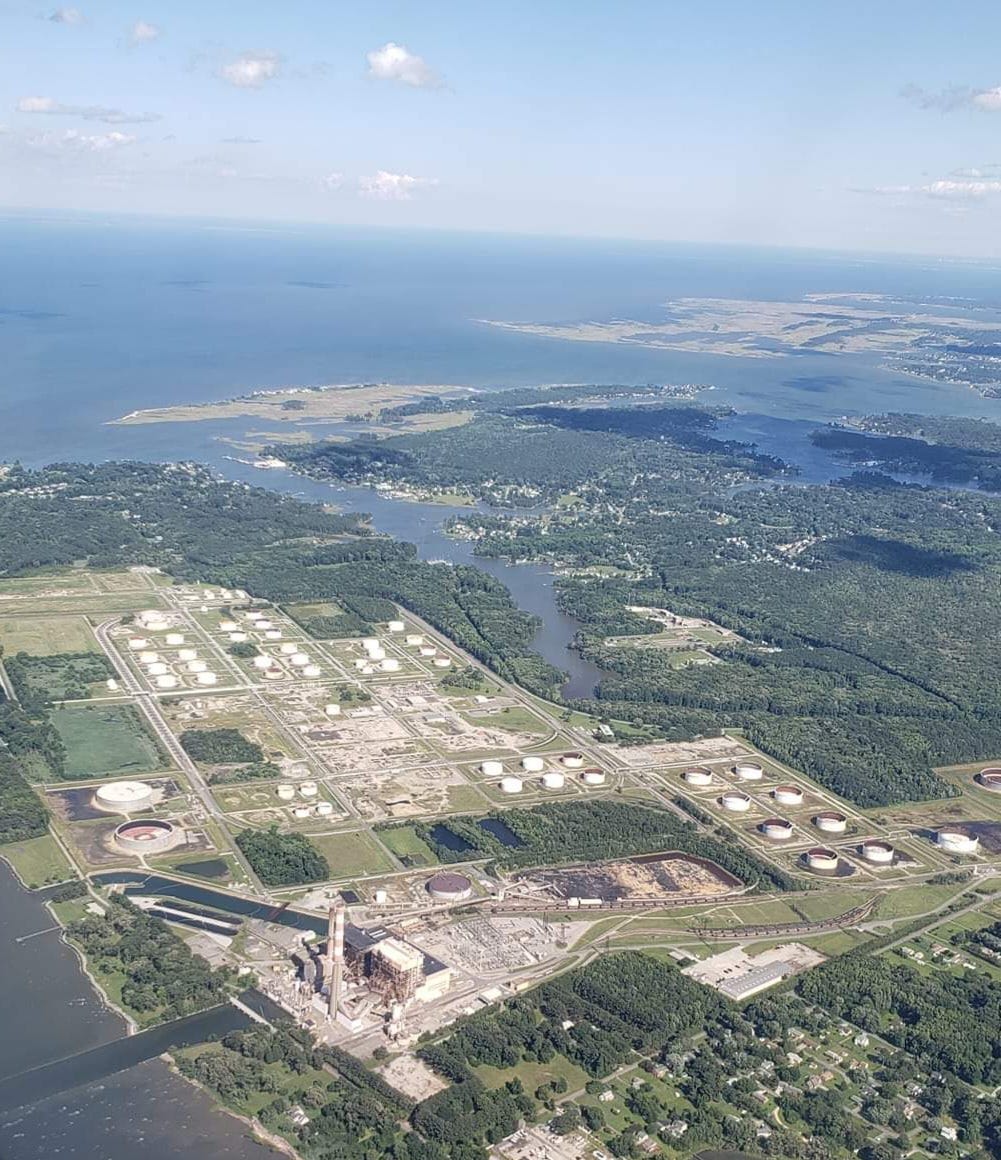
The Yorktown refinery was built in 1956 by Standard Oil of Indiana, which later became Amoco. For decades, it was the crown jewel of York County’s economy, the single largest property taxpayer in the entire county. At its peak, the facility could process 66,000 barrels of crude oil per day. Tankers and barges arrived regularly from Canada, the North Sea, South America and the Far East, delivering the lifeblood of American industry directly to our shores.
My grandfather worked there. A lot of grandfathers did. The refinery was where you wanted to work if you were in search of not just a good job, but good money. There was a clubhouse where the pipefitters and welders would gather. They’d throw Christmas parties and Thanksgiving dinners that were the events of the season. It was the place to be.
We’d later find out that some of those jobs came with a price nobody advertised, exposure to chemicals that led to lifelong disease and early death for some workers. But that’s a conversation for another day. Today, I want to talk about what happened when the noise stopped.
The refinery changed hands like a hot potato in its final years. Amoco merged with British Petroleum in 1998. Giant Industries bought it in 2002 for $127 million, promising a bright future. Western Refining acquired Giant in 2007. Then, in 2010, Western shuttered the refining operations entirely. By 2011, Plains All American Pipeline had purchased what remained, converting it into a storage and distribution terminal.
The tax revenue from that site dropped from $4 million per year to $1.3 million. About 200 jobs evaporated. Today, the facility employs maybe five people who mostly cut grass. The signature smokestacks still stand, but their paint is peeling and their pipes are rusting. The flame that once burned off byproducts, that eternal torch of industry, has been dark for years.
The Arithmetic of Absence
When an energy conglomerate pulls out of a small community, the math gets ugly fast. That $2.7 million annual tax shortfall doesn’t just disappear into the ether. It gets redistributed to everyday citizens through higher property taxes, increased business fees and reduced services. The schools still need funding. The roads still need paving. The fire department still needs trucks.
York County has managed better than most. We’ve still got some of the best schools in the country. We’re one of the last conservative holdouts in eastern Virginia, and property values have held relatively steady. But drive through town and you’ll notice the giant tanks being dismantled, structures that have been part of our skyline for my entire lifetime. The Dominion Power plant next door, built in the 1950s and retired in 2017, is being torn down too.
We have tracks, but we don’t have trains. We have massive piers that can accommodate oceangoing vessels, but the ships rarely come anymore.
The Blessing We Call a Burden
Here in Hampton Roads, we’re fortunate enough to still hear the sound of money, it just takes a different form. The roar of F/A-18 Super Hornets from Naval Air Station Oceana. F-22 Raptors from Langley. The percussion of ordnance testing at Naval Weapons Station Yorktown. The constant industrial symphony from Fort Eustis and the shipyards.
Defense spending accounts for 45.6 percent of all regional economic activity in Hampton Roads. Naval Station Norfolk is the largest naval base in the world. We’ve got 15 military installations and over 80,000 active-duty personnel pumping money into local businesses, buying houses and filling schools.
People complain about jet noise. I get it. When you’re trying to have a conversation on your back deck and a squadron of Super Hornets screams overhead, it can be inconvenient. But that noise is the sound of $26 billion in annual economic impact. That’s a blessing that keeps the lights on.
Blood and Butcher Paper
My great-grandfather, Roman Gissel, came to this country with nothing. Fresh out of forced service in the Russian military, born in the Russian Empire with family scattered across what is now Ukraine, Poland and Germany, all territories of that crumbling empire at the time. He arrived speaking no English, carrying no money, owning nothing but the clothes on his back and whatever dreams immigrants carried at the time.
He did the naturalization process the way it was supposed to be done. He started working. And he built something.
Gissel Packing Company in Huntington, West Virginia, started as a small family operation, a poor immigrant slaughtering hogs and packing meat. But it grew. It grew into a bustling facility that helped put Huntington on the map. It grew until hundreds of workers walked through those doors every day, processing beef and pork products that shipped across the region.
That was the sound of money. The clatter of cleavers. The hum of refrigeration. The rumble of delivery trucks heading out to feed America. An immigrant’s dream made real through sweat and blood and butcher paper.
And then the workers voted to organize.
When the Amalgamated Meat Cutters and Butcher Workmen of North America came calling, my grandfather made a decision. Rather than bargain with the union, he shut it down. Closed the doors. Silenced the machinery. Ended the jobs of everyone.
The case went all the way to the Supreme Court. NLRB v. Gissel Packing Co., 395 U.S. 575 (1969), remains a landmark decision in labor law to this day. Law students still study it. Legal scholars still debate it. The ruling established precedents about union authorization cards and employer speech that echo through courtrooms more than half a century later.
But in Huntington, what people remember isn’t the legal precedent. What they remember is the silence. The jobs that disappeared. The paychecks that stopped. The sound of money, gone. The crime that took over.
Lessons from the Coal Fields
I’ve pulled freight out of Tams, West Virginia. If you’ve never been there, picture this: Coal Filler’s plant, an RV park, a handful of small businesses clinging to existence. Drive past the main drag into the deep woods, and you’ll find an abandoned little town with boarded-up buildings falling apart. Nobody lives there anymore.
At one point, more than 100,000 West Virginians worked in the coal mines. Those jobs paid well and spilled over into retail, construction and education. Now fewer than 20,000 work in mining, and those jobs pay far less than they used to. Towns like Thurmond, which once had banks so flush with coal baron money they were the richest in the state, now have populations you can count on one hand.
There are ghost towns scattered across Appalachia like tombstones marking the places where industry used to live. Nuttallburg. Kaymoor. Caperton. Each one started as a boomtown that went bust when the seams ran dry or the demand dried up. The same pattern repeats in Union Level, Virginia, and countless other communities that didn’t hear the silence coming until it was too late.
The Warning Signs Are Audible
Economic decline doesn’t happen overnight. It happens gradually, almost imperceptibly, like the volume being turned down on a radio. One day you’re complaining about all those crude oil tankers holding up traffic. A few years later, you realize you haven’t stopped for a train in months. Eventually, you forget there ever were trains at all.
We should have heard it coming. The refinery started contracting long before it closed. The workforce shrank from over 200 to 134 unionized employees by the time Western Refining took over. Each layoff, each reduced shift, each deferred maintenance project was a note dropping out of the symphony. But we were too busy complaining about the noise to notice the silence creeping in.
What the Noise Means
So the next time a jet screams over your house from Oceana or Langley, or you hear explosions from the weapons station, or you get stuck behind a military convoy on I-64, take a moment to reconsider your frustration. That’s commerce. That’s jobs. That’s families being fed and mortgages being paid and small businesses staying open.
The same goes for the industrial complexes we take for granted. The shipyards. The trucking terminals. The rail yards and ports and manufacturing facilities that keep the gears of the economy turning. Every truck that rumbles past, every train that blocks your commute, every factory whistle that pierces the morning air, that’s the sound of money.
When that noise stops, something else starts: the slow, painful process of a community trying to figure out how to survive without the economic engine that once drove it. Property taxes go up. Services get cut. Young people leave for opportunities elsewhere. Storefronts go dark. Eventually, you’re left with nothing but memories and rust.
I drove past those railroad tracks this weekend, the ones that used to make me curse under my breath when I was late for something important. Now they just sit there, silent, waiting for trains that don’t come anymore.
My great-grandfather came to this country with nothing and built something that made noise, real noise, the kind that meant people were working and families were eating and an immigrant’s impossible dream was actually happening. My grandfather silenced it with a decision. The refinery owners silenced theirs with spreadsheets. The coal companies silenced theirs when the seams ran out and the regulatory burdens were too much.
The how doesn’t matter as much as the what. What matters is the silence that follows.
The sound of money is something you never want to take for granted. Enjoy it while it lasts. And be prepared for when it doesn’t.
I’d give anything to be stuck at those tracks again, watching the crude oil tankers roll by, checking my watch, running late.
That was the sound of money and when it’s gone, you’ll miss it
.