

This week, you’ll see me sharing articles about tools we’ve developed and continue to develop since February of this year to help solve market and industry issues. As most of you know, I seldom, maybe less than a handful of times, have sold anything or marketed for anyone; I just don't prefer to sell, but with the market advancing as it has, we have been advised to push out tools to market to raise awareness beyond the current market we have, which is about a 1000 clients or users.
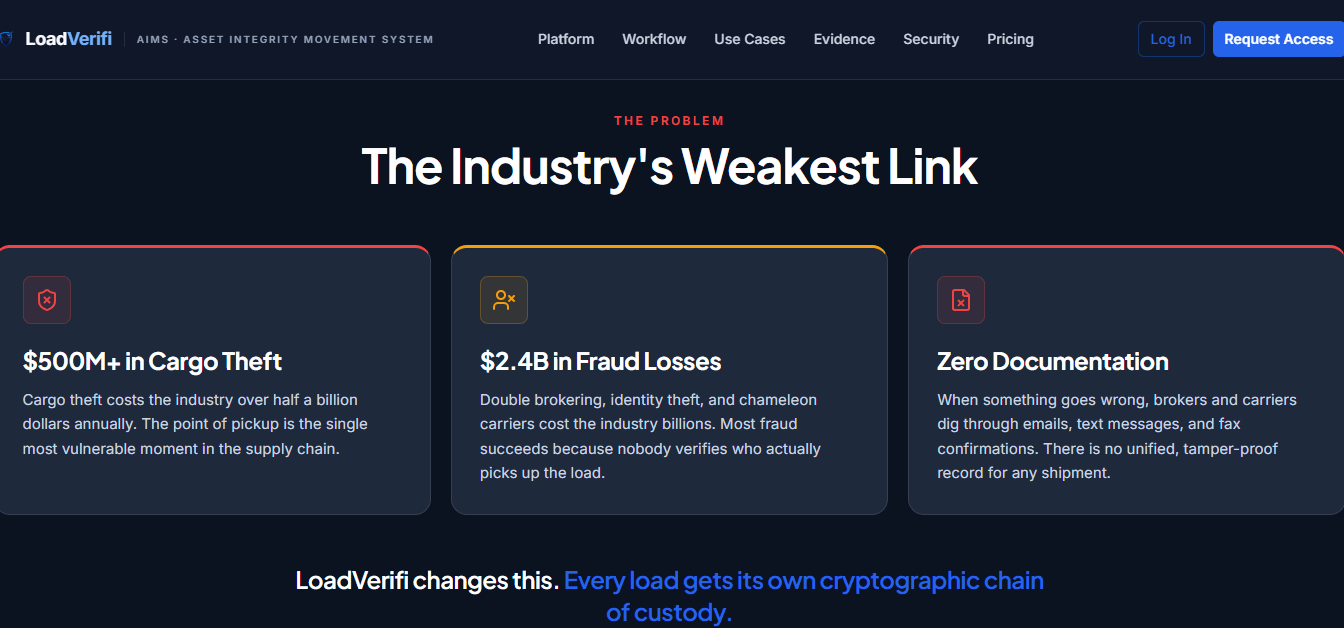
The load looked fine at pickup. The truck had a DOT number on the door that matched the carrier the broker booked. The driver had paperwork. The seal went on, the doors closed, and the freight drove away. By the time anyone called the real carrier, the real carrier had no idea what load they were talking about. Somebody had borrowed its identity, and a trailer full of product was gone.
That was the problem one of our clients brought us in February of this year. The client ships alcohol and other high-value freight, and it kept losing loads to cloned carriers: bad actors who copy a legitimate company’s name, DOT number, and paperwork, win the load, and disappear with it. The pattern never changes. Everyone in the chain checks a piece of paper, and nobody checks whether the person holding it is who the paper says.
The numbers explain why it keeps happening. Verisk CargoNet estimated cargo theft losses at nearly $725 million in 2025, up 60% from 2024. Confirmed thefts rose 18% to 2,646, and the average stolen load was worth $273,990, up 36%. Food and beverage thefts jumped 47% to 708 incidents. CargoNet’s own warning for 2026 is that theft-by-deception groups will focus on misdirecting shipments tendered to legitimate carriers. Put simply, thieves have found it’s easier to pose as a trucking company than to break into a trailer.
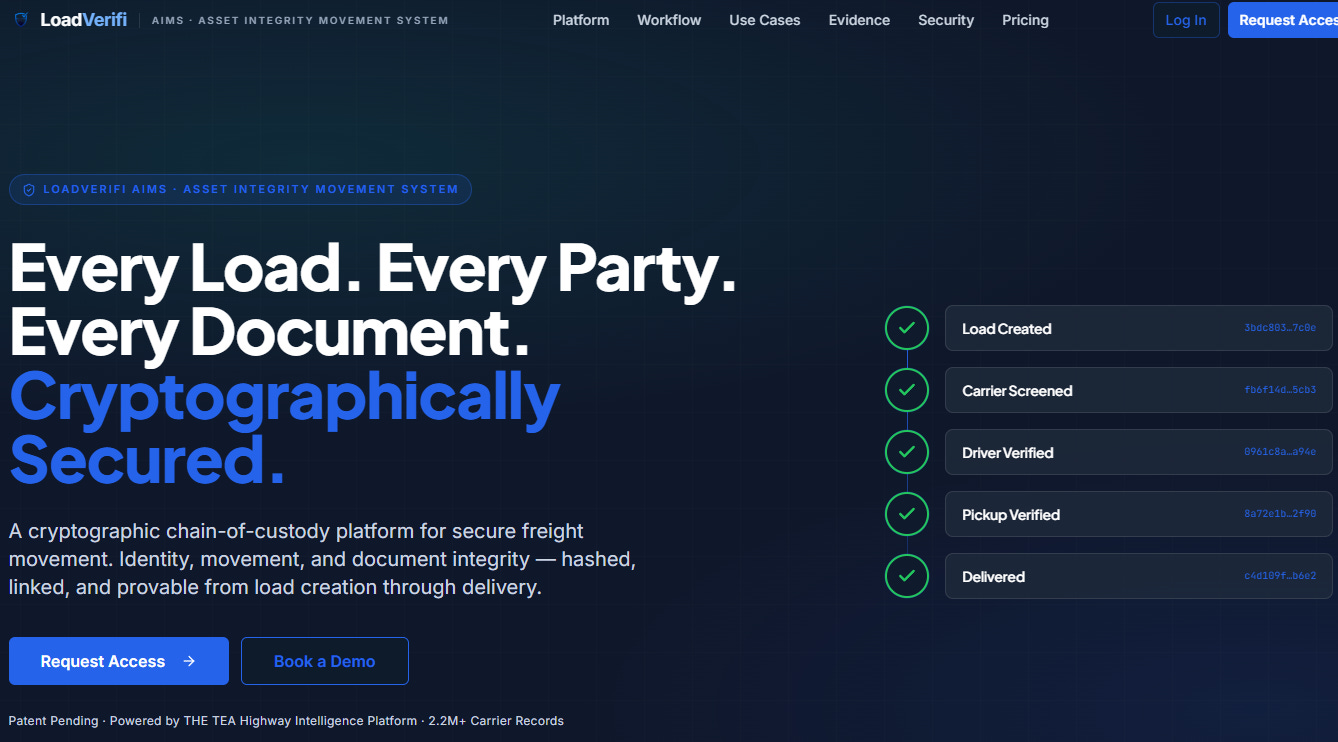
LoadVerifi is what we built for that client, and it has been running since March. It works on one idea. Before anyone touches the freight, prove who they are. Then record every handoff in a chain that shows if anyone changes it later. Think of it as TSA PreCheck for freight: the carrier and the driver are cleared before they reach the dock, not after the trailer is gone.
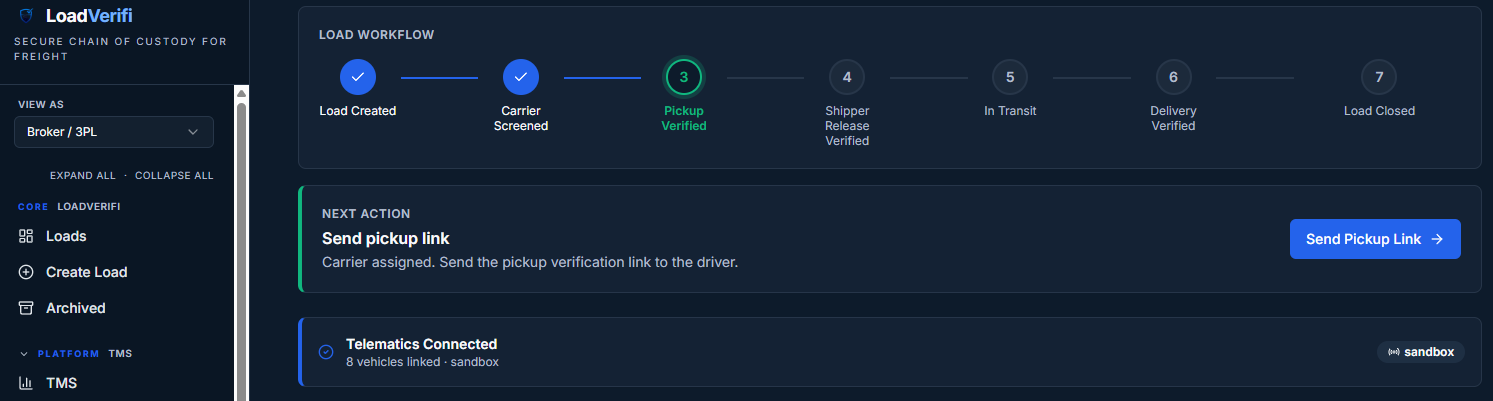
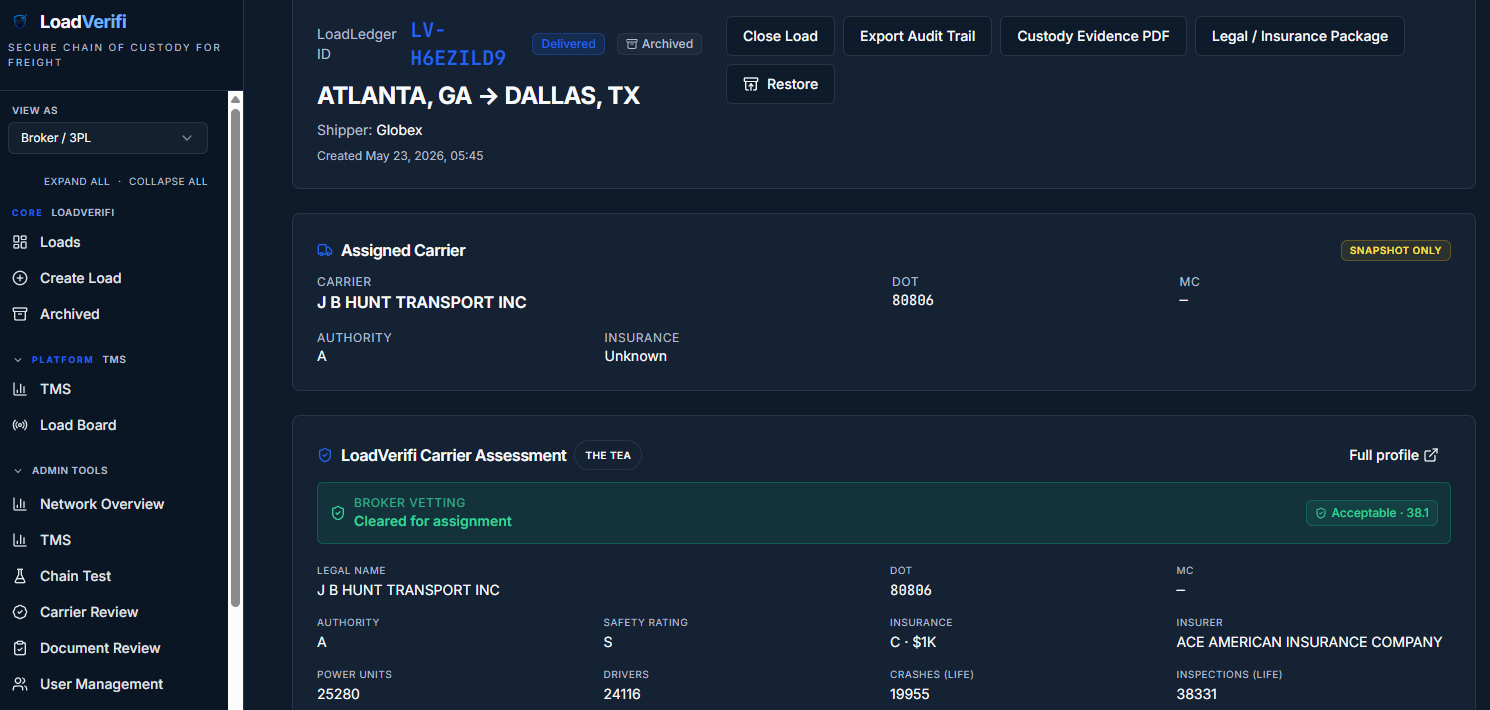
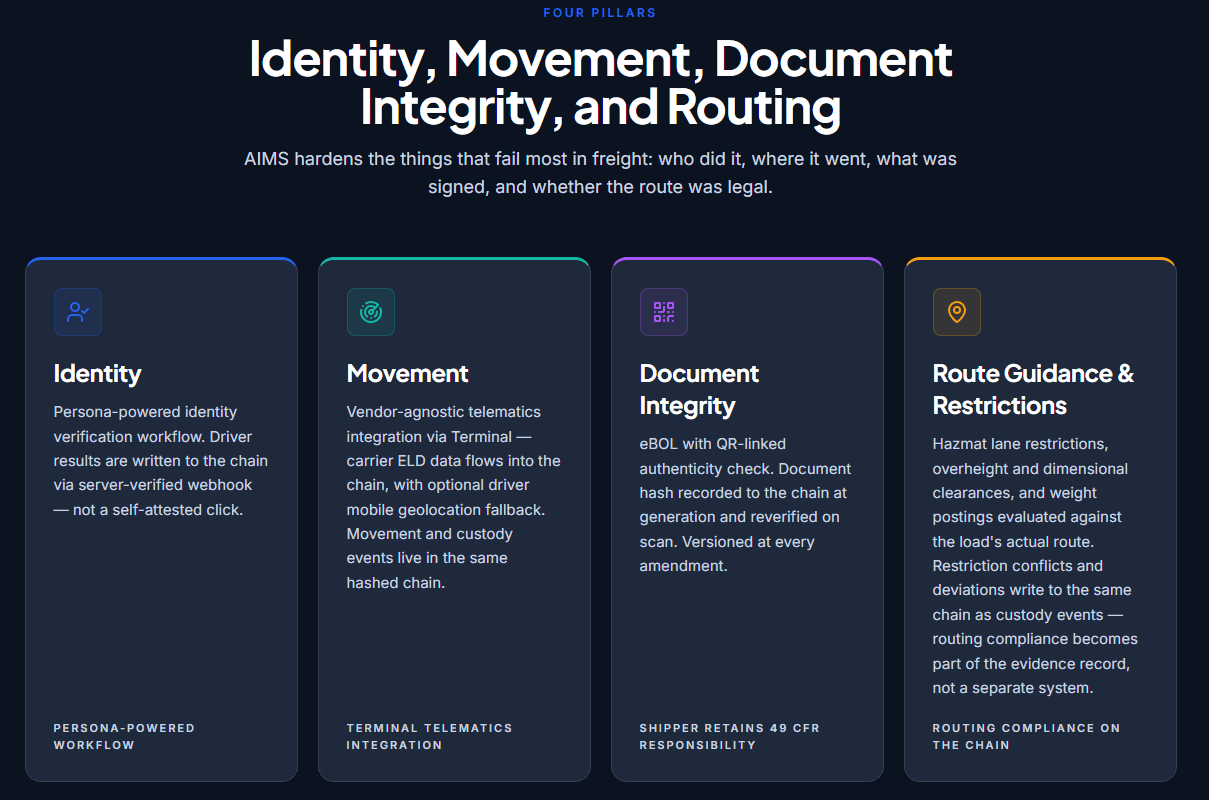
The carrier gets checked first. When a broker assigns a load, LoadVerifi runs the carrier’s USDOT number against FMCSA’s live API at that moment, not against a list somebody downloaded last month. Assignment is blocked if the carrier isn’t allowed to operate, its authority isn’t active, an out-of-service order is in effect, or FMCSA has no active liability insurance on file. The broker also sees the carrier’s full vetting assessment from Tea Technologies, our carrier intelligence platform: safety rating, insurance and insurer, fleet size, crash and inspection history, and flags such as authority transfers, SCAC code, and equipment and ID convergence and crossover. The carrier also has to prove that the person enrolling it actually controls that USDOT number, and the system records any recent changes to the carrier’s FMCSA registration it finds along the way. A cloned carrier can copy a door. It has a much harder time copying the person behind it.
Then the driver. LoadVerifi uses Persona, an identity and business verification service, to confirm the driver is a real person holding a real government ID, and that the face at the dock matches the ID. Persona's servers send the result to LoadVerifi, not a checkbox the driver clicks, and it’s written onto the load’s chain. Pickup and delivery links are one-time invitations. The recipient has to sign in before completing a pickup, a delivery, or a shipper release, which keeps the chain limited to the parties actually on the load. A link forwarded to a stranger doesn’t get that stranger onto the load.
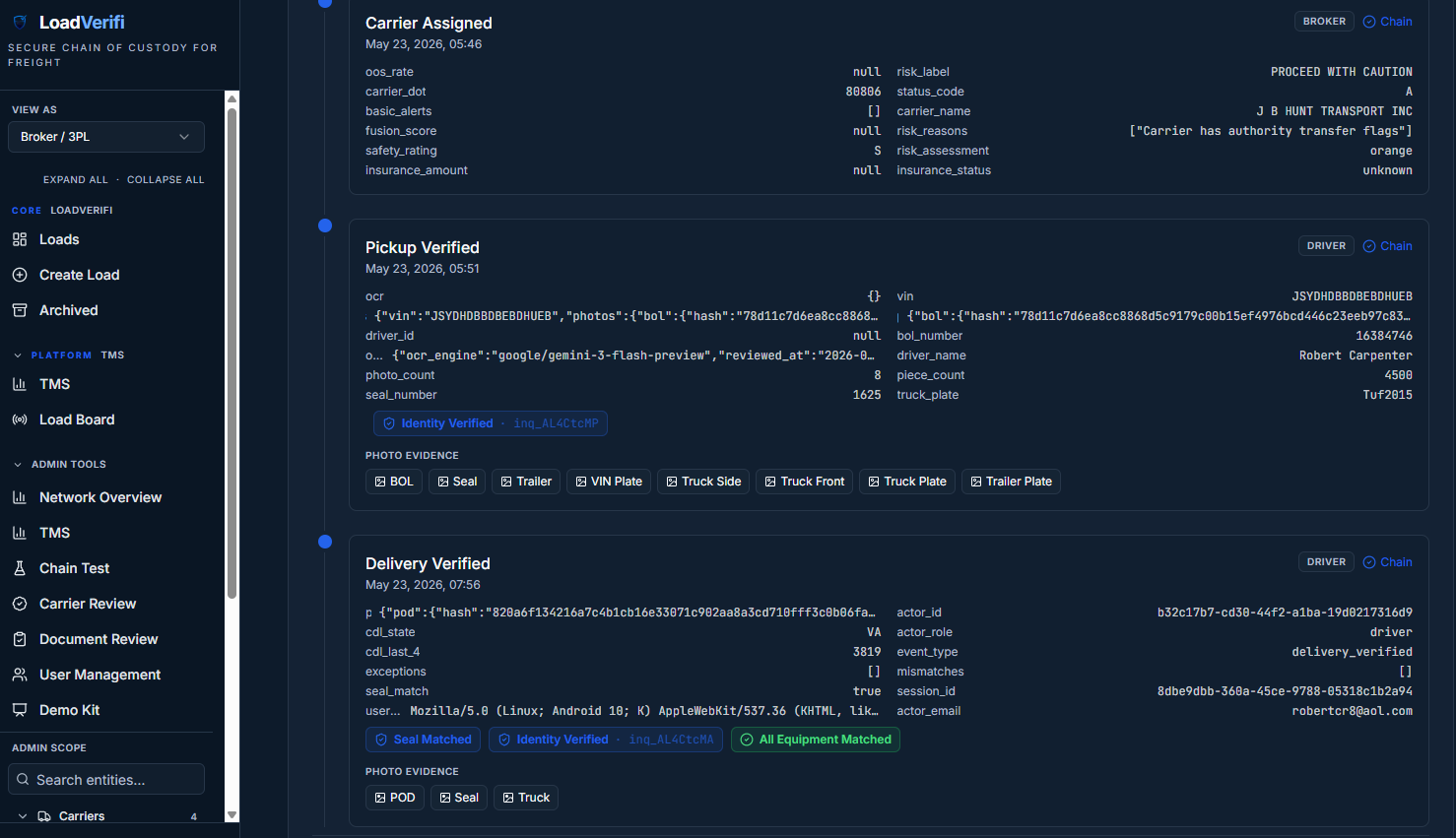
Then the equipment. At pickup, the driver photographs the bill of lading, the seal, the cargo, the trailer, the VIN plate, the truck's license plate from the side and front, and both license plates. LoadVerifi reads the VIN, plates, and seal number off the photos and records which values were read from a photo and which were typed in by hand. That distinction matters later, when somebody asks how anyone knew it was the right truck. Before the load departs, the VIN and plate are checked for crossover with other carriers.
At delivery, the system checks the seal against the one applied at pickup and the equipment against what left the dock. If everything lines up, the load shows “Seal Matched,” “Identity Verified,” and “All Equipment Matched.” If it doesn’t, the system records the mismatch on the chain.
Then the trip itself. LoadVerifi connects to the carrier’s electronic logging device or telematics system through Terminal, a telematics integration service. For the most part, it doesn't matter what telematics vendor the carrier uses; Terminal connects across the board with limited exceptions. The carrier connects its fleet once, regardless of the ELD it runs, and the truck’s location feeds the load record. If a carrier has no connected device, the driver’s phone can report location in the browser instead, and the record notes that phone location is a lower level of proof than the truck’s own device. Location pings are digested and anchored to the chain, so the route history can’t be quietly rewritten later.
Stops are where loads go missing, so LoadVerifi watches those too. When a truck stops, the system logs where and for how long, then checks the location against nearby secure facilities and past theft incidents. Each stop gets a label: a safe facility, a stop explained by traffic, or an unexplained stop. An unexplained two-hour stop in a lot with a theft history is exactly what a broker or shipper wants to know about while the load is still moving, not in the claim file afterward.
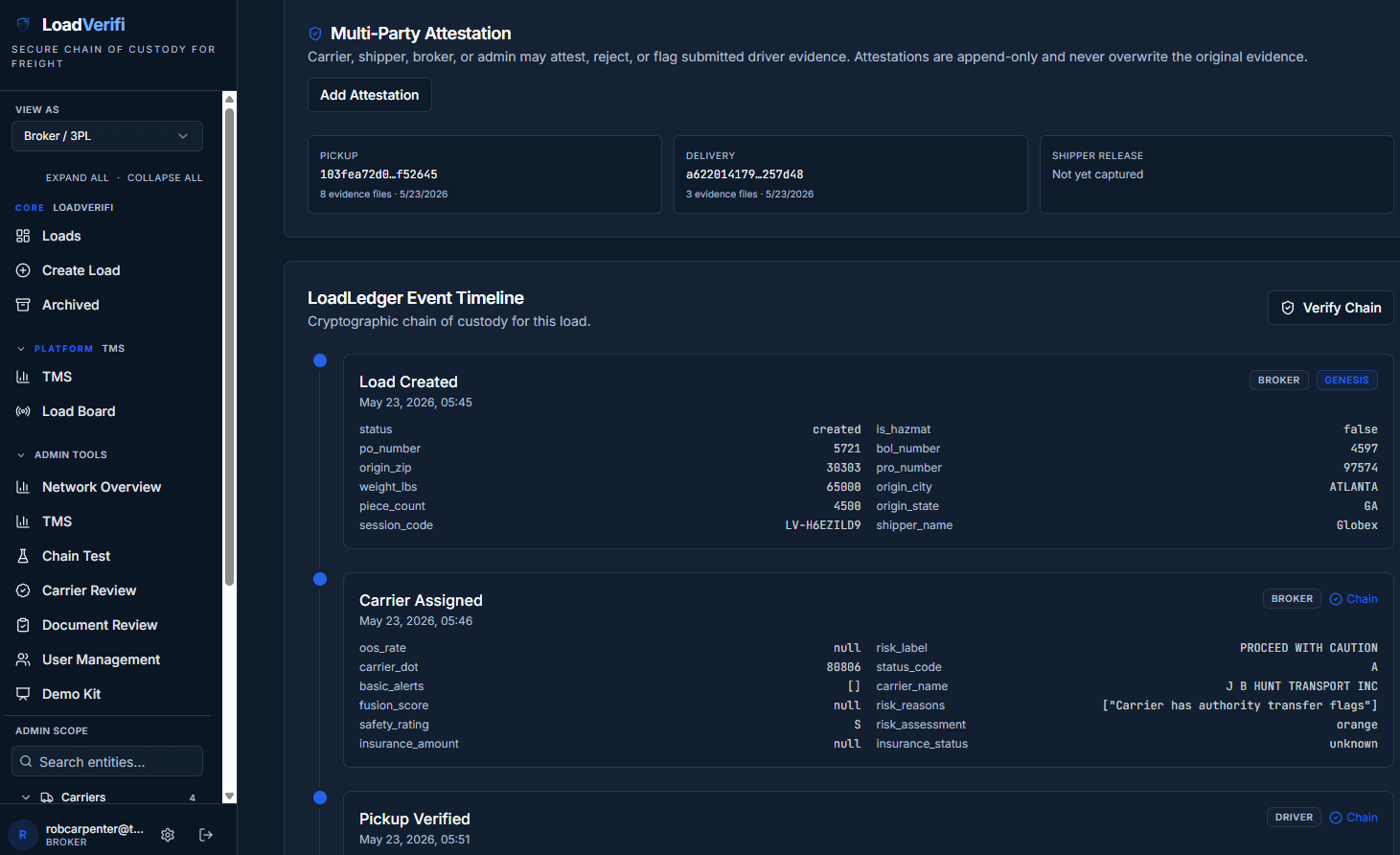
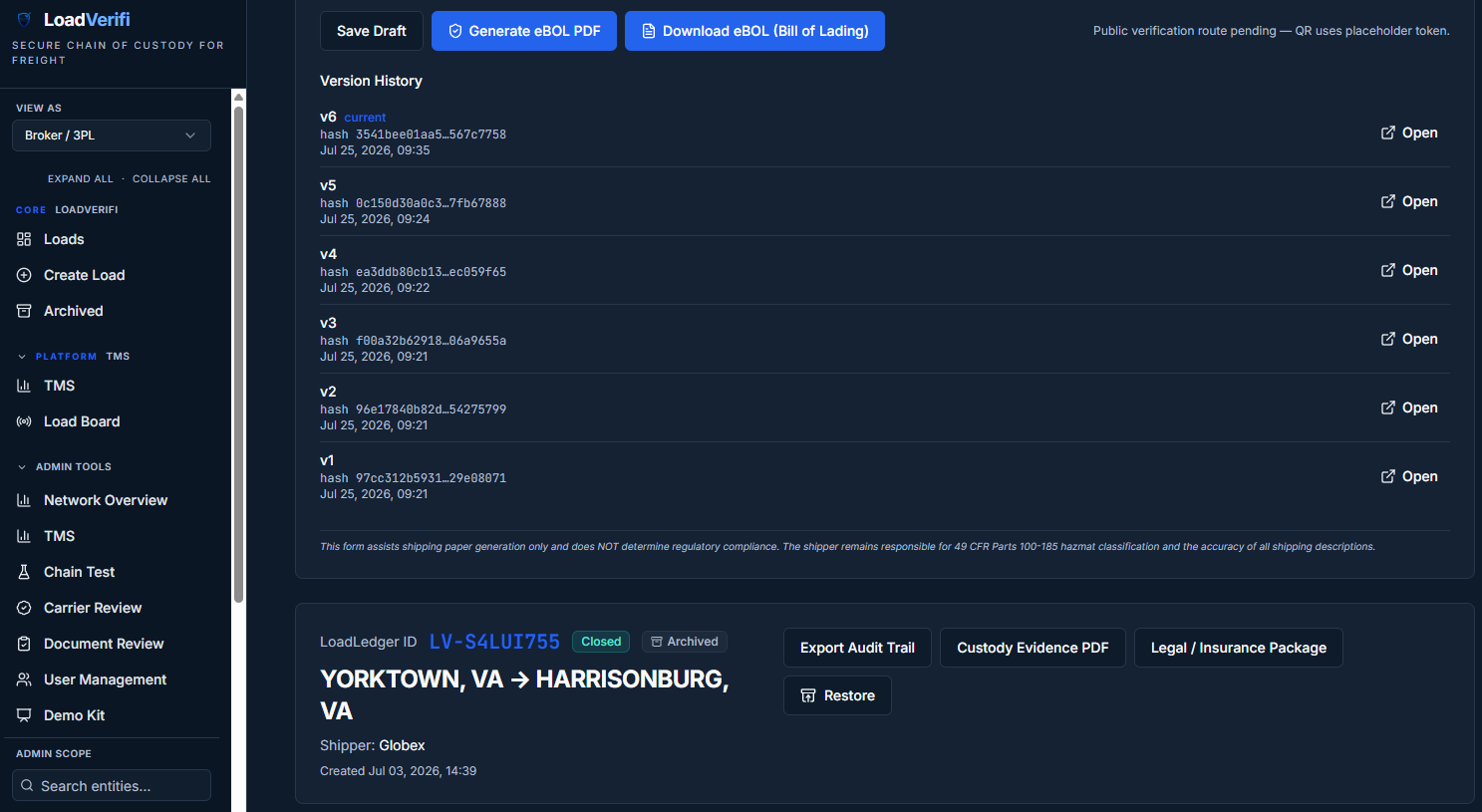
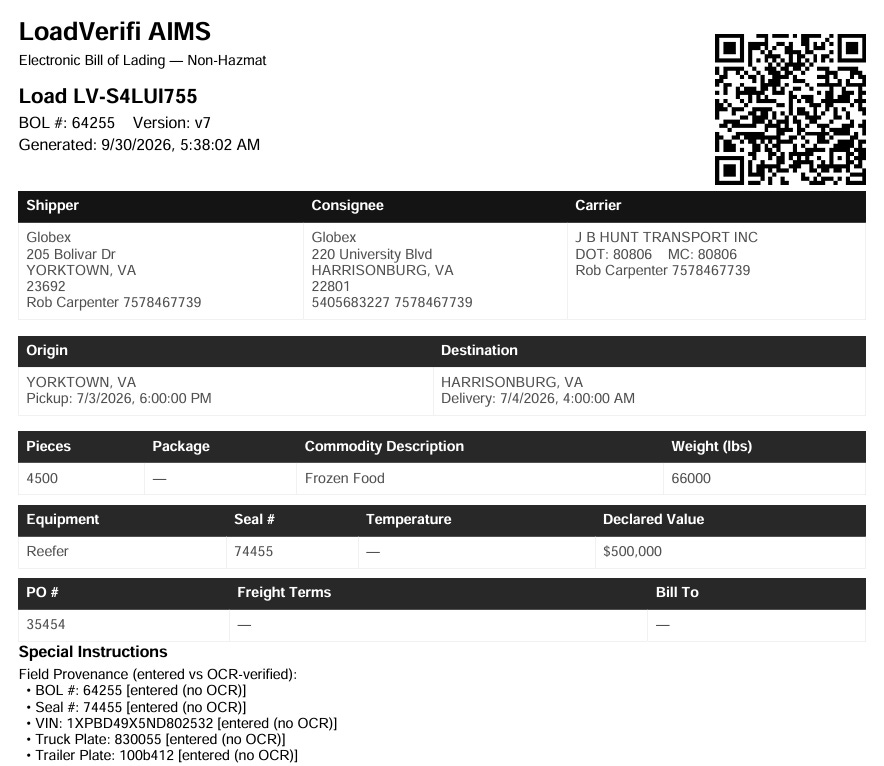
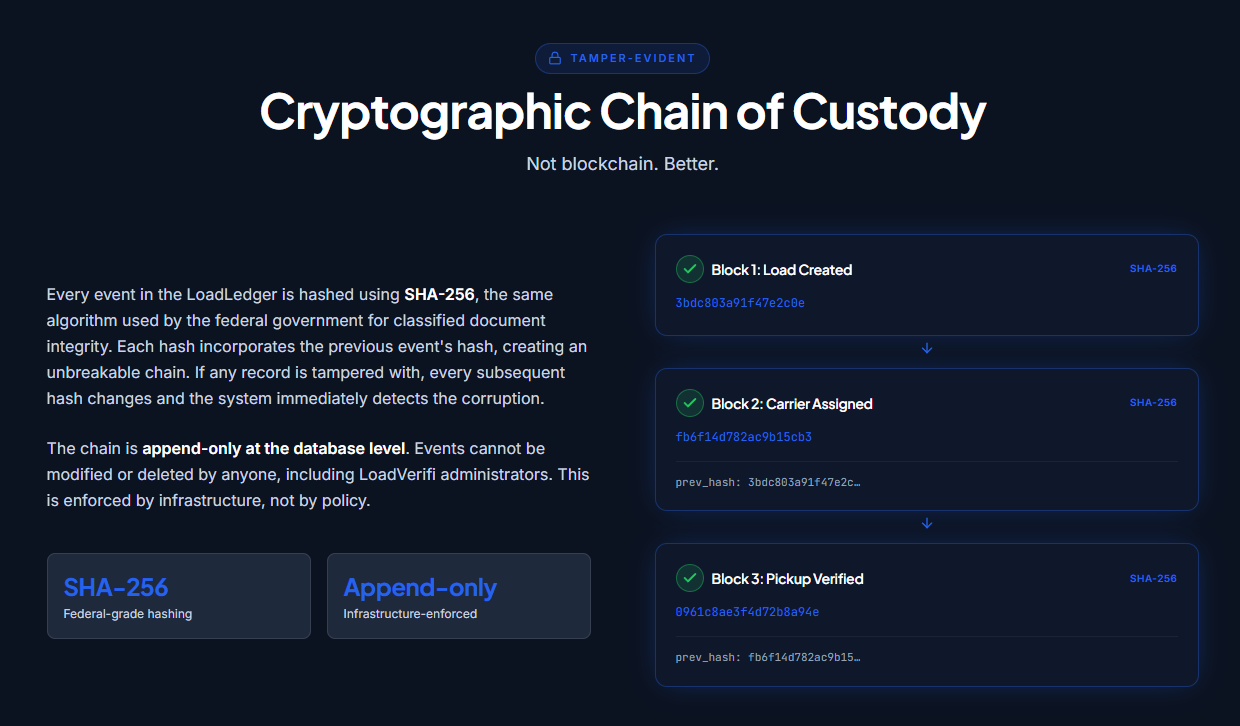
Every step writes an event to what we call the LoadLedger. Each event is hashed, meaning it’s run through a mathematical fingerprint, and each fingerprint includes the previous one. Change any earlier event and every fingerprint after it stops matching, so tampering shows. Documents work the same way. The electronic bill of lading is versioned, every version is hashed and kept, and the history shows exactly what changed and when. For hazardous materials, the shipping papers follow the description order federal rules require under 49 CFR 172.202: identification number, proper shipping name, hazard class, and packing group. The shipper still owns the classification, and the form says so.
When something does go wrong, the record is ready. A closed load exports as a full audit trail, a custody evidence PDF, or a legal and insurance package that puts the chain, the documents, and the proofs in one bundle. I’ve sat in enough depositions to know what happens without that. Everybody reconstructs the load from emails, texts, and a faxed rate confirmation, and the argument becomes whose memory is better. A time-stamped, tamper-evident record ends that argument before it starts.
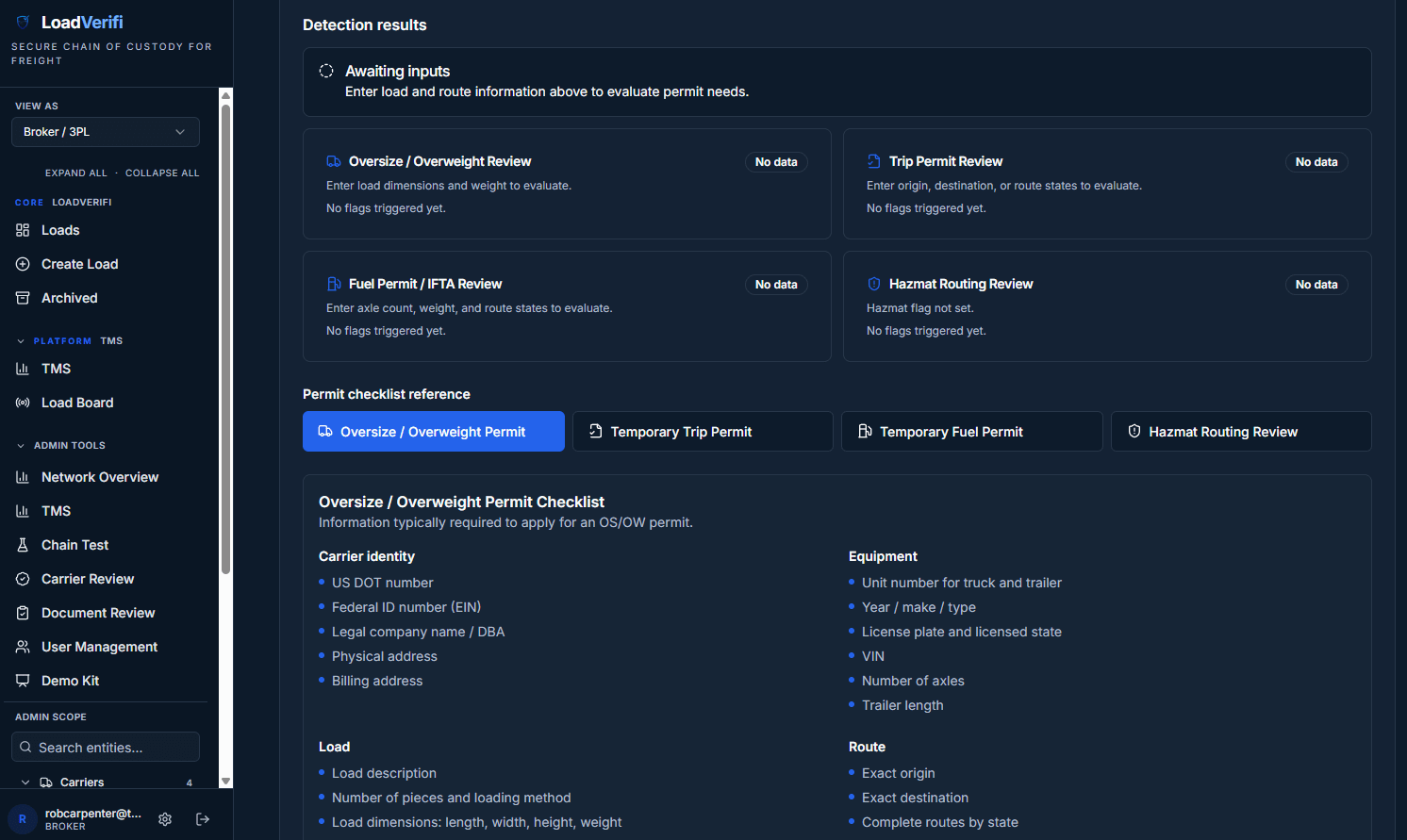
Routing is part of the chain too. LoadVerifi includes a permits and routing readiness tool that checks a load’s dimensions, weight, axle count, route states, and hazmat status. It flags oversize and overweight permit needs, temporary trip and fuel permits, and hazmat routing concerns, backed by a state-by-state reference of oversize and overweight rules and permit office contacts. It’s a planning checklist, not a permit office. It tells the broker and the carrier what they’ll need before the truck rolls, instead of after a scale house tells them.
Now the math. The LoadVerifi platform is $99 a month. Verification credits run from $25 a load down to $14 a load with volume, and eBOL-only shipping papers are $8 a load. Against an average theft of $273,990, a $25 verification costs less than one hundredth of 1% of what a single stolen load costs. For a shipper of alcohol, electronics, or pharmaceuticals, that isn’t a cost line. It’s the cheapest insurance in the building.
None of this makes theft impossible. A verified driver can still make a bad decision, and a record can’t stop a lie told at the dock. What it does is close the gap the cloned carriers live in: the space between what a carrier says it is and what anyone actually checked. Vet the carrier. Verify the driver. Match the equipment. Watch the stops. Keep the record.
The trucks that should be hauling your freight will pass every one of those checks without slowing down. The ones that shouldn’t won’t get past the first.