

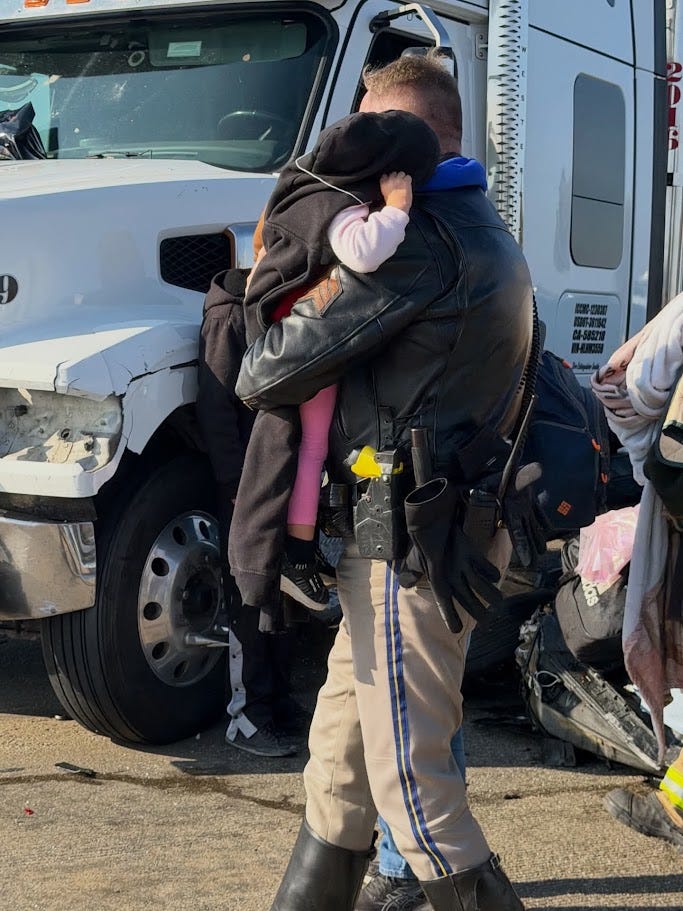
I was on the couch with my son last night, watching Robin Hood (the Russell Crowe version), and I told him King John was his 23rd-great-grandfather. He lit up. Genealogy, DNA, and finding and reuniting lost relatives were my gateway drug to data and research. My only real hobby. Then he started talking about Richard, how young the Lionheart was when he died, and then I thought about that. The odds of being here.
I’m two years older right now than my dad was when a motorcycle crash killed him. I’m six years older than my older sister was when years of drug abuse finally took her. I’m 17 years older than my younger brother was when he overdosed. Both of my grandfathers died last year. One of them got a cancer diagnosis, dropped a hundred pounds, and was gone six months later.
I sat there doing that math, and it hit me how much we take for granted. I wake up every day assuming I’ve got decades left, that I’ll make it to 80 or 90 or 100. History tells a different story. Tomorrow might be it. Today might be it. Every person I’ve ever stood over at a crash scene woke up that morning assuming the same thing I do. I have time, only to find out that they jumped to the front of the line and today's their day, oftentimes with someone else's help.
Then the aspergian autistic guy took over and crunched the math. King John died in 1216. Twenty-five generations separate him from my son, and on paper that’s 33,554,432 ancestor slots in that one generation alone. Every one of those lines had to hold. The Black Death swept Europe from 1347 to 1352 and killed roughly 30% of the people in the places it hit, close to half in the worst cities. For most of human history, about half of all children died before they grew up. Then came the famines, the trenches of World War I, the 1918 flu, and World War II. Every ancestor my son has, and every ancestor you have, made it through all of it long enough to have a child. Not one link broke, or none of us would be here.
Our 6th-great-grandfather Robert Shield, George Washington’s second cousin, died on the last day of the Battle of Yorktown in 1781. The last day.
Now think about the odds stacked up behind every single person on the road this morning. Centuries of plague, war, and early death couldn’t stop them from being born. And then they die on an ordinary weekday because a carrier skipped a drug test, a broker never checked who it handed the load to, a driver ran seven hours past his limit, or a motorist was looking at a phone. That is insane to me. All of that survival, every one of those odds beaten, ended by somebody who couldn’t be bothered to do the job right.
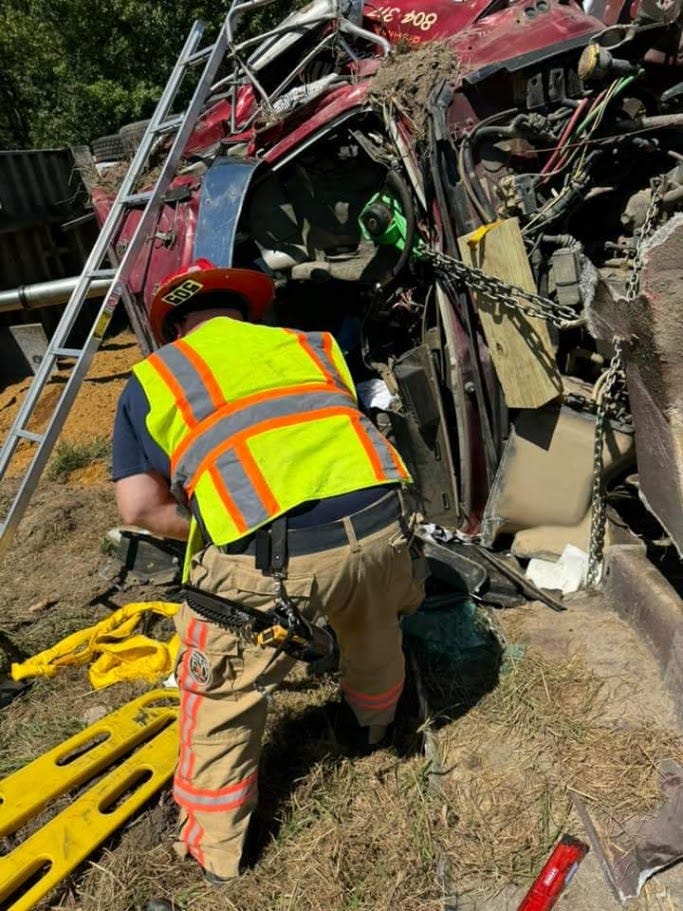
I’ve done this work for 25 years: driver, broker, fleet executive, compliance director, crash reconstructionist, expert witness. I can’t unsee any of it. People crushed in the seat, mashed between the steering wheel, the seat, and the floor. Bodies missing a head, missing arms. A split abdomen. The smell of iron and everything else that comes out of a human body when it fails all at once. The weight of the air at a scene. The cries, the screams, the families arriving and finding out on the shoulder of an interstate.
I don’t describe that for shock. I describe it because the people who cause it rarely have to see it, and the people who pay for it almost never connect what they pay to what happened.
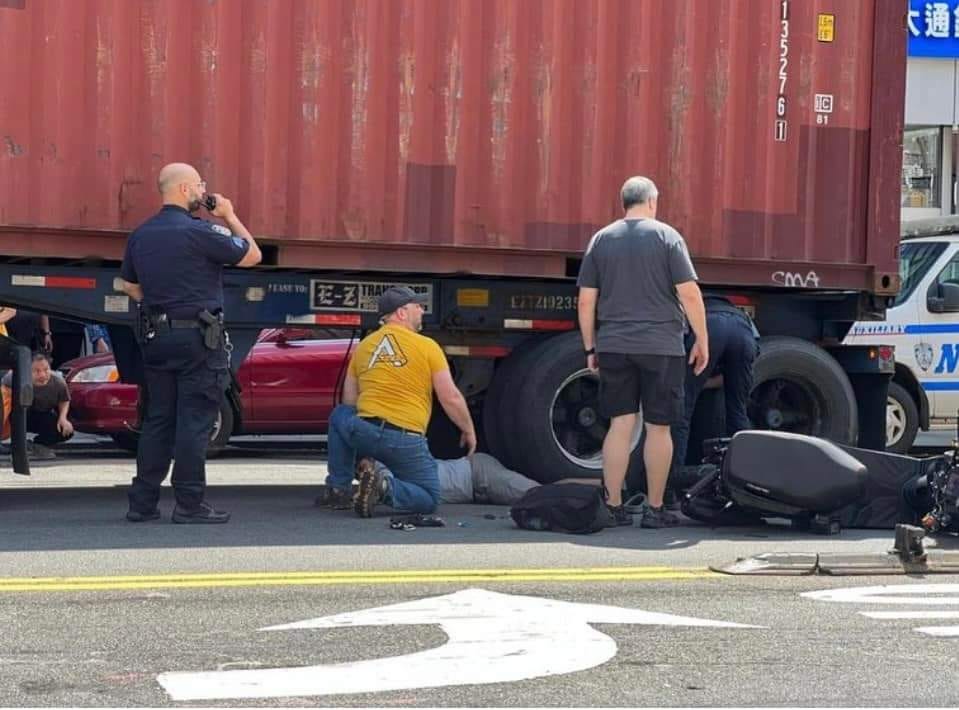
Here is one from last week.
A young woman was driving home from college. She was on the phone with her father. They were talking about her boyfriend and the future they had planned: marriage and a long life together. Then a tractor-trailer hit her, and her father heard it happen. He called and called 911, asking for updates from hundreds of miles away.
When I went through what was left at that scene, her whole life was on the ground. A romance novel in the floorboard. Her phone in a case covered with pictures of her and the boy she was going to marry. Her suitcase had burst, and her clothes were everywhere. Everything that made her somebody’s daughter, scattered across the pavement.
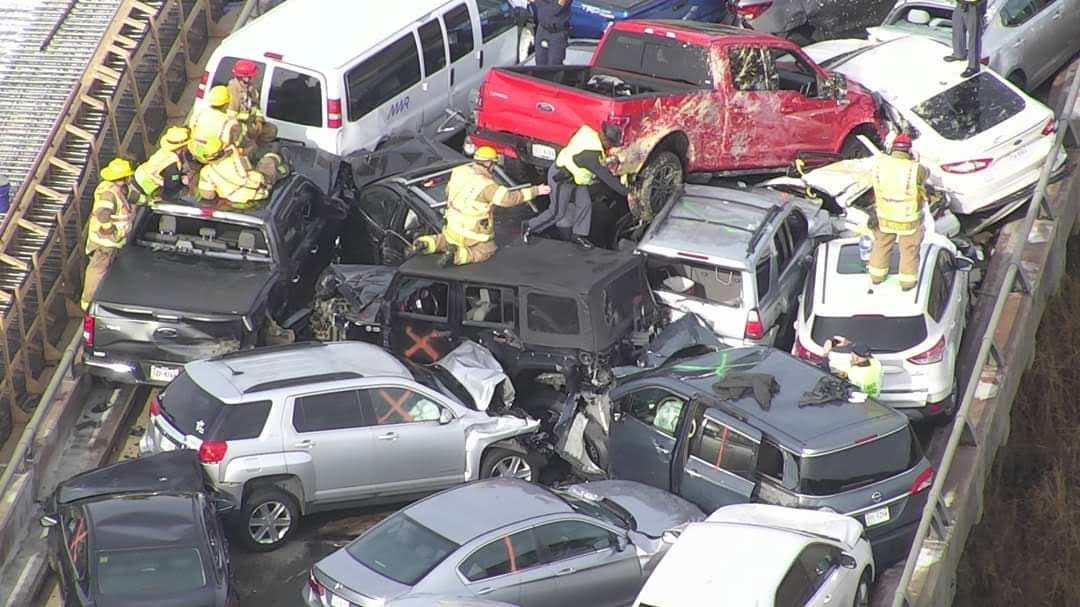
The truck driver got back in his truck a few hours later and went on about his day.
Then the record came out. He had driven 18 hours the day before. Federal rules cap driving at 11 hours inside a 14-hour window under 49 CFR 395.3. There was no driver qualification file, the folder 49 CFR 391.51 requires every carrier to keep on every driver it puts behind the wheel. There was no post-accident drug or alcohol test, even though 49 CFR 382.303 requires one after any crash that kills somebody: alcohol within eight hours and drugs within 32. His motor vehicle record was pulled six months after he was hired, when 49 CFR 391.23 gives a carrier 30 days. No training was on file, and Part 380 has required entry-level driver training for new CDL holders since 2022.
Behind that one truck sat a web of related companies. Every one of them now says it wasn’t the employer. None of them controlled the driver. The truck wasn’t on the policy. The family that buried their daughter is now fighting a maze of LLCs built, as far as I can tell from the record, for exactly this moment.
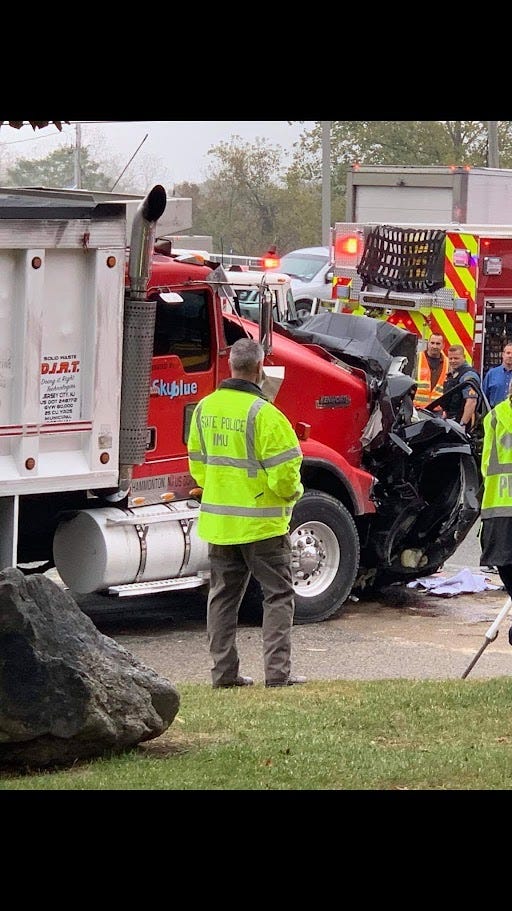
That is what a bad actor looks like after the crash. They have no trouble with the bodies they leave or the families they break. They have trouble with the bill, and they’ve built their whole operation so somebody else pays it.
A really good example here is Dragos Spinceana and Gold Coast adding a driver who died five years earlier to their company as President and Agent; after he died, they did this to try and avoid accountability. If they add a dead guy, 1) who's going to complain their identity is stolen, and 2) who cares, right, he’s dead? They didn't even file a workers' comp claim. Rocky Chhean's daughter buried him using GoFundMe proceeds from grassroots donors. Meanwhile, we watch him celebrating America with an active $1 million fine from Mar-a-Lago.
So let’s talk about who pays it.
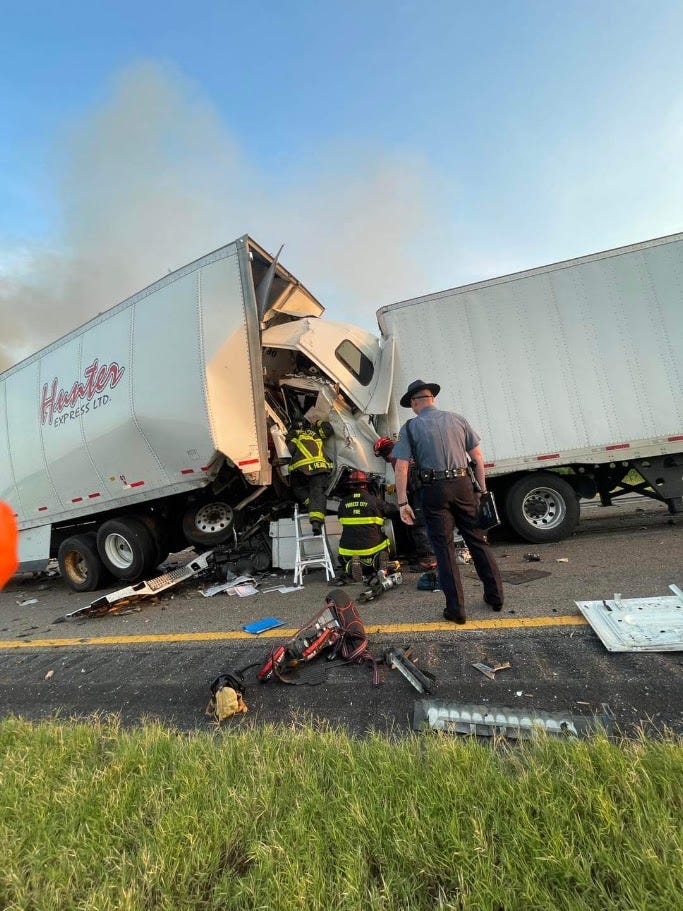
Start with the bodies. According to NHTSA’s Fatality Analysis Reporting System, 5,472 people died in crashes involving large trucks in 2023. About 70% of them, 3,837 people, were not in the truck. They were in cars, on motorcycles, or on foot. NHTSA’s early estimate puts total traffic deaths in 2024 at 39,345. That’s more than a hundred people a day, every day, on roads we all assume are safe because we share them with drivers we assume are qualified.
Most people never see the next number. FMCSA’s own Crash Cost Methodology, updated in 2025, puts the average cost of a fatal large truck crash at $15,230,414 in 2023 dollars. An injury crash averages $326,810. A crash where nobody gets hurt still runs $49,398. Those figures count medical bills, emergency response, lost wages and lost productivity, property damage, legal and court costs, and the value of the life itself.
NHTSA did the national math in its last full report on crash costs. In 2019, motor vehicle crashes cost the country $340 billion in economic losses, about 1.6% of the entire U.S. economy. Count the loss of life and quality of life, and the total climbs to nearly $1.4 trillion. That came to roughly $1,035 for every person living in the United States.
NHTSA found that people who were not involved in the crashes paid about three-quarters of those costs through insurance premiums, taxes, and the time they lost sitting in the backup. Taxpayers alone covered about $30 billion, roughly $230 for every household in the country.
The carrier that skipped the DQ file, skipped the MVR, skipped the drug test, and ran its driver seven hours past the legal limit did not save money. It moved the cost onto everybody else. The ambulance, the trooper, the medical examiner, the hazmat crew, the hours of a closed interstate, the trauma bed, the court system that now has to sort out which of a dozen LLCs actually owned the truck. You paid for that, whether you’ve ever heard of the carrier or not.
Then there’s the cost that never shows up in a crash cost table.
On June 20, 2024, Dalilah Coleman was 5 years old and riding in her family’s car on Highway 395 in San Bernardino County, California, when traffic slowed for a construction zone. The tractor-trailer behind them didn’t stop. Six vehicles were involved. Dalilah’s brain swelled so badly she was put on life support. She spent three weeks in a coma, had part of her skull removed to relieve the pressure, and spent six months in the hospital. She’s 7 now. She’s nonverbal; she’s learning to walk again, and her family is saving for another surgery next year. Her father, Marcus Coleman, drives a truck for a living. The driver charged in that crash, Partap Singh, is in immigration custody.
Dalilah lived. When everybody survives, the headline goes away, and the family is left with a different child than the one they put in the car that morning. No settlement figure gives her parents back the voice they used to hear.
The trauma doesn’t stop at the people who were physically hurt. A 2025 meta-analysis in Health Promotion Perspectives pooled 82 studies of road crash survivors and found a post-traumatic stress disorder rate of 20.3%. One in five. That is the brother in the back seat who won’t ride in a car anymore. The mother who can’t drive past the exit. The father who heard his daughter die over the phone and will hear it every night for the rest of his life.
I know a little about what that does to a family, because my family is made of people who were taken early. I’m the oldest and last left at only 45. You don’t get over it. You build your life around the hole.
Now follow the money through the rest of the system, because the worst actors don’t just cost the families they hit. They cost every good carrier in this country.
When a carrier with no qualification file and a driver running 18 hours puts somebody in the ground, the verdict that follows doesn’t stay in that courtroom. It lands in the actuarial tables every insurer uses to price commercial auto. The Council of Insurance Agents and Brokers found commercial auto premiums up 10.4% in the first quarter of 2025 and another 8.8% in the second quarter, outpacing nearly every other line of business it tracks. Brokers and insurers pointed at the legal system, and some of that is fair. But juries are not handing down huge numbers because they hate trucks. They do it when a plaintiff’s attorney puts a file in front of them that looks like the one I just described.
The good carrier, the one that actually pulls the MVR in 30 days and actually tests its drivers after a crash, pays those higher premiums too. The shipper pays them in its freight rates. The vendor pays them. And then you pay them at the register, because everything you own, eat, or wear moved on a truck at some point. The bad actor saved a few hundred dollars by skipping compliance, and the whole supply chain carries the difference.
Meanwhile, the bad actor often doesn’t pay at all. That’s what the maze of related companies is for. Federal minimum liability coverage for general freight is $750,000. FMCSA puts the average fatal truck crash at more than $15 million. When a carrier insured at the minimum kills somebody, the gap between those two numbers doesn’t vanish. It falls on the victim’s family, their health insurance, Medicaid, Social Security disability, and the taxpayers behind all of them. Then the same owners open a new company under a new name with the same trucks, and do it again.
Then comes the part nobody outside a courtroom sees: what the bad actor does to the family after the funeral.
The first move is almost always the same. The carrier, or its lawyer, goes to the widow, the estate, or the parents and says, more or less: we’re nobody. We’re a little trucking company. We don’t have anything. But we’ve got this policy over here, $750,000, maybe a million, and you can have that. That’s all there is. And a lot of families take it. They’re grieving, they’re broke, they want it over, and a check with six or seven figures on it looks like the end of the road.
If you are that family, do not take that offer. Not like that, and not ever without a lawyer who knows trucking looking first. That “nobody trucking company” very often has a dozen sister companies behind it, a broker who handed it the load, a shipper who picked it, an owner who leased it the truck, excess and umbrella coverage nobody mentioned, and assets that magically moved to a cousin’s LLC last spring. Remember the numbers above. FMCSA puts the average fatal truck crash at more than $15 million. A $750,000 policy is the floor the federal government requires, not the value of your husband’s life. If you’re facing this and don’t know who to call, email me at robcarpenter@theteaintel.com. I will find you a lawyer who actually knows trucking, and I will help you against a bad actor carrier. IF YOU EVER NEED GUIDANCE on a lawyer or a case or an offer, message me. I do not charge for this stuff. I will find you a real professional.
I don’t say that as someone who grew up on the plaintiff side. For most of my litigation career, I defended trucking companies. I still do. That was my side of the courtroom for years, and I believed in it, because the carriers I defended were mostly run by people who came up the way I did. When they hurt somebody, they felt it. Shame meant something. Responsibility meant something. Making the family whole was the first question, not the last one. Often, our goal was to mitigate a good carrier's issues to make victims whole again, without making the world rich off the trucks.
Over the past 20 years, I watched that change. Too many of the carriers and drivers I see in files today are not the same people who ran this industry 30 and 40 years ago. The question isn’t how we make this right anymore. It’s how close to legal we can run, and when it goes wrong, how little we can pay. And if the cheapest way to pay less is to destroy the people we hurt, so be it.
I had a case this fall where a father and husband was killed. By every account, he was a good man, and the crash was no fault of his. The truck belonged to a foreign carrier, driven by a temporary foreign driver who never should have been qualified to drive it. In discovery, that carrier’s side went after everything that man’s family had left: his life, his record, his dignity, his widow’s, all the way down to what their sex life was like before the crash. I know why lawyers ask some of those questions. When a spouse claims the loss of a marriage, the marriage is part of the case. But there is a line between proving damages and humiliating a widow into taking less, and that firm walked right over it.
That case is a big part of why I now take plaintiff cases too. Very selectively. We don’t work with ambulance chasers, and we don’t take cases that shouldn’t be brought. Our goal is making survivors and victims whole, not necessarily rich. We will take plenty of cases against bad-actor carriers and bad-actor drivers, the ones who did everything they could to skirt the rules and get into a truck and onto a highway they had no business being on.
I am a proponent of the trucking industry. I’ve spent my whole adult life in it, from driver to broker to owner to executive to risk and expert guy. I get it all. More than that, I’m a proponent of a quality trucking industry, and if we want to keep whatever quality we have left, we have to defend it from the people dragging it down. Every carrier on the road carries a moral, ethical, and professional obligation to the mothers, fathers, sons, daughters, sisters, and brothers it shares that road with. Somewhere along the way, too many forgot what that obligation means. We lost the concept of shame. We lost personal responsibility, and the simple decency of making whole the people we harm. We’ve let the worst drivers and the worst carriers pollute the driver pool, the carrier pool, and the highways the rest of us have to drive on.
So what does a crash actually cost? Put it all in one place.
It costs a life, or a child who comes home different. It costs a family the rest of its future together. It costs the first responders who carry those scenes for the rest of their careers. It costs the court system years of work untangling who was responsible. It costs every honest carrier higher premiums, every shipper higher rates, every consumer at the checkout, and every taxpayer public money spent cleaning up a mess somebody else made to save a buck.
The common thread in most of the crashes isn’t some freak event nobody could see coming. It’s a decision. A decision to put an unqualified driver in a truck. To skip the background check. To run past the hours limit. To ignore a medical problem. To let a mechanical defect ride. To ignore what the driver was on. To hide behind paperwork when it goes wrong. Distraction, licensing failures, medical emergencies, failed equipment, drunk and drugged driving: every one of those starts as a choice someone made long before the crash.
That is why Dalilah’s Law matters. H.R. 5688, sponsored by Rep. David Rouzer of North Carolina, would crack down on non-domiciled CDLs, require commercial drivers to be proficient in English, shut down CDL mills and ban foreign dispatch services, among other provisions. The House Transportation and Infrastructure Committee advanced it 35-26 on March 18, 2026.
That was 206 days ago. The full House still hasn’t voted. Politico reported in September that the bill doesn’t have the votes to pass the House right now, with lawmakers from Florida and New York objecting. The House is out until after the Nov. 3 midterms and has roughly 20 scheduled days in session left this year. The Senate version, S. 3917, filed by Sen. Jim Banks of Indiana the day after the State of the Union, has sat in the Commerce Committee since Feb. 25 without a hearing. If nothing passes by noon on Jan. 3, 2027, when this Congress ends, every version dies, and the fight starts over with a new bill number. Government funding and highway programs both run out Dec. 11, and my read is that the only way this gets to the president this year is riding one of those must-pass bills, the same way the English out-of-service requirement became law inside a spending bill in February.
You can argue over individual provisions, and people will. What you can’t argue with is the premise: the license and the authority are supposed to mean something, and right now, too often, they don’t.
What no law will do. It won’t bring back the girl coming home from college. It won’t give Dalilah her voice back. It won’t undo a single scene I’ve walked. The only thing any rule can do is make the next one less likely, and make the people who cut every corner pay their own bill instead of handing it to the rest of us.
When the movie ended, my son went to bed still talking about kings and crusades. I sat there a while longer. Nobody on the road tomorrow expects it to be their last day either. The least this industry owes them is a driver who is qualified, rested, sober, and accounted for, hauling for a company with its name on the line.
We all think we have time. Too many of the people I’ve stood over found out they didn’t.