

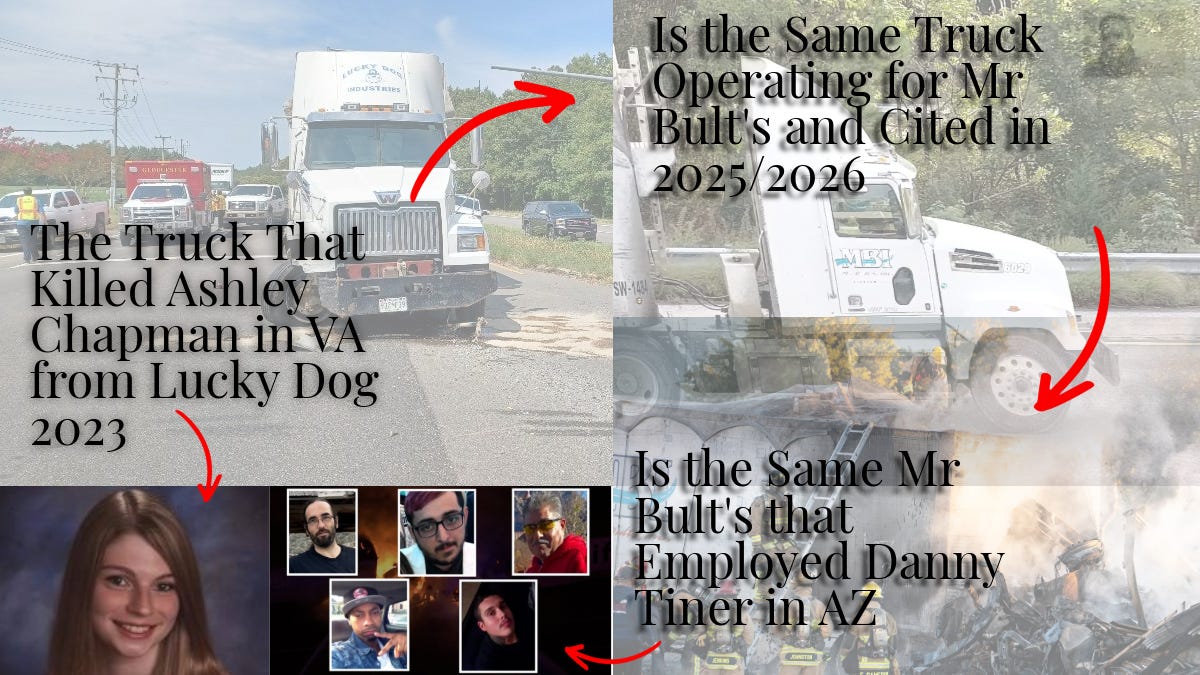
On August 24, 2023, a tractor-trailer hauling waste was traveling southbound on Route 17 in Gloucester County, Virginia, when it came upon stopped traffic near the intersection of T.C. Walker Road. The driver, Richard Hutchison-Wright II, 41, of Newport News, did not stop in time. His truck slammed into the back of a 1989 Chevrolet Beretta, crushing the car into a flatbed trailer ahead of it. Ashley Chapman, 25, of Gloucester, was killed at the scene. Her passenger was transported to Riverside Regional Hospital with serious injuries.
Initial reports said Hutchison-Wright was charged with reckless driving. What happened next received far less attention. On November 6, 2023, a Gloucester County grand jury returned a direct indictment charging Hutchison-Wright with involuntary manslaughter, a Class 5 felony under Virginia Code 18.2-36. On March 26, 2024, he entered a guilty plea. On July 9, 2024, a judge sentenced him to three years in the penitentiary. Gloucester Circuit Court case CR23000535-00 is a public record.
The truck that killed Ashley Chapman belonged to Lucky Dog Industries, a waste hauling operation based in the Washington, D.C., metropolitan area that had been in business since 1998. Lucky Dog had a history of high crash frequency and had been cycling through insurance carriers for years, burning through standard markets, then subprime markets, as each insurer reviewed its loss history and declined to renew.
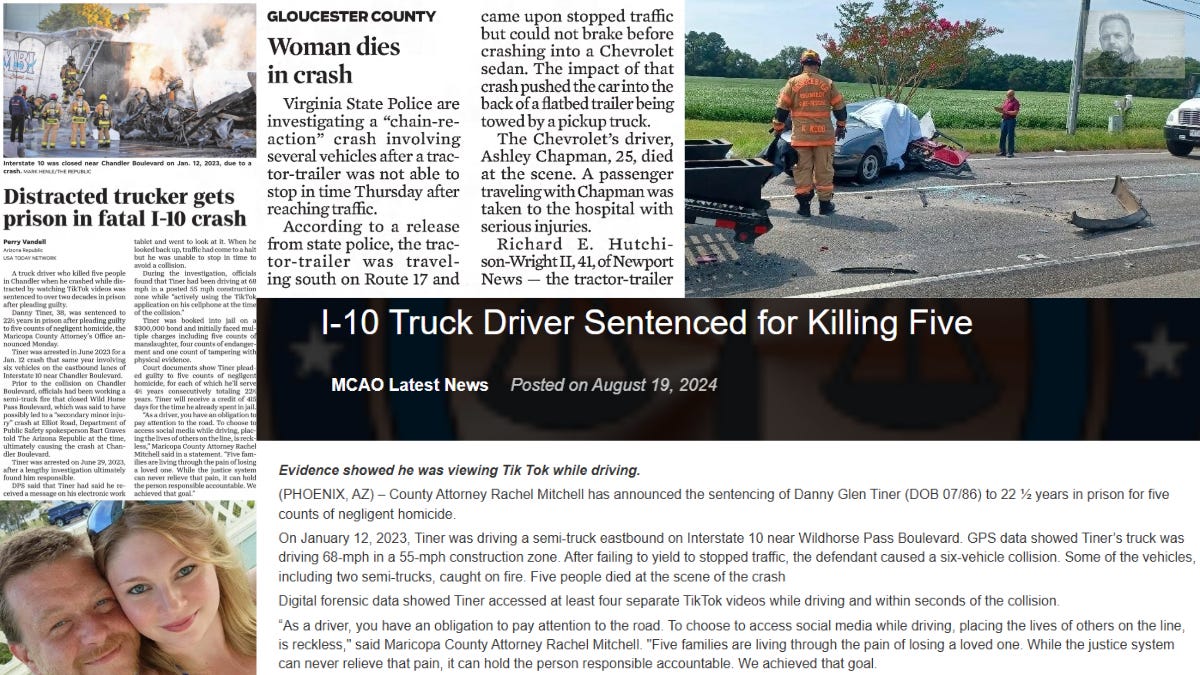
Less than five months later, on January 12, 2023, a different truck hauling waste plowed into stopped traffic on Interstate 10 near Chandler, Arizona. Danny Glen Tiner was driving 68 mph in a 55-mph construction zone while watching TikTok videos on his phone. Five people were burned to death. In August 2024, Tiner was sentenced to 22.5 years in prison after pleading guilty to five counts of negligent homicide.
Tiner drove for Mr. Bult’s Inc., an Illinois-based waste transportation company with USDOT number 387102. As of February 2026, FMCSA records show Mr. Bult’s has been involved in 137 crashes in the prior 24 months, including three fatal crashes and 51 injury crashes. The company has 1,547 power units and 1,132 drivers. Its vehicle out-of-service rate is 26.8 percent, above the national average of 22.26 percent. In June 2023, 12 News in Phoenix reported that Mr. Bult’s had been involved in 148 crashes in the prior two years, with 40 injuries and six deaths.
These two crashes, separated by 5 months and 2,300 miles, are connected by more than the waste-hauling industry. They are connected by the same carrier pipeline.

The carrier that couldn’t get insurance
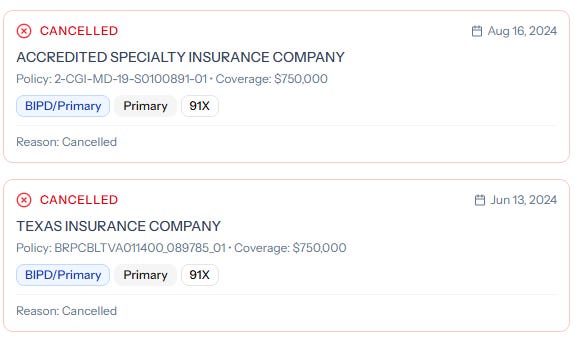
The same insurance company that insured Lucky Dog and canceled them after Ashley Chapman’s death became their insurer again before they closed, a year after they were dropped by Texas Insurance.
Lucky Dog Industries was “owned” by Sean Lash (Who by some miracle, ran a 600-asset multi-state trucking operation while being a full-time firefighter in northern VA. Backed by his father, “Tony” Wilton Lash) and operated out of Washington, D.C., and Hyattsville, Maryland, with transfer operations extending into Virginia. The company hauled municipal solid waste under contracts with major waste management corporations, including Republic Services, transporting refuse from transfer stations to regional landfills.
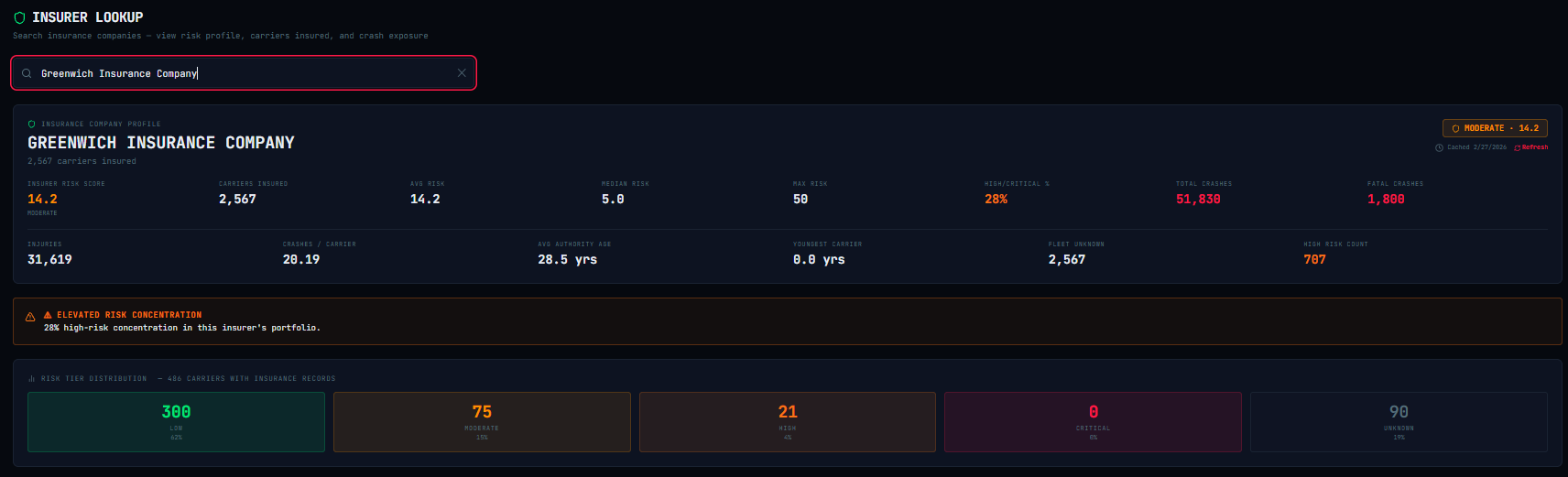
Over decades of operation, Lucky Dog accumulated a safety record that made it increasingly difficult to obtain commercial auto liability insurance. Each year, when its insurance agent went to market to renew the account, the pool of willing underwriters shrank. The standard market carriers declined. The specialty markets declined. The surplus lines carriers, the insurers of last resort for high-risk operations, eventually declined as well. Lucky Dog’s crash frequency and loss history had priced it out of the commercial insurance market.
Rather than cease operations, the company attempted to restructure its way around the insurance problem. A new entity, CWI of Washington, was established under the name of another family member and the COO, Joe Sandy. The plan was to gradually transition Lucky Dog’s vehicles and operations to CWI, effectively presenting insurers with a new carrier identity unburdened by Lucky Dog’s loss history. The insurance market identified the connection and declined to write CWI as well.
When the chameleon strategy failed, Lucky Dog executed an asset sale to Mr. Bult’s Inc., the Illinois-based waste hauler. The transaction transferred Lucky Dog’s vehicles, its municipal waste contracts with Republic Services and other shippers in Virginia, and key operational personnel. Joe Sandy, who had served as Lucky Dog’s chief operating officer, transitioned to Mr. Bult’s. Corporate records indicate Sandy also remains associated with CWI of Washington, which, as of this writing, holds a registered but inactive DOT number, a dormant authority that could be activated at any point to resume operations.
The asset sale was confirmed in a civil litigation case filed in the General District Court of Chesterfield County, Virginia. That case could not proceed to resolution due to the closure of Lucky Dog Industries and the transfer of its assets.
Follow the sequence. Lucky Dog’s truck killed Ashley Chapman on Route 17 in August 2023. Lucky Dog could not obtain insurance because its decades of poor safety performance had exhausted every willing underwriter in the market. Lucky Dog attempted to chameleon its operations through CWI of Washington. The insurance market caught it. Lucky Dog sold its assets, contracts, and personnel to Mr. Bult’s Inc. Five months before the Chapman crash, Mr. Bult’s driver, Danny Tiner, killed five people on Interstate 10 in Arizona. Mr. Bult’s then absorbed the very operation whose safety failures had made it uninsurable, with the same management team that had run Luck Dog into a place of uninsurability.
The driver who killed Ashley Chapman pleaded guilty to involuntary manslaughter and was sentenced to three years. The driver who killed five people in Arizona pleaded guilty to negligent homicide and was sentenced to 22.5 years. The carrier pipeline that connected both crashes, the ownership decisions, the chameleon attempts, the asset transfers, and the contract migrations produced no criminal charges against any carrier owner or executive in either case.
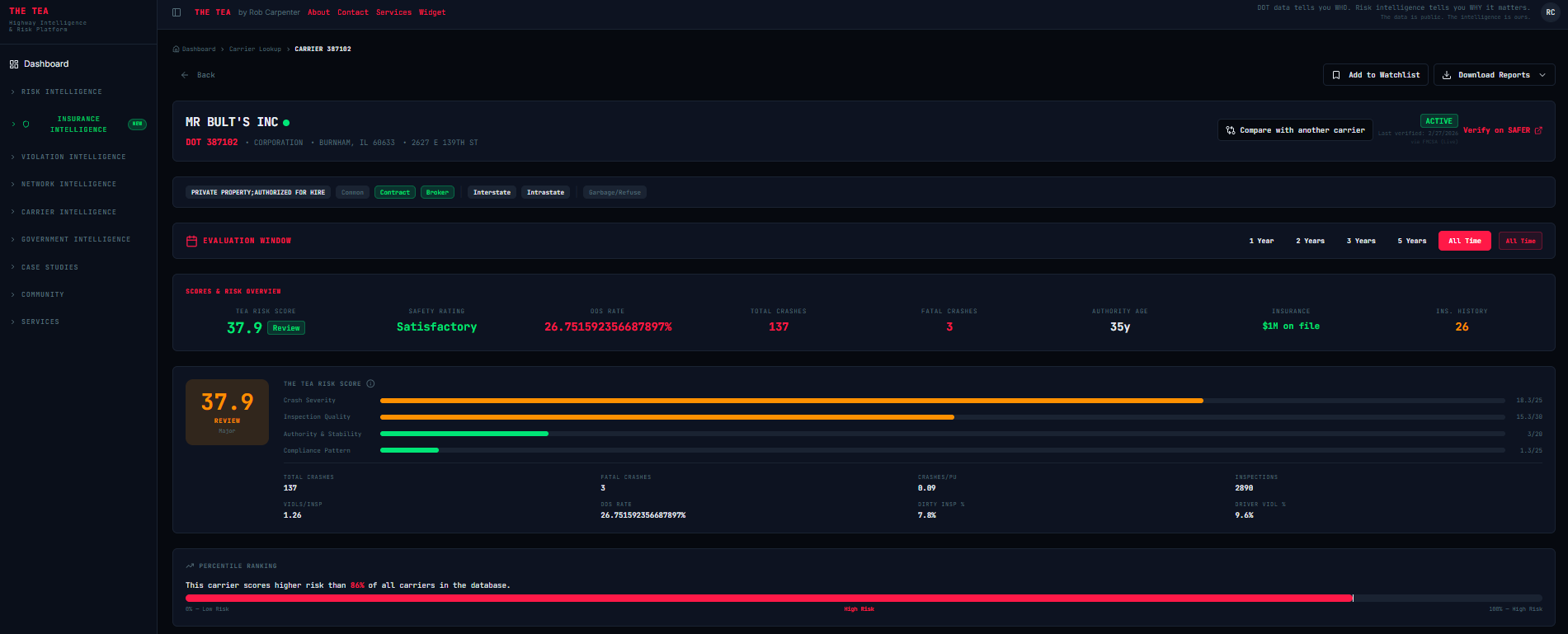
The shippers who looked the other way
The Lucky Dog to Mr. Bult’s pipeline raises a question that extends beyond the carriers themselves: what about the shippers who awarded and transferred the contracts?
Republic Services and other municipal waste corporations maintained long-standing relationships with Lucky Dog Industries, with Tony Lash, and with the Lash family’s operations. Those shippers had access to the same FMCSA data that insurers used to decline coverage. They knew, or had every reason to know, the carrier’s safety history. When Lucky Dog’s assets transferred to Mr. Bult’s, those contracts transferred with them. The shippers allowed it.
The waste hauling business model creates its own safety pressures independent of any individual carrier’s management. Drivers in the municipal solid waste sector are typically compensated by the load. Transfer stations and landfills operate on fixed schedules, generally from five days a week, Monday through Friday. The more loads a driver completes while the facilities are open, the more they earn. This pay structure manufactures a sense of urgency that incentivizes speed and fatigue. Add the short-haul exemption from electronic logging device requirements, which eliminates the digital record of hours worked, and what emerges is a sector where fatigue is commoditized and its evidence is invisible.
Republic Services and the other shippers that contract with waste haulers understand this dynamic. They understand that the carriers competing for their business are running drivers at maximum intensity within compressed windows. They understand that the pay-per-load model creates incentives that conflict with safe operation. And they continue to award contracts to carriers with documented safety problems, because the waste needs to be hauled, and the lowest-cost carrier gets the work.
In this cycle, when a carrier’s safety record finally catches up with it, when the insurance market shuts the door, the carrier does not disappear. It restructures. It’s chameleons. It sells its assets to the next operator willing to take its contracts and its trucks. The shippers transfer the contracts. The drivers transfer with them. And the public, the people sharing the highway with these trucks, absorbs the risk that the insurance market, the last private-sector safety filter in the chain, refused to carry.
The law that opened the floodgates
The pipeline that connected Ashley Chapman’s death to the five deaths on Interstate 10 did not emerge from nowhere. It is the product of a regulatory framework built over four decades, starting with a pen stroke in the Oval Office.
On July 1, 1980, President Jimmy Carter signed the Motor Carrier Act into law. Carter called it historic legislation that would save consumers $8 billion a year by removing 45 years of government restrictions on the trucking industry. He was right about the savings. What his signing statement did not predict was the cost.
Before 1980, entering the trucking industry required a certificate of public convenience and necessity from the Interstate Commerce Commission. Carriers had to demonstrate they could operate safely. Routes were regulated. Rates were set collectively. The system was inefficient and expensive, but the barriers to entry meant that the carriers on the road had been vetted, capitalized, and supervised.
The Motor Carrier Act removed those barriers. Entry became nearly automatic. The number of registered carriers more than doubled between 1980 and 1990. Thousands of new operators entered the market, many of them small and undercapitalized, operating on margins that left little room for safety investments. Drivers’ real wages fell roughly 30 percent. Union membership in the industry dropped by 25 percent. The ICC Termination Act of 1995 eliminated most remaining federal restrictions, completing the deregulation cycle.
Congress understood at the time that deregulation would flood the market with new operators. The $750,000 minimum liability insurance requirement, set in 1980, was Congress’s intended backstop. Insurers would refuse to cover unsafe operators or price them out of the market, creating a private-sector safety filter. That filter never materialized at the level Congress intended. The $750,000 minimum was supposed to be a floor that the Secretary of Transportation would raise over time. It was never raised. Not once, in 46 years. Adjusted for inflation, $750,000 in 1980 would be approximately $2.9 million today. The average cost of a fatal truck crash now exceeds $7 million, according to FMCSA estimates.
The consequences of that framework became visible in the data. Between 2013 and 2022, fatal crashes involving large trucks increased 43 percent. In 2022 alone, 5,788 large trucks were involved in fatal crashes, killing 5,936 people. Approximately 72 percent of the fatalities were occupants of other vehicles, pedestrians, or cyclists.
Four decades of barrier reduction
The Motor Carrier Act opened the door. What followed was a series of policy decisions across multiple administrations that widened it.
The false narrative of a perpetual driver shortage, promoted by carrier associations and repeated uncritically for years, provided political cover for reducing barriers to entry for both carriers and drivers. A 2024 study from the National Academies of Sciences found that the idea of a driver shortage contradicts basic economic principles of supply and demand. But the narrative served its purpose. It justified policies that prioritized cheap labor over qualified labor, volume over vetting, and market access over highway safety.
Federal and state programs reduced barriers to CDL acquisition. Third-party testing expanded without adequate oversight. CDL schools proliferated under minimal standards in a self-certification model that the FMCSA has now acknowledged was riddled with fraud. In February 2026, FMCSA announced it had removed 550 schools from the Training Provider Registry after conducting 1,400 sting operations. Those schools were actively producing credentialed drivers who could not meet federal qualification standards.
Non-domiciled CDL programs allowed foreign nationals to obtain commercial licenses through state-level systems with inconsistent verification standards. California’s CDL program issued licenses to drivers whose qualifications were never adequately confirmed. Illinois’s non-domiciled program had an illegal issuance rate of 20 percent, according to FMCSA enforcement findings. These were not isolated state failures. They were the predictable result of a federal system that relied on self-certification, inadequate oversight, and a political environment across multiple administrations in which reducing barriers was treated as inherently virtuous, regardless of safety consequences.
The Carter administration signed the Motor Carrier Act. Subsequent administrations of both parties continued the pattern of barrier reduction without building the enforcement infrastructure to replace the functions that barriers had provided. The self-certification model for schools, examiners, and carriers created registries without gatekeepers. The influx of carriers and drivers into the system overwhelmed the inspection and enforcement apparatus that was never funded to handle the volume deregulation created. The result was not a failure of one administration or one party. It was a structural failure spanning four decades, in which every administration prioritized market access over the safety infrastructure the market required.
The ten decisions that determine who lives and who dies
Every fatal truck crash has a proximate cause. A driver watched TikTok. A driver fell asleep. A driver used heroin. But behind every proximate cause is a chain of decisions, made by people far from the highway, that put that driver in that truck on that road. Each link in the chain is a point at which the system either captures the risk or lets it through.
1. The people Americans elect to make and enforce the laws
Highway safety policy begins in Washington and in state capitals. When Congress sets a minimum insurance threshold and never adjusts it for 46 years, that is a policy choice with body-count consequences. When administrations choose to reduce barriers to entry without corresponding increases in enforcement resources, that is a choice. When oversight committees decline to hold hearings on CDL fraud or chameleon carriers for decades, that is a choice.
2. Who insurers choose to insure
Insurance was supposed to be the market’s safety filter. When a carrier cannot obtain insurance, it cannot operate. But the $750,000 federal minimum is so low that coverage is available to carriers that should not be on the road. Lucky Dog Industries burned through every insurer in the market and was still operating when its truck killed Ashley Chapman. The insurance filter worked eventually, but only after someone was dead.
3. Who receives authority to operate as a motor carrier
FMCSA’s registration system has historically relied on self-reported information. A carrier shut down for safety violations could register under a new name with the same trucks, drivers, and address, and receive a new DOT number. CWI of Washington sits today with a registered DOT number, dormant, waiting. The SAFE Act, introduced in February 2026, is the first federal legislation targeting this practice.
4. Which CDL schools receive authorization to train drivers
The Training Provider Registry operated on a self-certification model. After 1,400 sting operations, FMCSA removed 550 schools. Every graduate with a fraudulent credential was a risk on public highways, placed there by a system that trusted the honor code in an industry with financial incentives to cheat.
5. Which medical examiners are authorized to certify driver fitness
The National Registry of Certified Medical Examiners determines who can sign the medical certificate that clears a driver to operate an 80,000-pound vehicle. The same self-certification problems that plagued CDL schools have appeared in the medical examiner registry. Examiners who rubber-stamp certifications put medically unfit drivers behind the wheel.
6. Which third-party examiners administer CDL tests
States that allow third-party testing outsource a core public safety function to private entities with financial incentives to pass applicants rather than fail them. The LICENSE Act currently before Congress would expand third-party testing, while the FMCSA is shutting down fraudulent testing operations.
7. Which drivers a carrier chooses to hire
Federal regulations under 49 CFR Parts 382, 383, 390, 391, and 395 require motor carriers to verify CDL validity, check the Drug and Alcohol Clearinghouse, conduct pre-employment drug testing, maintain driver qualification files, and monitor hours of service compliance. When carriers fail to perform these checks, and a driver kills someone, the carrier made the decision that put that driver on the road. The driver pulled the trigger. The carrier loaded the gun.
8. What equipment the carrier purchases and how it is maintained
Vehicle maintenance is a federal requirement under 49 CFR Part 396. Mr. Bult’s Inc.’s vehicle out-of-service rate of 26.8 percent means that more than one in four of its trucks inspected at roadside had deficiencies severe enough to be placed out of service. Carriers that treat federal maintenance standards as optional are making a calculated bet that the inspection system will not catch them before someone dies.
9. Who awards the contracts and allows the transfers
The shippers and waste management companies that contract with carriers like Lucky Dog and Mr. Bult’s have access to the same safety data that the public can find on the FMCSA website. Republic Services maintained contracts with Lucky Dog despite deteriorating safety performance and allowed those contracts to transfer to Mr. Bult’s after the asset sale. The waste hauling pay-per-load model, compressed schedules, and short-haul ELD exemptions create the conditions under which fatigued drivers operate. The shippers who structure those contracts bear responsibility for the incentives those structures create.
10. Whether the system holds the right people accountable when it fails
And this is where the chain breaks. Richard Hutchison-Wright went to prison for three years for killing Ashley Chapman. Danny Tiner went to prison for 22.5 years for killing five people in Arizona. The carrier pipeline that connected both crashes, Lucky Dog’s decades of poor operations, the chameleon attempt through CWI, the asset sale to Mr. Bult’s, and the transfer of contracts and personnel produced no criminal charges against any carrier owner or executive. The person with the least institutional power, the driver, absorbed the most severe consequences. The entities that created the conditions for the crash absorbed the least.
The cases that complete the pattern
Rogel Aguilera-Mederos and the I-70 crash: 110 years, commuted to 10
Aguilera-Mederos was 23 years old with less than a year of experience when his brakes failed on Interstate 70 near Lakewood, Colorado, on April 25, 2019. Four people died in a 28-vehicle pileup. A jury convicted him of 27 charges. The original 110-year sentence was the statutory minimum under Colorado law. Governor Jared Polis commuted it to 10 years. The Change.org petition that drove the commutation, signed by more than five million people, contained a line that captured the accountability gap: “No one but the trucking company he is/was employed by should be held accountable for this accident.” The carrier was not criminally charged.
Westfield Transport and the Jarheads crash: seven dead, carrier owner pleads to paperwork
On June 21, 2019, Volodymyr Zhukovskyy, an employee of Westfield Transport Inc., collided with motorcycles in Randolph, New Hampshire, killing seven members of the Jarheads Motorcycle Club, an organization of Marine Corps veterans and their spouses. Zhukovskyy told police he used three to four bags of heroin a day and had used both heroin and cocaine the morning of the crash. A post-crash FMCSA review found more than two dozen violations at Westfield Transport: no corporate safety program, no drug testing program, no maintenance records, falsified logs, and false statements to federal inspectors. In August 2022, a jury acquitted Zhukovskyy. In August 2024, the carrier owner, Dunyadar Gasanov, pleaded guilty to three counts of making false statements to federal investigators. Seven Marines are dead. The carrier owner pleaded to paperwork.
Hope Trans and the I-20 crash: the rare exception
On June 22, 2024, a tractor-trailer hauling a U.S. Postal Service load slammed into slowed traffic on Interstate 20 near Weatherford, Texas. Five people died, including four members of the same family. The driver told investigators he fell asleep. A federal audit found that between 2018 and 2022, USPS contract drivers were involved in at least 373 crashes that killed 89 people, and the Postal Service had failed to track those accidents. Both the driver and a company official were indicted. That indictment remains the exception.
The argument for criminal carrier liability
The tools now exist to identify carriers operating outside federal safety requirements before a crash occurs. The Drug and Alcohol Clearinghouse, the SMS scoring system, the Training Provider Registry, FMCSA inspection databases, and carrier intelligence platforms can document patterns of decisions that prioritize revenue over safety. When a carrier with repeated out-of-service violations, Clearinghouse hits, maintenance deficiencies, and driver qualification failures produces a fatal crash, the record is the evidence.
There is no principled reason why a carrier owner who knowingly employs unqualified drivers, falsifies safety records, defers critical vehicle maintenance, and attempts to chameleon into a new identity when the insurance market finally shuts the door should face less criminal exposure than the driver those decisions put on the highway. The driver who watches TikTok at 68 mph in a construction zone made a reckless choice in a moment. The carrier that put an untested, unvetted driver behind the wheel of a truck with deferred maintenance made a series of reckless choices, every single day, as part of its business model.
Lucky Dog Industries operated for decades with deteriorating safety performance. When it could no longer obtain insurance, it did not stop operating. It attempted to disguise itself as CWI of Washington and, when that failed, sold its assets and contracts to Mr. Bult’s Inc. At no point in that sequence did any carrier owner face criminal accountability for the operational decisions that produced Ashley Chapman’s death or contributed to the conditions under which Mr. Bult’s driver killed five people in Arizona.
The road from here
The hierarchy of failure documented in this article is not a conspiracy. It is a system. It was built through a series of rational-seeming policy decisions over four decades, each of which prioritized market access, cost reduction, or political expediency over the safety infrastructure needed to support the market those decisions created.
The current administration has taken more enforcement action on CDL fraud, chameleon carriers, English proficiency, and non-domiciled licensing in its first year than any administration in recent memory. Operation SafeDRIVE, the CDL school purge, the non-domiciled final rule, and the English-only testing mandate represent a genuine course correction. But enforcement actions are executive decisions that can be reversed by the next administration. The structural problem requires structural solutions: statutory carrier accountability, updated insurance minimums, funded enforcement, shipper liability standards, and a registration system that identifies bad actors before they kill someone.
The highway bill reauthorization, due by September 30, 2026, is where those structural solutions either materialize or die in committee. Every bill in the current legislative pipeline, from the SAFE Act targeting chameleon carriers to Connor’s Law strengthening the Clearinghouse, is a potential rider on that vehicle.
Ashley Chapman was 25 years old. She was driving her Chevrolet Beretta on Route 17 in Gloucester County, Virginia, on a Thursday afternoon. The truck that killed her belonged to a carrier that could not get insurance because of how poorly it operated. That carrier attempted to chameleon into a new identity. When that failed, it sold its assets and contracts to a company whose driver had already killed five people in Arizona. The driver who killed Chapman went to prison. The carrier pipeline that produced both crashes did not.
Until the criminal justice system treats both sides of that equation with equal seriousness, the accountability gap will persist. And the public will keep paying for it, one crash at a time, in ways most Americans never see, and few in positions of authority are willing to discuss.
Put some flock cameras on that!