

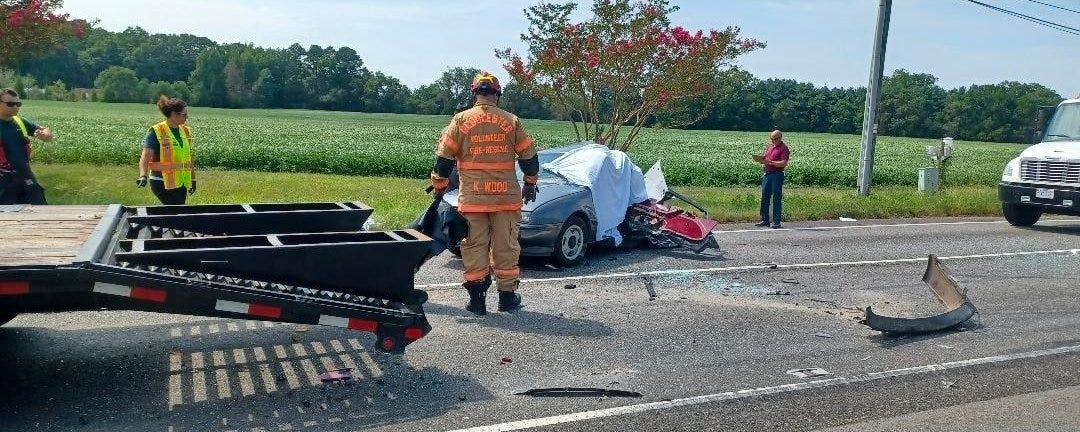
A father was on the phone with his daughter when the truck hit and killed her. That case came in last week, and it will never close for him.
A father was on the phone with his daughter when the truck hit her. He heard it happen. Then he heard nothing, and he stayed on the line anyway, because there was nothing else on God’s earth he could do from where he was standing. That call is the last conversation he will ever have with her. It will play in his head at red lights, in the shower, and every time his phone rings for the rest of his life.
He would go on to call 911 and wait for a Trooper to call him back about the condition of his child. His daughter. The call came, and he found out that listening to his little girl die because of a careless carrier and bad driver was the last call he would ever have with his daughter.
That case landed on my desk last week. It’s one of hundreds I work on around the country, trying to make carriers and drivers “right,” or to make victims whole. It will settle or go to trial, and either way the file will close. It will never close for him. None of these cases do. The families who bury someone carry it forever, and the ones who live through the crash carry it in their bodies. I have sat across from people who came out of a truck crash without legs, without eyes, missing a hand or an arm, with a face strangers stare at in the grocery store. The lawyers call that damages. The people living it call it Tuesday.
I get asked a lot of questions about why I do what I do. Some come politely, from drivers and safety directors. Some come in comment sections. Some come through lawyers. What’s his angle? Who’s paying him? Is he a defense guy or a plaintiff guy? Why does he keep writing about C.H. Robinson or Super Ego? Those are fair questions, and I would rather answer them myself than let somebody else answer them for me. So here it is.
When I get these cases, and I get to crash scenes, or I watch the videos, I reimagine what happened here and what that felt like for the daughter and the father. The hopelessness. The waiting. The hoping and the praying. Then I replay the event, and I watch how the slightest lane change two minutes ago became the last decision a victim made to put themselves unknowingly in the path of a dangerous carrier or driver who in no way grasps the totality of his moral, ethical, or professional responsibilities to the people he shares the road with.
Start with the part that has nothing to do with trucking. My father died in a motorcycle crash. He shot himself decades earlier when we were small children. I have lost siblings to drug overdoses before 30 and 40 years old. Both of my parents were addicts; I was raised from age 4 by my dad’s mother on a farm, and I was emancipated at 15. I am not telling you that for sympathy. I am telling you because I know exactly what the family on the other end of my case file is about to go through, usually before they do. There is nothing like holding the cold, dead hand of somebody you love because someone else made a bad decision and never wrapped his mind around his moral, ethical, and professional responsibility to share the road safely. I have held that hand. I would not wish it on the people I investigate.
In August I wrote about the last eight seconds of Ashley Chapman’s life. She was stopped at a red light on Route 17 in Gloucester, Virginia, when a loaded trash truck driven by a man who had been nodding off all day ran into the back of her Chevrolet and drove it into the gooseneck flatbed stopped ahead of her. I watched his whole day on the forward-facing and driver-facing cameras. The camera system in his cab did not issue a forward collision warning until he was about a foot from her bumper. A mile earlier, she and a pickup driver had swapped lanes, the most ordinary thing two drivers ever do, and that swap put her in front of him instead of the other guy.
The point of that piece was not the last eight seconds. It was everything stacked underneath them. A short-haul exception that meant no electronic log ever recorded how hard he was running. Pay by the load against landfill gates open eight or nine hours a day. A carrier whose address of record steered its federal review to an office full of accountants instead of the yard full of trucks. A customer that kept renewing the contract while the public record got worse. Someone made every one of those decisions to optimize revenue, and each looked survivable on its own, because most days it was. On her day they lined up.
That is the whole thesis of my work, and it answers the question of motive. The more cases I work, the more footage I watch and the more scenes I stand on, the more certain I am that almost none of these crashes are unpredictable. They show up looking like lightning strikes. They are almost always the compound interest on years of decisions made revenue first, with the moral and professional obligations somewhere in the back of the line. The last eight seconds get decided in rate confirmations, contract renewals, and audit samples, months and years before anybody bleeds.
Which brings me to the freight market, and to why the brokerage side of this industry keeps showing up in my reporting. Here is the pattern. The worst brokers choose the worst carriers to haul the cheapest freight at the lowest rates. That is not a slogan. It is basic trucking and broker math. A load priced below what it costs a legitimate carrier to run will still move because somebody out there doesn't carry the costs a legitimate carrier carries. No safety director. No real drug and alcohol program. No maintenance schedule worth the paper. Insurance bought on a self-declaration. Drivers paid in pennies, or not at all. A carrier with no compliance program has no compliance overhead to absorb, so it can haul for nothing and still make money, and the legitimate fleet down the road is bidding against a ghost.
The carriers suing C.H. Robinson and Total Quality Logistics put numbers on that this fall. Stevens Trucking and five other asset-based carriers filed a racketeering and false advertising complaint Sept. 23 in the Eastern District of Texas, Marshall Division, case No. 2:26-cv-00869. The complaint cites American Transportation Research Institute data putting the marginal cost of running a truck in 2022 and 2023 at about $2.26 a mile, with roughly 42% of that going to labor. That leaves about $1.31 a mile in costs every carrier pays whether its drivers get paid or not. The plaintiffs allege team loads went out for less than $1.50 a mile. Do the subtraction, and about 19 cents a mile is left to pay two drivers. Those are allegations; both brokers deny them, and C.H. Robinson has said it rejects the lawsuit’s characterization of the company and its practices. The math does not care who wins the motion to dismiss.
Strip away the fraud, and the worst carriers in this industry fail on three things: identity, disclosure, and accountability. Those are the foundations of any civilized system, not just trucking. You know who you are dealing with. They tell you the truth about what they are. They answer for what they do. A chameleon carrier breaks all three by design. It hides who owns it. It does not disclose its association with the last company that ran the same trucks, drivers, and dispatchers under a different DOT number. When the crash comes, it skirts accountability by dissolving into the next entity. The scheme is not a bug in the paperwork. It is the business model. In one case, Gold Coast stooped so low as to move the company into the name of a driver who died driving for the company five years earlier.
We built a system that lets them do it, because nearly every gate in civilian surface transportation runs on the honor system. Electronic logging devices are self-certified by the companies that sell them. Entry-level driver training providers put themselves on a federal registry by attesting that they meet the standard. A carrier declares its own fleet size on its registration, and I have read insurance files where an operation declared one truck to an underwriter while the network it belonged to was moving hundreds of VINs. The CBS 60 Minutes segment I worked on reported about 350 federal investigators overseeing roughly 700,000 registered trucking companies. Self-declaration plus a skeleton enforcement staff is not oversight. It is an invitation.
Super Ego is the clearest example I know. On Sept. 17, 2025, C.H. Robinson announced its Carrier of the Year winners, and the award in the 1,000-plus truck category went to Super Ego. Seven months later, on April 12, 60 Minutes aired an eight-month investigation into the network, citing Department of Transportation data showing Super Ego-connected carriers logged nearly 15,000 safety violations and 500 crashes over two years. Super Ego called the report misleading and said it is an equipment leasing company, not a carrier. I have read the public court records on the insurers that rescinded their policies one after another. Readers can decide which description fits.
Here is where my issues with C.H. Robinson come from. When I started publishing what the federal roadside inspection records showed about the carriers moving on Robinson loads, what came back was not a better vetting program. It was complaints about me. A data vendor whose platform I was using cut off my access after Robinson complained, and the company complained to the media side of a major trade show that I had recorded its people. I did not stop. The roadside records are public. The Carrier of the Year press release is public. The $604 million advisory verdict a Dallas County jury returned against the company on July 23 in a fatal crash case is public, and the company has said it will challenge it. None of that is a vendetta. It is the record, and my job is to read it.
I want to be fair to the brokerage side, because I spent years there. Most brokers are not the problem. Plenty of them vet hard, turn down cheap capacity, and lose freight as a result. The Supreme Court made their homework matter on May 14, when it ruled unanimously in Montgomery v. Caribe Transport II that federal law does not shield brokers from negligent selection claims. That ruling did not create a duty to care who hauls your freight. It confirmed that the duty was always there.
Now the question I get most: do you take plaintiff work or defense work? For most of its history, TruckSafe has taken only defense expert work. I honored that unwritten rule to support the industry. Over the years, I personally decided to start taking select plaintiff cases. I did not make that decision lightly, and I did not make it for money. I made it because our market and our industry are being destroyed by the worst actors possible, and highlighting the problem is not the same as fighting it. I spent time building tools to trace carrier networks for investigations and enforcement. I don't believe you can build a system like that and then refuse to use what it shows you to help make victims whole or make the industry right again. We have systems and executives in the market who just want to make money on the enforcement and investigative side; I am not one of them. I will not hide who or what a broker or carrier is or has been simply for dollars at the expense of not making the victim whole. That is the point of all of this.
My standard does not change based on who signs the engagement letter. If a broker did its homework, I will say so, and I have. We are defending a broker as we speak who had a .01% driver OOS rate yet has been ambushed as a “bad carrier selection.” If a carrier ran a real safety program and a driver made a mistake no program could have prevented, I will say that too. If the record shows a company priced its freight so low that only a ghost could haul it, picked the ghost, and then acted surprised at the funeral, I will say that, and I do not care whose side it helps. I choose my clients carefully. I do not care what you pay me. If you are not a principled operator, I do not want your business.
That goes for the media side too. My content reaches about 250 million views a year, and offers come in constantly: push this product, endorse this vendor, carry this agenda. I push maybe four, and I do most of those for free, because they are real advocacy groups, associations, and programs that actually help drivers and the people they share the road with. Influencers in this industry will take money from anyone who asks, every single day, simply because someone is willing to pay. I am not that guy. I make my own money. I do not need yours. I was never designed to be an influencer; I am a man focused on my work, and that work is to root out the worst of our industry and make victims whole wherever that leads.
The truth is, a lot of my work isn't billed at all. I consult for free most of the time. Partners have to push me to bill, and some of the case reviews I do are labeled for exactly what they are: uncompensated reviews provided as a resource, not retained opinions. The standard creed in the consulting and legal world is that if you thought about a case in the shower, you bill for the shower. I have never been able to wrap my head around that as work. Thinking about how a family ended up in my file is not a line item. It is the job.
None of this means I have written off the bad actors. The majority of our business is helping the worst fleets in this industry become the best ones, whether you are a trucking company, a broker, or a vendor. I believe in redemption, and I believe the intelligence that exposes a bad operation is the same intelligence that can fix one. We will not make our highways safer without reaching across the aisle and working with the operators who need it most. I will sit down with anyone who wants to get better at what they do. But if we get into a relationship and it becomes clear you are not trying to be above board, that you want the badge without the work, we are done. We do not hitch our wagon to sorry carriers and sorry brokers who will not change.
I believe the people running this country’s transportation agencies are serious about enforcement right now. Enforcement alone will not fix it. Washington cannot audit its way out of a system where 350 investigators chase 700,000 companies that grade their own paper. The industry has to fix it: shippers who ask who actually hauled their freight, brokers who refuse capacity that cannot exist at that price, insurers who verify what they underwrite, and carriers who stop treating compliance as a cost to be competed away.
Everybody in this industry should want it turned right side up again, because everybody in it is paying for the bottom of it. The legitimate carrier pays when it loses the lane to a rate only a ghost can haul. The legitimate driver pays in a paycheck squeezed to match the operator who doesn’t pay his drivers at all. Every fleet pays at renewal, when insurers price in the verdicts the worst operators earned. Brokers and shippers pay when a crash puts their name in the caption. The motoring public pays in the only currency that can’t be refunded. The bad actors don’t just cut corners. They take the cost of every corner they cut and hand it to the people who didn’t cut any.
For a lot of brokers, carrier selection has always been graded at the floor. Does the carrier have a DOT number, operating authority, and an insurance certificate on file? If yes, tender the load. To me, that is the same as hiring a driver off his CDL instead of a road test. The regulations let a carrier accept a CDL in lieu of the road test under 49 CFR 391.33. You have no idea who the examiner was, what the licensing agency checked, or whether the license came out of a mill. Yet you trust it as the declaration that this driver is safe, and you put him on the road. Ten more minutes in the passenger seat would tell you who he is, how he drives, and whether you want him behind the wheel of your truck.
Brokers don’t get a ride-along. What they get is better: years of public history on every carrier they tender to. Inspection records, out-of-service rates, crash history, authority changes, shared addresses, shared phone numbers, shared equipment, and insurance that keeps getting canceled. The data that tells you a carrier is high risk or below board is endless, and most of it is free. Stop grading carrier selection at the floor. Look at the risk profile you are adopting every time you source the cheapest truck on the board.
We don’t need a new regulation to tell us a carrier is bad. We need brokers to put common sense selection protocols in place that confirm what we already know in our gut from the carrier’s own history. The record is sitting there. Read it before you tender, not after the funeral. Make the selection with a moral, ethical, and professional standard mindset, not a financial one. Ask yourself: would I want my daughter, son, or spouse next to this truck on the highway?
Until that happens, I will keep reading the records, and I will keep taking the cases worth taking, on whichever side of the courtroom the truth happens to sit. I owe that to the legitimate carriers and drivers of this industry who play by the rules and lose loads for it. I owe it to Ashley Chapman’s family. I owe it to the father who stayed on the line.
He will hear that call for the rest of his life. I want the people who priced that load to hear it too.
Good for you. What you are doing is important. Keep doing it thank you.
I wonder if you could give us ordinary drivers some tips on how to protect ourselves from bad truck drivers. Are there any indicators we can watch for on the highway?