

Brokered spot market freight has one goal: margin. When margin is the goal, cheap freight attracts the cheapest carriers. So, what is really brokered freight? What is interlined freight? What’s the difference? Does it matter?
Last year I wrote several articles on things many either forgot or didn’t know. Interlining freight was one big one, and valueless commodities that don’t require broker authority to arrange transactions. I sit in depositions now, on top of everything else, and I can tell you what the first fight in a truck crash case used to be: speed, brakes, hours, the physical facts of the crash, or the hire or the transaction.
The first fight in case after case happens before anyone mentions the truck. It’s an org chart fight. The shipper tendered to a company it calls its broker. That company says it never touched the load; a dispatch service did. The dispatch service says it’s not a broker; it’s an agent for the carrier. The carrier on the rate confirmation never owned a truck, and the company whose driver actually crashed says the load came to it through interlining, which is a word most of the people in the room are hearing for the first time. Somewhere in that chain, somebody selected the carrier that killed someone, and every entity in it has a theory for why the selector was somebody else.
The federal government already published the answer. In June 2023, responding to a mandate Congress wrote into the Infrastructure Investment and Jobs Act, FMCSA issued final regulatory guidance, 88 Fed. Reg. 39368 on what makes a broker a broker, what makes a bona fide agent an agent, and where dispatch services fall. It didn’t change the rules it just told everyone how the existing rules apply, which is worse for the pretenders, because it means the answers were always the answers.
A broker, under 49 CFR 371.2(a), is an entity that arranges transportation of freight by motor carriers it doesn’t operate. Arranging is the job: taking a shipment and deciding which carrier hauls it. A bona fide agent, under 371.2(b), is different in one specific way that everything else hangs on: an agent works for a carrier, inside a preexisting written agreement, doing what the carrier directed, with no meaningful decisions of its own. The technical hinge is the phrase “allocating traffic,” and the 2023 guidance defined it as any exercise of discretion when assigning a load to a motor carrier. Any. If an entity represents more than one carrier and it decides which of those carriers gets the load, that decision is brokerage, and brokerage requires federal broker authority, a registration, and a $75,000 bond. The guidance allows a narrow carve-out for a true agent serving multiple carriers only when no real choice exists, carriers in mutually exclusive markets, or a reefer outfit and a flatbed outfit that can’t haul each other’s freight. The moment two of your carriers could both take the load, and you pick one, you’re a broker. You’ve been a broker the whole time.
Now the dispatch service economy, which is enormous and almost none of it can survive the test. Dispatch services have no statutory definition, and FMCSA has no authority to regulate them as a category; the agency can only reach them when their conduct crosses into brokerage, freight forwarding, or carriage. A dispatcher works exclusively for motor carriers, under written agency contracts, sourcing loads through licensed brokers, paid by the carrier on a 1099 or a W-2, disclosing on every call that it acts for a named carrier, never soliciting shippers, never touching the freight money, never handing the load to some other carrier. I know dispatchers who run exactly that model and they are worth every percent they charge a two-truck operation that can’t staff a back office. Then there’s the rest of the market: dispatch operations representing rosters of thirty, fifty, a hundred small carriers, accepting loads before they know which truck will cover them, choosing among their carriers by whoever’s empty and closest, invoicing through factoring companies, sitting in the middle of the money, some of them running from offices that aren’t in this country.
Choosing among carriers is allocating traffic. Accepting a shipment first and finding the truck second is the defining act of brokerage. Touching the money between shipper and carrier is, in FMCSA’s words, a factor that strongly suggests broker authority is required. These operations aren’t dispatch services with paperwork problems. They’re unlicensed brokers with a trade name, and the statute that covers unlicensed brokerage, 49 U.S.C. § 14916, carries civil penalties per violation, a private right of action for anyone injured by the conduct, and personal liability reaching the officers, directors, and principals behind the entity. The corporate shell does not shield you from this one. Congress wrote it that way on purpose.
Interlining deserves its own section, because it’s the oldest legitimate practice in transportation. Real interlining is how connecting carriers have moved freight since the railroad era: a through movement where carrier A hauls the first leg under its own authority, hands to carrier B for the second leg under carrier B’s authority, one through bill of lading governs the shipment, the carriers divide the revenue under an actual arrangement, and cargo liability runs continuously under Carmack from origin to destination. LTL networks interline every night. Parcel does it. Alaska and Hawaii freight can’t move without it. The structure has three load-bearing features: each carrier physically participates in the movement, each operates its own segment under its own authority, and the arrangement between them is a genuine through-route, not a resale. Now compare the version I keep meeting in discovery. A “carrier” accepts a truckload shipment, never dispatches a truck it owns or leases, never touches the freight, sells the load to a second carrier at a markdown, keeps the spread, and when the second carrier’s driver crashes, or the freight vanishes, calls the transaction interlining. It isn’t. A carrier that re-arranges transportation it will not perform is arranging transportation by a carrier it does not operate, which is the definition of brokerage, performed without broker authority, which is the definition of a 14916 violation. The industry name for it is double brokering, the fraud economy built on it now costs shippers and honest carriers hundreds of millions a year, and the interlining defense fails on the same three questions every time: did your equipment move any part of this load, does your bill of lading govern the through movement, and does a genuine pre-existing through-route arrangement exist, or did you flip a rate con. Two of my current files contain the word interlining in a defense position. Neither file contains a truck.
If you want to know why these definitional games suddenly matter enough for me to write about them, the answer came from the Supreme Court on May 14. Montgomery v. Caribe Transport II held, nine to zero, that the Federal Aviation Administration Authorization Act’s safety exception preserves negligent selection claims against brokers. For twenty years, brokers argued federal preemption made carrier selection legally consequence-free, and the circuits split, and the defense worked often enough to be worth pleading. That shield is gone. A broker that places freight on a dangerous carrier can now be sued for that choice in every courtroom in the country, which transforms the question “which entity in this chain was the broker” from a licensing technicality into the whole ballgame. If brokerage now carries selection liability, every intermediary has a fresh reason to insist it wasn’t the broker; it was a dispatcher, an agent, a platform, an interline partner, anything without the duty attached. The definitional fog isn’t an accident of a complicated industry. Post-Montgomery, the fog is the defense strategy.
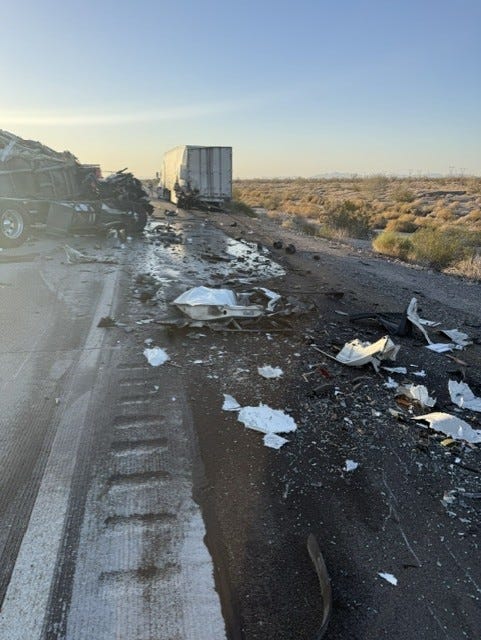
The fog also has a vetting cost that lands before any crash, and this is for the shippers and brokers. The entire carrier vetting model, the whole industry I work in, assumes the chain is what the paperwork says: shipper vets broker, broker vets carrier, carrier dispatches its own truck. Insert an undisclosed allocation layer and the model breaks. The broker vetted the carrier on the rate confirmation, and that carrier sold the load. The shipper’s transportation agreement prohibits re-brokering, and nobody downstream cares. The dispatch service that actually chose the truck was vetted by no one, holds no authority, filed no insurance, and appears in no system a vetting tool can query, and in a growing number of operations it isn’t even in the country. I reported last year on brokerage and dispatch floors running from Eastern Europe behind American paper, and my published work on the Beaumont, Texas crash of April 2023 walked through one public example end to end: a Fortune 500 shipper’s beer moved through a Denver-registered digital broker whose recruiting and dispatch operation ran out of Chisinau, Moldova, onto a carrier whose public federal record at the time of tender already showed a closed enforcement case settled for $791,640, violations for using drivers without valid CDLs, and a crash history that would reach 150 events, 10 deaths, and 86 injuries. Brandon Rogers died on I-10 in that wreck, and seventeen people in total were killed or hurt. Every fact in that sentence was public record the day the load was tendered. The selection chain that ignored them is the subject of active litigation, and the questions being fought over are exactly the ones in this article: who arranged, who allocated, who had discretion, who was the broker.
So here’s how I approach the intermediary question in my expert work, and I’m giving it away because shippers and brokers should run the same checklist before the crash instead of paying me to run it after. Pull the written agreements first: a bona fide agent has a preexisting written agency contract with its carrier that spells out the relationship, and an entity that can’t produce one has already failed the guidance’s first factor. Trace the money second, because the guidance treats sitting in the payment flow between shipper and carrier as the strongest single indicator of brokerage, and factoring records don’t forget. Read the communications third and look for the moment of choice: the text or email or TMS entry where a human at the intermediary decided this carrier, not that one, gets the load, because that moment is allocation of traffic and allocation is brokerage. Then ask the interlining questions from above: whose truck, whose bill, what through-route. Fifteen years of case files have taught me that the entity with discretion and the entity with authority are different companies far more often than anyone’s contract contemplates, and Montgomery just made that gap compensable.
The fixes don’t require new regulation, which is convenient, because the guidance is the regulation explained. Dispatch services that want to stay dispatch services should conform to the model: one written agency agreement per carrier, no shipper contact, no money handling, full disclosure, no reallocation, or go get broker authority, which costs a few hundred dollars and a bond and converts an existential legal exposure into a business license. Brokers should contractually prohibit re-brokering, verify it with tracking that ties the tendered DOT number to the truck at the dock, and treat a carrier that can’t show its own equipment on the load as a fraud event, not a paperwork gap. Shippers should extend vetting one layer past the rate confirmation and ask the question this whole article reduces to: who actually books the truck. The federal government told this industry three years ago exactly where the lines are. The entities still claiming confusion are positioned, and after May 14, positioned is no longer the same thing as protected.