

Before we start with “This is so long,” this is an insurance guide. A comprehensive guide to every reason why the trucking crisis lives and breathes from an insurance perspective. It’s a guide, not an article.
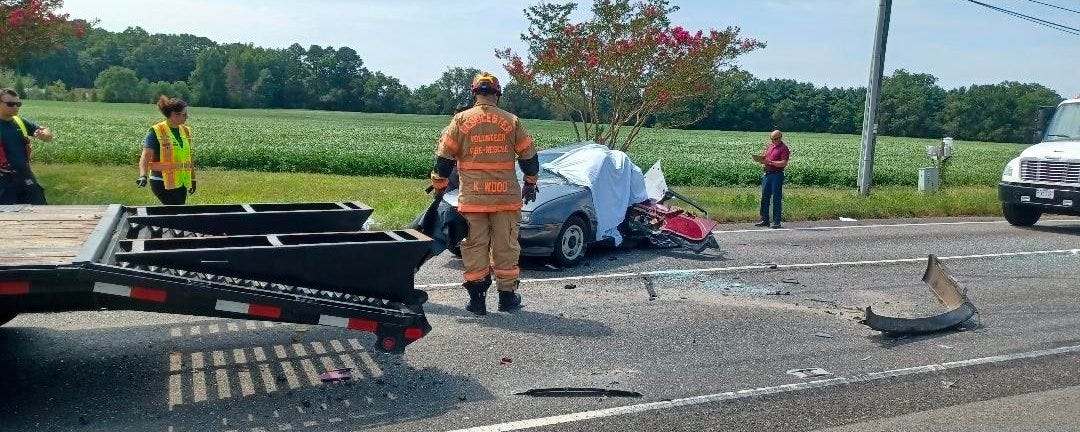
The call goes about the same way every time. A family gets hit by a tractor-trailer. The truck has a DOT number on the door and an insurance filing on record with the federal government. A claims adjuster calls back a week later and says the tractor isn’t scheduled on the policy, the driver isn’t listed and the company never added either one, so there’s nothing to pay. Most people hang up believing that’s the end of it.
For an interstate for-hire motor carrier, it isn’t. Federal law put a one-page endorsement on that policy for exactly this situation. It’s called the MCS-90, and it says the insurer pays a final judgment for the carrier’s negligence whether or not the vehicle was ever described in the policy. The insurer can then go after its own customer for the money. It can’t walk away from the person the truck hit.
The MCS-90 is the most important document in trucking insurance and the least understood, including by some of the people adjusting the claims. This piece breaks it down, then follows the money through the $750,000 floor Congress set when Jimmy Carter was president, the shift from real underwriting to instant online policies, the state assigned risk plans that put carriers back on the road after every insurer in the voluntary market said no, the fleets that declare one truck and run hundreds, the insurers suing their own customers for fraud, a hotshot run out of an Airbnb that killed a man on an interstate, the risk retention groups with no safety net, and the bill that lands on everyone else.
The summary
The MCS-90 is a federal guarantee, not a coverage grant. If an interstate carrier is found negligent and a court enters a judgment, the insurer that filed the carrier’s federal proof of insurance must pay that judgment up to the federal minimum, usually $750,000, even if the truck or driver was never on the policy and even if the carrier lied on its application. The insurer then has the right to be reimbursed by the carrier. It rarely collects, because the carriers most likely to trigger an MCS-90 are the ones built to disappear. The $750,000 floor hasn’t moved since 1980. Underwriting has moved from inspection to self-declaration. When the voluntary market does say no, most states run an assigned risk plan that writes the carrier anyway and spreads the losses across every company selling auto insurance in that state. Every one of those paths ends in the same place: unrecovered losses priced into the premiums of honest carriers, shippers and consumers.
1. What the MCS-90 is
The Motor Carrier Act of 1980 deregulated trucking and, in the same bill, required interstate carriers to prove they could pay for the harm they caused. The Federal Motor Carrier Safety Administration carries out that requirement in 49 CFR Part 387. A for-hire carrier hauling property across state lines in vehicles over 10,001 pounds must show financial responsibility in one of three ways: an MCS-90 endorsement on a liability policy, an MCS-82 surety bond, or FMCSA-approved self-insurance. Nearly every carrier uses the MCS-90. The insurer files a Form BMC-91X with FMCSA, and that filing is what activates the carrier’s operating authority.
The endorsement wording is fixed by regulation at 49 CFR 387.15 and can’t be edited by the insurer. It still refers to the Interstate Commerce Commission, an agency abolished in 1995. The operative promise is that the insurer agrees to pay, within the limits described, any final judgment recovered against the insured for public liability resulting from negligence in the operation, maintenance or use of motor vehicles subject to the federal requirements, “regardless of whether or not each motor vehicle is specifically described in the policy.” The same paragraph says that promise holds whether or not the negligence happens on a route or in a territory the carrier is authorized to serve.
The next clause shuts the door on most denials. The endorsement says no condition, provision, stipulation or limitation in the policy, in the endorsement or in any other endorsement, and no violation of them, relieves the insurer of liability or of paying a final judgment. It also says the obligation applies irrespective of the insured’s financial condition, insolvency or bankruptcy. Late notice, failure to cooperate, an unlisted tractor, an excluded driver, a false application: those can be fights between the insurer and its customer. They aren’t defenses against the injured member of the public, up to the federal minimum.
The last piece explains everything that follows. The endorsement says the insured agrees to reimburse the insurer for any payment it made that it wouldn’t have been obligated to make under the policy except for the MCS-90. The insurer pays the victim, then bills the carrier. Most people in the business call that subrogation. Technically it’s a contractual reimbursement right. Either way, the insurer has to collect, not the victim.
Courts have spent 40 years defining the edges. The majority view, adopted by the Tenth Circuit sitting en banc in Carolina Casualty Insurance Co. v. Yeates in 2009, treats the MCS-90 as a surety obligation rather than a rewrite of the policy. Under Yeates, the endorsement is triggered only when the attached policy doesn’t otherwise cover the loss and no other insurer is available to satisfy the federal minimum. The court called it a safety net that protects the public when other insurance coverage is lacking. The MCS-90 isn’t extra insurance. It’s the floor under the floor.
It covers public liability, meaning bodily injury, death, property damage and certain environmental restoration owed to third parties. It doesn’t cover cargo or the carrier’s own employees. It pays only up to the federal minimum for the vehicle and cargo type, not the policy limit and not the full value of a catastrophic case. Some courts have held it applies only when the truck was operating in interstate commerce at the time of the crash. It pays a final judgment, not a demand letter, which is why so many victims are told no. A claims department can take a coverage position before there’s a judgment. The MCS-90 obligation attaches when the judgment is entered.
2. “The truck wasn’t on the policy”
When an adjuster says the tractor or driver wasn’t on the policy, they’re usually describing the policy’s coverage, and they may be right. Many small-fleet trucking policies cover only “scheduled autos,” the specific units listed on the declarations page. A carrier that runs a tractor it never added, or puts a driver behind the wheel the insurer excluded, has breached its own contract.
That’s a problem between the carrier and the insurer. For the person the truck hit, it’s the situation the MCS-90 was written for. Courts have described the endorsement as making the insurer liable to third parties for the insured’s negligent use of any motor vehicle, even one not covered under the policy. The federal government didn’t create that obligation to protect insurers or carriers. It created it so a crash victim isn’t left holding a judgment against a company with no assets.
If you or a client get that call, follow this order. Get the carrier’s USDOT and MC numbers from the crash report or the truck door. Pull the carrier’s insurance history from FMCSA’s Licensing and Insurance system, which shows the insurer that filed the BMC-91X, the policy number, the coverage amount and the effective and cancellation dates. Check whether that filing was in force on the date of the crash. An MCS-90 can only be canceled with 35 days’ written notice to the insured and 30 days’ notice to FMCSA, so a policy “canceled” the week before a wreck often wasn’t canceled yet under federal law. Ask the insurer in writing for the full policy, including the MCS-90. Hire a lawyer who handles trucking cases, because the MCS-90 pays judgments, and judgments come from litigation. Then look past the carrier. After the Supreme Court’s decision in Montgomery v. Caribe Transport II in May 2026, the broker who picked that carrier may be on the hook too.
A carrier operating on someone else’s authority, the lease-on model, puts the lessee carrier’s insurer and its MCS-90 in play. If the crash involved more than one policy or more than one insurer, courts following Yeates look at the regular coverage first and the MCS-90 last.
3. The $750,000 floor nobody will raise
President Carter signed the Motor Carrier Act on July 1, 1980. Congress set the minimum at $750,000 per accident for general freight and higher amounts for oil and hazardous materials, and gave the Secretary of Transportation authority to raise the numbers. The Department phased the requirement in over about five years, which is why some reports, including some of mine, date the floor to the Reagan administration. Today the schedule at 49 CFR 387.9 still reads $750,000 for general freight, $1 million for oil and certain hazardous materials, and $5 million for the most dangerous hazmat loads. A one-truck owner-operator and a 500-truck fleet carry the same federal minimum. There’s no sliding scale for revenue, miles or fleet size, and no year-end audit that reconciles exposure the way workers’ compensation does.
Nobody has used the authority to raise it. In April 2014, FMCSA sent Congress a report concluding the $750,000 limit doesn’t adequately cover catastrophic crashes, chiefly because of inflation and medical costs. In November 2014, the agency published an advance notice of proposed rulemaking. On June 5, 2017, it withdrew that notice, saying commenters hadn’t given it enough data for the cost-benefit analysis a rule would require. The Owner-Operator Independent Drivers Association, the American Trucking Associations and more than 60 trade groups have opposed increases, arguing that about 98% of claims settle within current limits. The Truck Safety Coalition, trial lawyers and the Trucking Alliance pushed for one. The Trucking Alliance has recommended $2.9 million, the 1980 figure adjusted for general inflation, with medical-cost indexing after that. New Jersey didn’t wait. In July 2024, it raised its own minimum for trucks over 26,001 pounds to $1.5 million.
Adjusted by CPI from 1980, $750,000 is roughly $2.8 million today. Adjusted for medical inflation, it’s closer to $5 million. Minimums aren’t written for the 98% of claims that settle. They’re written for the crash that kills four men on a state highway on a Tuesday afternoon. The American Transportation Research Institute put the median nuclear verdict in trucking at $36 million in 2022 and the average trucking verdict between 2020 and 2023 at $27.5 million. The federal floor covers about 2% of that median. AM Best reports that average commercial auto liability claim severity has more than doubled over the past nine years.
The number also decides whether anyone underwrites. A full risk control assessment on a small carrier runs $3,000 to $6,000 the traditional way. The premium on a minimum-limit policy for that carrier might be $8,000 to $15,000. At that ratio, insurers skip assessment and focus on volume. The Truck Safety Coalition, citing FMCSA’s 2014 review, argued the minimums should be set high enough “to give the insurance companies a reason to set realistic underwriting standards.” Congress built deregulation on the theory that insurers would police the carriers they wrote. A limit priced for 1980 doesn’t pay them to.
4. How insurance stopped being the gate
You can get operating authority for $300. You can get a USDOT number for free, file a process-agent designation for pocket change, rent a tractor for about $1,000 a week, and fake a driver qualification file. For most of my career, the one thing you couldn’t fake was insurance. I’ve explained it for years with the influencer economy. Influencers can rent a Bentley for the afternoon and book a mansion for one night of pictures. They can’t rent a Gulfstream for the photo shoot. The jet is real, or it isn’t. Insurance was our jet.
Getting that coverage meant sitting across from an agent and an underwriter who wanted loss runs, a driver list with MVRs, a vehicle schedule with VINs, years of experience, sometimes a site visit, and a premium that reflected it all. The best fleets in the country still buy coverage that way. They’re in group captives, member-owned insurance companies where risk control professionals review driver files, maintenance programs and telematics before anyone gets in. If a member’s losses climb, consultants show up. If the member doesn’t improve, it’s removed. When losses stay low, the underwriting profit comes back to the members. Nobody in a captive has to be told the front end matters, because it shows up on the distribution statement every year.
The bottom of the market went the other way about a decade ago. Commercial auto writers built online quoting and binding for small fleets and new authorities. GEICO entered commercial trucking with a program marketed “for the little guy,” advertising “quick purchase” options and “an instant price and coverage within minutes.” Progressive has run a similar online model for years. An applicant answers questions about who they are, what they haul, how many trucks they run and who drives them, and can walk away with a bound policy and a BMC-91X on file with FMCSA the same day. Algorithms score the answers against MVR data, credit-based variables and the carrier’s thin federal record. Nobody visits the yard. Nobody counts the tractors.
Self-declaration is the core problem. The applicant tells the insurer how many power units it operates. The applicant tells FMCSA how many power units it operates on the MCS-150. Both numbers are taken largely on trust, and the premium is priced off the declared fleet. An operator who declares one truck pays for one truck. If that operator then runs 200 tractors under the DOT number, the MCS-90 still guarantees the public up to $750,000 per accident on each one. The insurer collects premium on one unit and carries federal exposure on all of them. Insurers answer with audits, mid-term endorsements, mileage reconciliation and the right to cancel, and all of those happen after the fact. A cancellation needs 35 days. An audit happens at renewal. A fleet that cycles to a new LLC every 60 to 90 days is gone before the audit runs.
THE TEA analysis of 2.8 million insurer-carrier relationships in FMCSA filing data shows where that leaves the risk. When carriers are ranked by the riskiness of their insurer’s portfolio, the top 5% account for 31.9% of all crashes and 31.8% of fatal crashes. The top 25% account for 70.1% of both. The 50 largest insurers cover 55.2% of carriers and 27.7% of crashes. The remaining 3,680 smaller insurers, the segment where surplus lines, specialty programs and residual market placements sit, cover 44.8% of carriers and 72.3% of crashes. Thirteen insurers each write at least 500 carriers, with half or more of their book in the high- or critical-risk tiers. Ten insurers account for 50.25% of all new-entrant carriers.
No federal or state law requires an insurer to look at any of that before it binds a policy. FMCSA checks that a BMC-91X is on file. Under the McCarran-Ferguson Act of 1945, insurance regulation belongs to the states, and state insurance departments regulate solvency, licensing, rates and claims practices, not whether an underwriter reviewed a carrier’s crash history before writing it. Both the captive and the instant-issue policy are legal, and the regulatory framework treats them the same.
5. When every insurer says no, the state says yes
A carrier that burns through the standard markets and the subprime markets has one more door. Most states run a residual market for auto insurance, the assigned risk plan, and AIPSO, the Automobile Insurance Plans Service Office, is the industry association that manages it. AIPSO says it serves as Plan Manager for residual market mechanisms in 37 states and the District of Columbia. On the commercial side the mechanism is called the Commercial Automobile Insurance Procedure, or CAIP. A trucking company that can show it was turned down in the voluntary market applies to the state plan through a certified producer, and the plan has to write it.
The mechanics matter for everyone else. A CAIP policy is issued by a servicing carrier, an insurer under contract to the plan that writes, bills and adjusts the business on behalf of every company that sells auto insurance in the state. The premiums, expenses and losses go back into the plan and get split among those member companies by their share of the state’s voluntary market. The standard plan endorsement says it in one sentence: the policy is “written and handled by a carrier representing all carriers” through the plan. The insurer whose name is on the BMC-91X didn’t choose the risk. The companies paying the losses never saw the file. The more good business an insurer writes in a state, the bigger its share of the carriers nobody wanted.
Plan rates run higher than the voluntary market, and they still don’t cover the losses of the worst risks, because the rate structures were built for a small residual population: a contractor non-renewed over a fender bender, a local delivery company that had a bad year. They weren’t built for 80,000-pound trucks with crash histories and nuclear verdict exposure. The insurer has no discretion to decline. A carrier with a conditional rating, an out-of-service rate double the national average and a stack of enforcement cases gets a policy, gets its BMC-91X filed, and FMCSA activates its authority. The MCS-90 rides on that plan policy like any other.
For years, one of the biggest commercial servicing carriers has been National Continental Insurance Company, a Progressive subsidiary. A New York Department of Financial Services examination says the company began acting primarily as a servicing carrier for commercial auto insurance plans and special risk distribution plans in selected states in 1996, before building a voluntary commercial book. Effective Sept. 1, 2022, National Specialty Insurance Company, a Markel company serviced by AIPSO, replaced National Continental as the CAIP servicing carrier in California, New Jersey, Idaho, New Mexico and other plans, and National Continental’s existing plan policies were set to non-renew on their next anniversary. A few plans have started asking the question every underwriter used to ask. Since Sept. 1, 2019, California’s plan has required a CAIP Inspected Units Form with any commercial application for a risk that needs a federal filing, and New Jersey and the Western plans now publish the same kind of form.
The system has been gamed before. In 1992, the New Jersey Automobile Insurance Plan went to federal court over fraud in the New Jersey and Pennsylvania commercial auto plans, where intermediaries had worked the plan rules to win large premium reductions for trucking companies and shift the losses to the assigned insurers. When New Jersey doubled its own minimum in 2024, carriers that couldn’t afford $1.5 million in the voluntary market moved into the New Jersey plan. Meanwhile, the voluntary market keeps shrinking. Chubb pulled back from commercial trucking in Chicago, Nationwide exited its primary E&S commercial auto business in 2023, and AmTrust and Wesco reportedly followed. An insurer that writes no voluntary commercial auto in a state has no share of that state’s plan losses, so leaving is the only way out of the pool, and every exit concentrates the plan’s losses on the companies that stay.
The plan wasn’t designed as a dumping ground. It becomes one when the voluntary market has no obligation to screen and the plan has no point at which a carrier is too dangerous to write. Any reform that adds underwriting standards to the voluntary market pushes the rejects here first, which is why the plan has to be part of the fix.
6. Gold Coast: a plan policy on I-10
On the afternoon of April 15, 2023, a tractor-trailer hauling Ghost Energy drinks for Anheuser-Busch ran into slowed traffic in a construction zone on eastbound Interstate 10 near Beaumont, Texas, with workers on the job. Ten vehicles were involved. Brandon Rogers was killed and 16 other people were hurt. The Texas crash report notes that a bus dashcam showed the truck never braked before the first impact. Jefferson County indicted the driver, Leandre Sime, on June 7, 2023. The truck was dispatched under USDOT 2190975, DMG Consulting & Development Inc., doing business as Goldcoast Logistics Group of Elgin, Illinois. The load came to Gold Coast the day before, through the broker Archerhub, after the original carrier failed to show.
Gold Coast wasn’t a small operation. Its last MCS-150, filed Sept. 29, 2022, reported 350 term-leased tractors, 334 drivers and 46 million miles in 2021. It also wasn’t a secret. On May 17, 2022, FMCSA closed an enforcement case against the carrier with a $791,640 settlement for violations that included knowingly allowing a driver to operate without a valid CDL and violating hours-of-service driving limits. THE TEA analysis of FMCSA’s closed enforcement data ranks that as the largest settled amount among 11,946 closed cases. FMCSA’s crash file lists 44 Gold Coast crashes in calendar 2022 alone.
The carrier’s federal insurance filings trace the descent I’ve described in this series. Artisan & Truckers Casualty, a Progressive company, filed its proof of coverage from 2011 into 2015. Old Republic Insurance Co. took it from October 2015 to October 2017. American Inter-Fidelity Exchange filed next, and that filing was canceled May 30, 2018. That same day, National Continental filed on policy CIL0004950657, and the same base number renewed every May 30 after that: 2018, 2019, 2020, 2021, and 2022. The 2022 renewal took effect 13 days after the $791,640 settlement. The federal filing was canceled and refiled several times, most recently effective Jan. 6, 2023, 99 days before the crash. National Continental canceled it effective May 30, 2023, 45 days after Brandon Rogers died. FMCSA rated the carrier unsatisfactory and ordered it out of service on Aug. 27, 2023, and issued a second order for an unpaid fine on Sept. 12. A second enforcement case closed Oct. 19, 2023, for $97,990, which brought Gold Coast’s settled federal penalties to $889,630, the highest carrier-level total among 11,307 carriers in the same analysis.
The policy in force on April 15, 2023, wasn’t voluntarily placed. Every endorsement in the 49-page policy carries the same instruction: that it must be attached to policies issued in accordance with the Illinois Automobile Insurance Plan. Stapled into it is form AP 9007, the Commercial Automobile Insurance Procedure Mandatory Endorsement, edition June 1982, printed when the Interstate Commerce Commission still regulated trucking. The plan name line was left blank. The amended declarations, dated Nov. 24, 2022, and mailed Jan. 6, 2023, show policy CIL 000-4950-657-2, a policy period of May 30, 2022, to May 30, 2023, a $1 million combined single limit, covered auto symbol 1, “any auto,” a producer in Waverly, Iowa, and a liability premium rated on cost of hire with a tentative rate subject to a test audit within 60 days. The named insured’s business is listed as “1 TRUCKER DOT#2190975.” The form of business is listed as a partnership. DMG Consulting & Development is a corporation.
The family’s lawsuit, Cause No. 23DCCV0514 in the 60th District Court of Jefferson County, names the carrier, Anheuser-Busch, Archerhub, Ryder, Sime, Gold Coast’s owner Dragos Sprinceana and others. The petition alleges Sprinceana is the carrier’s alter ego and moved assets to avoid paying for the crash. Those are allegations; the defendants deny them and no court has ruled on them. I’m a retained expert for the plaintiffs in that case.
Put the MCS-90 and the plan side by side. A carrier with a $791,640 federal penalty and 44 crashes in a year couldn’t stay in the voluntary market. The state plan wrote it anyway, as required by law. The plan’s servicing carrier filed the federal proof that kept its authority active. If a judgment comes, the MCS-90 guarantees the public up to the federal minimum and the policy pays up to $1 million. Under the plan’s design, every company writing auto insurance in Illinois funds its share of that loss. The carrier has been out of service for three years.
7. One declared truck, hundreds on the road
Gold Coast declared 350 tractors and ran 350 tractors. The bigger problem at the bottom of the market is the carrier that declares one.
Danielle Chaffin put out another wild group, MLTZX Group LLC, USDOT 5233773, registered Sept. 2, 2026, at an apartment in Murphysboro, Illinois. Its MCS-150 declares one power unit and one driver. Its insurance filing is a $1 million BIPD policy from Artisan & Truckers Casualty Co., effective Sept. 21, 2026. Between Sept. 28 and Oct. 29, inspectors logged 323 inspections on 285 different VINs carrying 286 different plates in 41 states. On Oct. 28 alone, its “one truck” was inspected in 10 states.
FMCSA’s census lists MLTZX Group LLC’s only officer as Andrey Vorobyev, at 1822 Edith St. #4, Murphysboro, Illinois. Variants of the name appear in Tea Technologies sanctions databases as Andrey Viktorovich Vorobev July 24, 1985OFAC (Russia EO 14024), UK, Canada, Australia, Switzerland, Japan Member of Russia’s parliament, the State Duma Andrey Yuryevich Vorobyev/VorobyovApril 14, 1970OFAC (Russia EO 14024), UK, Canada, Australia, Switzerland Governor of the Moscow Region Andrei Vorobiev June 18, 1966 Crime/watchlist data. No program, address, or notes in our copy.
MLTZX is the newest of 17 LLCs that have handed the same pool of hotshot pickups from authority to authority since October 2025. Together, those 17 declared 79 trucks to FMCSA. Together they logged 6,291 inspections on 3,096 different VINs in 49 states, with 56 crashes, 30 people injured and 2 killed. Every link carried a federal insurance filing, most from Progressive group companies and GEICO Marine. One link, Golla Group LLC, kept getting inspected for four months after FMCSA issued a federal out-of-service order against it. The broader network I’ve mapped is larger: 32 connected companies declaring 32 trucks while running roughly 7,200 VINs across about 10,000 plates, many of them expired temporary tags. Earlier this year I reported two GEICO-insured hotshot carriers claiming three trucks between them with 1,800 inspections across 11 VINs in two years, and seven more clusters like it, mostly Eastern European hotshot operators based in Illinois.
Every one of those 3,096 VINs, operating under a DOT number with a filed policy, carries a federal guarantee of up to $750,000 to the people it hits. The premium behind it was priced for 79 trucks. When a crash on an unlisted unit goes to judgment, the insurer pays. Then it has a reimbursement right against an LLC that was registered at an apartment, declared one truck, and went dark when the next LLC came online. It probably won’t collect.
8. When the insurer is the one getting played
The court filings on the Super Ego network show what this looks like from the insurer’s side.
On Sept. 11, 2020, American Inter-Fidelity Exchange sued in the Northern District of Illinois, Case No. 1:20-cv-05394, asking a federal judge to rescind a physical damage policy it issued to Aleksandar Mimic. AIFE alleged four material misrepresentations on the application, including that he answered “no” when asked whether he’d operated under another name, when AIFE alleged he’d operated under Windy City Trans, Rex Trucking, Super Ego Holding, Kordun Express, Floyd and Time Logistics. The equipment schedule in that application listed more than 100 tractors. Seventy-three days later, AIFE voluntarily dismissed the case with prejudice. No court ruled on the allegations.
On Feb. 3, 2023, The North River Insurance Co., a Crum & Forster company, sued Super Ego Holding LLC and United Ego LLC in DuPage County, Case No. 2023LA000108, for statutory insurance fraud under 720 ILCS 5/17-10.5, common-law fraud and a declaration that four commercial auto policies are void. North River alleges the defendants activated coverage on previously uninsured trucks and trailers after the date of loss but before reporting the loss, submitted inflated repair and towing amounts, and submitted claims after repairs were supposedly done without adequate evidence that the damage existed. Super Ego and United Ego deny the allegations and counter-sued, claiming at least $4,234,340, built largely on premiums North River collected before voiding the policies. On Feb. 11, 2026, the parties entered an agreed order in which the defendants waived their lost revenue, lost business and lost profit claims and confirmed they can’t identify anyone beyond the people already named who submitted claims or maintained the insured equipment list. The case is active, and every allegation on both sides remains an allegation.
MS Amlin and Lloyd’s Syndicate 2001 sued Floyd Inc. in the Northern District of Illinois, Case No. 1:23-cv-03253, to rescind a cargo policy. That case settled in August 2024. In an April 7, 2025, deposition in Austin v. Floyd Inc., Aleksandar Mimic testified that he is CEO of both Floyd and Super Ego Holding and that Super Ego Holding holds no operating authority. The excerpts were filed publicly in that case on July 7, 2025.
The federal filings of one network carrier show the whole insurance ladder. Rocket Expediting LLC, USDOT 2356464 of Columbus, Ohio, is a defendant with Super Ego Holding, Mimic and Floyd in Rice v. Super Ego Holding LLC, a truth-in-leasing case filed Jan. 23, 2026, in the Northern District of Ohio, No. 5:26-cv-00186. OOIDA’s risk retention group filed Rocket’s liability coverage from 2012 to November 2020. Progressive Casualty took it next. On Oct. 23, 2021, National Continental, Progressive’s plan servicing company, filed on policy COH0006255974. Progressive Preferred filed on Oct. 22, 2022, and canceled that filing effective Dec. 13, 2022. The next day, National Specialty filed on policy CAR3400000080. Prime Insurance Co. followed in December 2023, National Specialty again from March 2024 to March 2025, then Progressive Preferred, Concert Specialty and Trisura Specialty, whose filing was canceled Nov. 1, 2025. That’s eight different insurers since 2020, and three separate stretches on paper from the two companies that service the assigned risk plans.
When an insurer believes a carrier gamed what was on the policy, its remedies are rescission, a fraud suit or walking away. None of those touch the federal guarantee to a member of the public hurt by an unlisted truck. The insurer pays that, then litigates for years with its own customer, often against a structure built so there’s little left to recover. The network’s map also includes an insurance agency, Millennium Insurance Group LLC, the renamed Super Ego Insurance Agency, sitting alongside the carriers.
9. Who pays when the carrier is an Airbnb
On a February night, a one-ton pickup pulling a wedge car-hauler loaded with two new heavy-duty pickups ran out of fuel in the middle lane of a Midwest interstate. The right shoulder was clear, and the driver had enough rolling speed to coast onto it. He stopped in a live lane of 65 mph traffic after dark instead, set out three reflective triangles in a pattern the regulation doesn’t recognize, and taped consumer flashlights to the tailgate of the rearmost pickup on the trailer. A man in his 60s, driving a Sprinter van that night for a small expediting company, came down that lane at highway speed and hit the back of the trailer. He died at the hospital about 90 minutes later.
The pickup’s driver held no U.S. commercial license of any class. He held a Russian CDL. The manufacturer’s combined weight rating for that truck and trailer requires a Class A CDL in every factory configuration. He needed a translation app to answer the trooper’s questions, and 49 CFR 391.11(b)(2) requires a driver to respond to official inquiries in English. He didn’t know the truck had run out of fuel until the trooper had him turn the key and look at the gauge. He got a U.S. CDL about three months after the crash.
The load changed hands four times before it reached him. A national shipper tendered the new vehicles to a haulaway carrier with more than 60 years in business and a contract that made it responsible for every subcontractor it used. That carrier brokered the load to a one-truck carrier whose insurance schedule listed nothing but over-the-road tractors. Seventeen days before the crash, that one-truck carrier had been placed out of service for operating a commercial vehicle without a CDL, and its driver out-of-service rate was nearly seven times the national average. The next morning, the haulaway carrier’s desk assigned it 11 more loads. It had no broker authority, and it re-brokered the load to a company that existed only on the bill of lading. The truck was titled to a shell whose owner had left the country 16 months earlier and was run day to day by a company that had never held motor carrier authority, operating under an assumed name with its principal place of business listed at an Airbnb unit in a Miami high-rise. I’m a retained expert in that case, and the parties stay unnamed here.
Run the payers in order. The company running the truck had no authority, no BMC-91X and no MCS-90 behind it, and any personal policy on a pickup excludes for-hire hauling. The one-truck carrier’s policy scheduled only tractors, so its insurer has the “not on the policy” answer from Section 2 ready. If a court decides the carrier was the motor carrier responsible for the move, its MCS-90 can still respond up to $750,000 after a judgment, and its insurer then chases the one-truck company for reimbursement. If the court finds it acted only as an unlicensed broker, the endorsement may not apply to the loss at all. The haulaway carrier signed a contract making it responsible for its subcontractors, carries its own liability and hired auto coverage, and now faces a negligent selection claim after Montgomery. Its brokerage director testified that the desk had no written vetting policy. It’s the only company in the chain with a balance sheet, so the claim goes there first.
Then the bill moves to the victim’s side. If he was an employee, his employer’s workers’ compensation insurer owes death benefits under state law and holds a lien on any recovery from the trucking side. Depending on the van’s coverage, an uninsured or underinsured motorist policy may respond. His health insurer, Medicare or Medicaid paid the hospital and files its own lien. Each of those payers prices the loss into somebody else’s premium: the expediting company’s workers’ comp rates, the haulaway carrier’s renewal, the auto policies in that state. The shell, the company at the Airbnb address and the man who dispatched the truck have nothing anyone can collect.
10. Risk retention groups: the market with no net
When admitted insurers get burned, they raise rates, tighten underwriting or leave. When enough leave a market, some business flows to risk retention groups. A risk retention group is a liability insurer owned by its policyholders, authorized by the federal Liability Risk Retention Act of 1986, licensed in one domicile state and largely exempt from regulation in the other 49. Under 15 U.S.C. 3902(a)(2), it can’t participate in any state insurance guaranty fund. Every RRG policy has to carry a notice saying guaranty fund protection isn’t available. Vermont alone houses 85 licensed RRGs that wrote $2.92 billion in gross premiums in 2023.
The structure isn’t the problem. OOIDA’s RRG has served owner-operators for about 25 years, and ATTIC RRG insures large, safety-focused fleets running more than 7,000 trucks. The distressed end of the market works the other way. It forms because its members can’t get coverage anywhere else, and a management company often runs it and gets paid on premium volume, not loss results. In THE TEA’s study of 314,078 interstate for-hire carriers, RRG-insured carriers scored 4.6 to 11.6 points worse than underwritten peers of the same fleet size, with a dirty inspection rate- inspections with violations in more than one BASIC category- of 50.71%, more than 15 points above the underwritten average.
When one of those fails, a crash victim’s judgment becomes a claim against a receivership. Federal Motor Carriers RRG was liquidated in 2011. Its operator later formed Spirit Commercial Auto RRG, which a Nevada court put into permanent receivership on Feb. 27, 2019, with $199 million in unpaid losses. James D. Richardson, hurt in a crash at 53rd and Western in Chicago, settled with a Spirit-insured carrier for $1 million and couldn’t collect from the guaranty funds in Nevada or Illinois. A Vermont court liquidated Global Hawk Insurance Company RRG on June 8, 2020, leaving 1,008 commercial trucks “effectively uninsured.” The liquidator found 512 policies that never made it onto the company’s books, and its president, Jasbir Thandi, pleaded guilty to insurance fraud conspiracy after moving roughly $14 million out of the company. Six years later, 2,748 carriers still show a Global Hawk filing of record in FMCSA’s system, 131 of them with active census records. Across the market, 76 RRGs insure 29,423 motor carriers with 209,854 crashes and 6,373 fatal crashes in the federal crash file, all outside guaranty fund protection.
The MCS-90 rides on an RRG policy like any other. It’s only as good as the company that signed it.
11. Who pays
Fewer balance sheets back trucking insurance than the certificate names suggest. Northland is Travelers. Great West is Old Republic. National Indemnity, GEICO’s commercial book, Guard, and biBERK are Berkshire Hathaway. State National and National Specialty are Markel, and ACE is Chubb. National Continental and Artisan & Truckers are Progressive, which wrote $10.8 billion of commercial auto premium in 2024, an 11.9% market share, according to AM Best. Those companies aren’t in business to lose money. When a line loses money, they reprice as much as they can.
Commercial auto has lost money for a long time. AM Best reports the line posted an underwriting loss for the 14th consecutive year in 2024, $4.9 billion that year and more than $10 billion over two years, with a combined ratio of 107.2. Commercial auto liability ran at 113, meaning insurers paid out about $1.13 in losses and expenses for every premium dollar. Fourteen of the top 20 commercial auto writers lost money on the line. ATRI’s data shows trucking liability premiums climbed nearly 38% from 2015 to 2024, to a record 10.2 cents a mile. From 2021 to 2024, heavy-duty truck crash rates fell 2.6% industry-wide. Crashes went down, premiums went up and losses kept compounding. Mohave’s Iron Insurance program lost $130 million in a single year, writing carriers that stopped paying premiums while they kept running.
Honest carriers pay first, in premiums priced off a pooled loss experience that includes every unlisted tractor, every rescinded policy and every assigned risk loss in their state. Shippers pay through freight rates. Then it spreads. The companies that write commercial auto also write personal auto, and many of the same cost drivers, from medical inflation to litigation severity, run through both books. The average full-coverage personal auto premium rose 46% from 2022 to 2024, according to Insurify, before dipping in 2025 and climbing again in 2026. Trucking fraud didn’t cause all of that, and nobody should claim it did. It’s one of the losses the whole system is pricing in.
NHTSA’s research on the economic cost of crashes found individual victims pay roughly a quarter of the cost directly. Private insurers funded by every policyholder pay about half, public revenue pays about 9%, and charities, health care providers and other third parties pay the rest. In 2019 public revenue covered about $30 billion in crash costs, roughly $230 in taxes for every household in America. Medicaid covers about 15.8% of hospital costs from motor vehicle crashes and Medicare another 7.3%, before counting victims who become eligible for Medicaid because a catastrophic injury left them unable to work. When a judgment exceeds $750,000, or the RRG behind the policy is insolvent, or the carrier evaporates before the insurer collects its reimbursement, the gap lands on those programs, on hospitals and on the victim’s own insurers.
A fleet declares one truck and pays for one truck. It runs hundreds. The MCS-90 makes the insurer pay when one of them hurts someone, up to $750,000. The insurer’s reimbursement claim against a dissolved LLC goes uncollected. A carrier no underwriter will touch gets written through the state plan, and its losses get split among every auto insurer in the state. Anything above the limit goes to the victim, the taxpayer and the health system. The insurers reprice. The honest fleet down the road pays more, the shipper pays more and the consumer pays more for freight and for their own coverage. The operator who started it registers a new LLC and buys another policy online.
The fatality numbers show what that costs on the road. According to IIHS analysis of federal crash data, 5,174 people died in crashes involving large trucks in 1990 and 4,354 died in 2023. In between, truck miles more than doubled, the carrier population went from about 300,000 to more than 2 million, and the industry adopted ABS, stability control, ELDs and collision mitigation. The passenger vehicle occupant death rate per 100 million truck miles fell 67%. The absolute count barely moved.
12. Brokers and shippers, after Montgomery
For years, brokers argued that federal law preempted negligent selection claims, so a broker that tendered a load to a dangerous carrier couldn’t be sued for choosing it. On May 14, 2026, the Supreme Court unanimously rejected that argument in Montgomery v. Caribe Transport II, holding that negligent hiring claims against brokers fall within the safety exception of the Federal Aviation Administration Authorization Act. Twelve days later, the Court denied certiorari in Total Quality Logistics v. Cox.
A broker’s only federal financial responsibility requirement is a $75,000 surety bond under 49 U.S.C. 13906, raised from $10,000 in 2012, and that bond pays freight charges, not bodily injury judgments. Contingent auto liability coverage is optional. If the carrier has a $750,000 MCS-90 and nothing else, and the damages are $5 million, the plaintiff’s lawyer will look for the next pocket, and more and more often that’s the broker and sometimes the shipper. A broker who collected a certificate and never checked the company behind it, or never asked why a 350-truck carrier with a $791,640 federal penalty was insured through a state plan, bought a document, not a control. The DOT number won’t show a one-truck carrier running 285 VINs. The VIN history will.
13. Know what you’re binding before you bind it
Every fact in this piece came out of federal data anyone can pull: the insurance filing history, the declared fleet against the VINs on inspection reports, the enforcement settlements, the crash file, the out-of-service orders. None of it was hidden. It sits in separate systems that nobody reads together at the moment an agent markets a carrier, a broker tenders a load or an underwriter binds a policy.
I built TruckVerifi for that moment. It searches 2.27 million carrier records from the federal census and puts a carrier’s insurance filing history, lapses, current insurer, renewal timing, inspections, crashes, fraud signals and vetting score on one screen. There’s no digging. An agent can see in a minute whether the carrier in front of them has cycled through eight insurers in five years, sat on assigned risk paper or declared one truck against 285 VINs, then build the submission an underwriter needs to price it. A broker can see the same record before the load goes out. An underwriter can see the exposure they’re about to adopt before the BMC-91X is filed.
When the file needs more, THE TEA goes deeper: the VIN and plate network behind the authority, the officers, phones and addresses it shares with carriers that were shut down, and the lanes the carrier runs most, measured against the crash history of those corridors. A carrier running I-10 through Beaumont construction zones every week isn’t the same risk as one running county roads in Iowa, even with the same truck count on the MCS-150.
14. What would fix it
None of these fixes require Congress to invent anything. Most require agencies and state plans to use authority they already have. Raise the floor. FMCSA has had the authority since 1980. Index the minimum to inflation from the 1980 baseline, about $2.8 million for general freight, and adjust it on a schedule, as Congress already requires for civil penalties. The NAIC Model Act requires insurers to review a carrier’s FMCSA safety data and document the decision before binding a for-hire interstate policy. It doesn’t have to be exhaustive. It has to exist.
Verify the fleet. FMCSA already logs the VIN on every roadside inspection. Match each carrier’s observed VINs against its declared power units and flag the gap. Tie the MCS-150 power unit count to the BMC-91X filing, require VIN-level verification at binding and quarterly reconciliation after that, and notify FMCSA and the state regulator when the declared and actual fleets don’t match. Several private platforms, including TEA, already run this match. The federal government holds the source data.
Fix the assigned risk plans for trucks. Price plan coverage on the carrier’s own loss experience, not broad rate-class surcharges. Make a safety improvement plan with measurable benchmarks a condition of plan coverage, cap how long a carrier can stay in the plan without improving, and coordinate across states so a carrier rejected in Illinois can’t restart in Indiana. Adopt California’s inspected-units requirement everywhere. Decide whether a carrier’s risk profile is so poor that no mechanism, voluntary or involuntary, puts it on the highway.
Disclose who’s behind the paper. Every BMC-91X should identify whether the insurer is admitted, surplus lines, an RRG, a captive or a plan servicing carrier writing assigned risk, and name the parent company.
Report rescissions. Commercial trucking has no shared database for rescission and fraud actions. An insurer that voids a policy for misrepresentation should have to tell FMCSA, and the next insurer should be able to see it.
Close the RRG gap for trucking. Require trucking RRGs to meet risk-based capital standards, submit solvency reviews FMCSA can see and meet the same underwriting standard as admitted insurers.
Tell victims the truth. A claims department that tells a crash victim there’s no coverage because a truck wasn’t scheduled, without mentioning the MCS-90, is telling half the story. State insurance regulators can require disclosure of the federal endorsement in any denial letter on an interstate carrier’s policy.
Congress deregulated trucking in 1980 on the promise that insurance would keep the worst operators off the road. The MCS-90 was the guarantee behind that promise: whatever happens, the public gets paid. Forty-six years later, the floor hasn’t moved; the underwriter has been replaced by a web form; the state plan writes the carriers the web form won’t; and fleets that declare one truck run hundreds. The MCS-90 still does what it says, and the insurer still owes you. Brandon Rogers’ family is still in court.
Links to a few of my older articles on this are here:
Jan. 20, 2026:
Insurance Was Trucking’s Last Real Barrier to Entry. It Collapsed.
Feb. 9, 2026:
How Carriers and Insurers Are Subsidizing Failure
(this is the Yahoo Finance copy you sent; I didn’t find the FreightWaves URL)
Feb. 12, 2026:
Inside the Shadow Market: 200,000+ Trucking Crashes Without Guaranty Fund Protection
Feb. 19, 2026:
The Dumping Ground: Insuring America’s Most Dangerous Truckers. No Questions Asked.
Feb. 22, 2026:
Feb. 24, 2026:
A handful of parent companies control America’s trucking insurance market
March 24, 2026:
New data puts a number on the insurance-safety gap in trucking
March 25, 2026:
May 26, 2026:
May 2026:
(the Mohave and Knight-Swift piece)
June 1, 2026:
Another home run! I just shared this with my team and our small trucking clients because you explain the challenges behind their fleet insurance policies so clearly. I swear we share a brain, but you got the smarter half. I’ll spot something, start researching and writing, and boom—Rob drops a Substack saying exactly what I was trying to pull together, only better. 😂 Don’t be surprised if you get a shout-out during my presentation to the Missouri Trucking Association in February!