


The permanent labor certification program has one job. Before an American employer can sponsor a foreign worker for a green card, it has to prove to the U.S. Department of Labor that it tried to hire an American and could not find one who was able, willing, qualified and available at the prevailing wage. The program is called PERM. The form is ETA-9089. The legal standard sits in 20 CFR Part 656, and it exists to protect the wages and working conditions of U.S. workers. Every certified petition is the federal government agreeing that, for that job, at that pay, in that town, no qualified American showed up.
For a decade the trucking industry has told Congress, the press and anyone else who would listen that it is short tens of thousands of drivers. I have heard that line from podiums for most of my 25 years in this business, as a driver, a broker, a fleet executive and a compliance director. I have also sat across from the drivers who left. So when our earlier reporting on a Miami immigration lawyer turned up her truck-driver petitions, the obvious next question was how big the national picture is. Who is certifying to the federal government that no American will drive their trucks, how often, from which countries, at what pay, and who is filing the paperwork.
We pulled every PERM and H-2B disclosure file the Labor Department’s Office of Foreign Labor Certification has published for fiscal years 2015 through 2026, 1.54 million filings in all, and isolated every job coded to Standard Occupational Classification 53-3032, heavy and tractor-trailer truck drivers. THE TEA then matched the sponsoring employers against the FMCSA motor carrier census and the agency’s Safety Measurement System snapshot of Nov. 1, 2026.
The count: 11,350 truck-driver green-card petitions filed by 951 employers. Another 1,558 H-2B temporary applications asked for roughly 23,800 seasonal drivers. Driver PERM filings sat at 51 in fiscal 2017. Two years later they hit 1,514. They have run between 1,000 and 1,800 a year ever since, and fiscal 2026 set the record at 1,730.
For the years the Labor Department published worker nationality, fiscal 2015 through 2024, the countries break down like this: Mexico 29.3%, Zimbabwe 17.5%, South Africa 13.9%, Poland 8.7% and North Macedonia 3%, followed by Ukraine, Colombia, Serbia, Malawi and Brazil. Outside Illinois, 77% of the workers were not in the United States when the employer filed. These are not people already living here and looking to adjust status. They are overseas recruits.
PERM and H-2B are legal programs. A certification is not a visa, and it is not proof the worker ever arrived or ever drove. Many of the sponsors in this data are long-running fleets with Satisfactory safety ratings and real training departments. May Trucking, Cypress Truck Lines, Veriha and Transportation Services Inc. are on this list, and nothing in the filings suggests they did anything but follow the rules. Worker names are not public, and no individual driver is identified anywhere in this reporting.
The problem is what the rules allow, and what happens at the margins.
One office in The Woodlands
The single largest name in the data is not a carrier. It is Visa Solutions LLC of The Woodlands, Texas, and its agent of record, Jose J. Gomez-Urquiza. Between fiscal 2018 and 2026, Visa Solutions filed 3,186 truck-driver petitions for 40 employers. That is more than one of every four driver green cards in the country, out of one office.
Of the Visa Solutions workers whose nationality the Labor Department published, about 1,031 were from Zimbabwe, 750 from Mexico and 573 from South Africa, with Poland, Malawi, Colombia, North Macedonia, Serbia and Albania behind them. FleetOwner reported in October 2019 that the company expected to bring about 1,600 truckers into the country that year from as many as 60 countries, and that it ran recruitment offices in Mexico, Poland, South Africa and the Philippines. Today it markets the operation on LinkedIn as Visa Solutions Trucking, a program that sources drivers abroad and places them with American carriers.
So why Zimbabwe? The answer is geography and paperwork, not mystery. Southern Africa runs on cross-border trucking. Zimbabwean drivers haul the corridors into South Africa, Zambia and the Congo’s Copperbelt, and a long-standing arrangement with the Democratic Republic of the Congo let them cross visa-free, which made them the drivers regional haulers wanted. South Africa admits foreign commercial heavy-vehicle drivers for short stays as long as they carry an employment letter from a transport company. That produces a pool of experienced, English-speaking heavy-vehicle drivers who already live out of a truck and already work in a country where Visa Solutions keeps an office. A recruiter does not have to build that pipeline. It only has to tap it.
What the pipeline pays is where this stops being a recruiting story.
$31,387
Visa Solutions’ biggest client was MVT Services LLC of Las Cruces, New Mexico, with an operating base in El Paso. MVT filed 987 driver petitions through Visa Solutions. Its median offer was $31,387 a year. In fiscal 2019 alone, MVT filed 529 petitions at that number. A third-party analysis of the same Labor Department records shows every one of MVT’s green-card applicants in fiscal 2020 through 2022 was outside the United States when the petition was filed, and every job was truck driver.
Put that next to what the job pays. The Bureau of Labor Statistics put the national median for heavy and tractor-trailer truck drivers at $45,260 in May 2019. In May 2018 the bottom 10% of all truck drivers in America earned $28,160 or less. The MVT offer sat closer to the floor of the occupation than to the middle, and it was certified 529 times in one year.
The national trend tells the same story from the other direction. Here is the median annual offer on every truck-driver PERM petition, by fiscal year, annualized from the wage and pay unit the employer reported: $37,274 in 2018, $31,387 in 2019, $39,000 in 2020, $36,858 in 2021, $42,786 in 2022, $47,840 in 2023, $47,923 in 2024, $54,080 in 2025 and $58,115 in 2026. In the five years when the green-card driver pipeline was at its largest, the typical offer ran $8,000 to $14,000 below the national median for the job. Offers only reached the national median after it moved past them, at $57,440 in May 2024 and $58,640 in May 2025.
A PERM offer has to meet the prevailing wage the Labor Department sets for that job in that local labor market, and the El Paso and Las Cruces region pays some of the lowest trucking wages in the country. BLS put the New Mexico median at $48,360 in 2024. CEMEX’s Houston ready-mix petitions at $30,992 to $38,334 were also built on local wage determinations. Nothing in these files says the offers were illegal.
That is the point. The federal test asks whether a qualified American will take the job at the local prevailing wage. It does not ask why the local prevailing wage is what it is, or whether the carrier’s turnover is the reason it cannot keep a domestic driver. A carrier can post a job at the bottom of the scale, watch American drivers pass on it, and certify to the federal government that it faces a shortage. The program protects the wage that exists. It does nothing about the wage that drove the American off the seat in the first place.
I’ve recruited drivers. I have also run fleets where the seat count never matched the truck count, and I can tell you what fixed it every time: pay, home time, equipment that doesn’t break down, and a dispatcher who doesn’t lie about miles. When a fleet answers a 90% turnover rate by recruiting in Harare instead of fixing those four things, the shortage it reports is a business model.
The Chicago corridor
Illinois runs differently, and it runs through a different set of law offices.
Poland supplied 715 truck-driver petitions nationally, and 375 of them came from Illinois employers. The top firm is Kurczaba Law Offices in Chicago, which appears on about 1,030 driver filings under two firm names. Go To Logistics, also filing as GT Expedited, at 2233 West St. in River Grove, filed about 209 driver petitions between fiscal 2018 and 2026 for workers from Poland, Ukraine, Moldova, Russia, Belarus, Bulgaria, Romania and Lithuania. A Kurczaba firm files every year. Go To’s offers were real money, $49,400 in 2018, rising to $62,234 in 2026, and the carrier holds a Satisfactory rating.
What stands out in Illinois is the immigration status. In most of the country, workers were abroad. In Illinois, of 1,240 old-form driver petitions, only 169 list the worker as outside the United States. Forty-one list B-2, the tourist visa. Twenty-nine list J-1, the exchange visitor visa, and 23 list F-1, the student visa. Most Illinois rows leave the field blank, so those numbers are floors, not totals. Go To’s petitions include workers on all three. A tourist visa does not authorize employment. An exchange or student visa is not a pathway into a sleeper berth. These are people who entered the country for one purpose and were then sponsored for a trucking job.
The Polmax family of companies in Alsip and La Grange accounts for about 470 driver petitions across Polmax LLC, Polmax LLC doing business as Experior Transport, and Polmax Truck and Trailer Repair Center LLC. The repair center alone filed 186 petitions from fiscal 2017 to 2023, nearly all of them for truck drivers. A truck repair shop usually doesn’t need 186 drivers.
Then the country’s trucking enforcement already knows by name. Forty-two of the 46 Russian-citizen driver petitions were filed by Illinois employers, and most were filed with a B-2 tourist status. Moldova accounts for 39 petitions, with Kriezelman Burton and Associates as the top firm. Serbia accounts for 132. North Macedonia accounts for 244, led by Bright Sky Transport in Romulus, Michigan, with 65 and Profit Logistic in Lemont, Illinois, with 25. Time Definite Services in South Barrington sponsored 155 drivers, mostly from Zimbabwe, through the Law Office of Shayne Epstein in Pompano Beach, Florida. Cadence Premier Global in Joliet sponsored 99 workers from Morocco, North Africa, Turkmenistan and Georgia through Kriezelman Burton.
Readers of this column know those countries for a reason. They are the same origin points that have shown up again and again in the chameleon carrier, CDL and non-domiciled license networks we have mapped through the Chicago suburbs. The nationality is not the finding. Most of these workers are presumably exactly what the petitions say. The finding is that the same handful of suburban law offices and the same handful of suburban carriers sit at the front end of a pipeline whose back end we have already been documenting on the highway.
The Miami lawyer, Dragos, Mar-a-lago, and the paper carriers
That brings us back to where this started.
Ekaterina Mouratova runs the Immigration Center of Ekaterina Mouratova, P.A., at 848 Brickell Ave., Suite 625, in Miami. Florida’s Division of Corporations lists her as president of Liberty Immigration Council Corp., document number N26000004264, filed March 23, 2026, at that same Brickell address. The council’s vice president is Dragos Sprinceana.

FMCSA shut down Sprinceana’s Gold Coast fleet in 2023 and assessed $889,630 in penalties after finding drivers operating without valid commercial licenses and hours-of-service violations. A federal court in Chicago entered a default judgment against him personally in a driver wage case, Ealom v. Goldcoast Carriers, case 1:24-cv-05217 in the Northern District of Illinois. The man the federal government removed from the highway for putting unqualified drivers behind the wheel is now an officer of a council whose president files green cards for truck drivers.
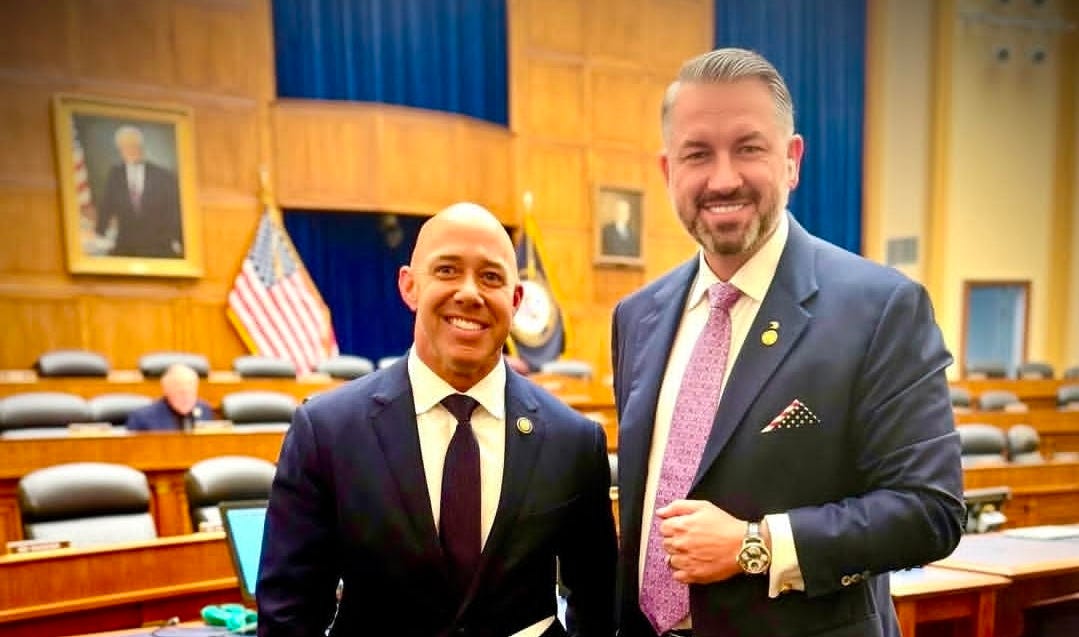
The full Labor Department data contains 63 PERM petitions bearing Mouratova’s name or her firm’s email domain, icemlaw.com, between fiscal 2021 and 2026. Twenty-six of them are truck-driver jobs. Ten of her petitions fall in the years the Labor Department published nationality, and all 10 workers are from the former Soviet Union: six from Ukraine and one each from Russia, Belarus, Moldova and Kazakhstan. Six of the 10 were in the United States on B-2 tourist visas when the employer filed. Two were on F-1 student visas, and one on a B-1 business visa. Her two driver petitions with a published nationality were both tourist-visa holders: a Moldovan sponsored by Condor Trans (certified) and a Ukrainian sponsored by KVS Trans (denied).
Then look at the employers.
Aremel LLC, at 1755 E. Hallandale Beach Blvd. in Hallandale Beach, Florida, filed 16 truck-driver petitions through Mouratova over three days, Oct. 31 through Nov. 2, 2023. The Labor Department certified all 16 in March 2025 at $52,998 a year. All 16 certifications later expired unused. On the forms, Aremel reported that it was founded in 2017, listed its industry as logistics consulting, NAICS code 541614, and reported zero employees. Aremel does not appear in the FMCSA motor carrier census under its name or its phone number. It holds no USDOT number. A company with no employees and no trucks persuaded the federal government that it could not find 16 American truck drivers.
TIM&COM Inc. of Aventura, Florida, got a commercial truck driver petition certified in fiscal 2026 at $55,370 a year. It reported zero employees and the long-distance trucking industry code. It has no FMCSA record. Mountain Star Transportation LLC of Centennial, Colorado, filed three driver job petitions at $33,301 a year: two certified and one withdrawn. No Colorado carrier by that name appears in the FMCSA census. The only Mountain Star Transportation carriers in the system are in El Paso, one inactive and one with no for-hire authority and zero roadside inspections. Lead Management Agency LLC of Vernon Hills, Illinois, sought a safety supervisor and was denied. It has no FMCSA record either. Power Only Transit Inc., which sought a software engineer, holds USDOT 2316701 with zero power units and zero inspections.
The clients that do run trucks are their own story. Condor Trans Inc. of Mount Prospect, Illinois, USDOT 1588474, lists Anca Sarmasan as its officer and runs 51 power units, with 429 inspections, 73 out-of-service results and 51 crashes on its record. Condor’s phone number is also registered to BlackFiber Group LLC, USDOT 4510158, added Dec. 23, 2025, with Anca Borza as its officer, one truck, no operating authority on file and one roadside inspection that produced four out-of-service violations. A carrier that sponsored a Moldovan driver on a tourist visa shares a phone with a one-truck company with no authority to haul for hire and failed its only inspection.
West Coast Cargo Inc. of Elk Grove Village, USDOT 3102696, officer Roman Nikolaev, runs 153 power units with 609 inspections, 76 out-of-service results and 18 crashes. It filed two driver petitions through Mouratova at $72,155, one certified and one denied. Pro Star Logistic of Kent, Washington, USDOT 3007470, runs 80 power units with 15 crashes. EMSA Express of Murfreesboro, Tennessee, USDOT 3627417, officer Elyorbek A. Soliev, runs three trucks with two inspections on record.
Recruiting does not happen in the PERM file. It happens on Telegram. Mouratova’s firm runs a Russian-language channel, t.me/icemlaw1, that posts recruitment cards aimed at drivers and other workers. The Russian- and Ukrainian-language CDL job channels we mapped in August, including @TopManager_cdl and the Dalnoboy Hub regional channels, sit in the same ecosystem, and on those channels carriers openly price non-domiciled drivers as a separate, lower-pay tier. In our Nov. 15 reporting, two carriers that sponsor drivers through PERM, Altex Transportation and Universe Freight Express, appeared in a Telegram channel selling ELD log edits.
Here is the fair line, and it is firm. No Sprinceana company appears as a Mouratova client in the Labor Department data. Worker names are not public. Nothing in these records shows that any worker she represented was unqualified, unsafe or dishonest. What the public record shows is a structure: an officer the federal government removed from trucking, a council president who files truck-driver green cards, Telegram recruiting aimed at former-Soviet workers, workers who were already in the country on tourist visas, and employers that in several cases, do not exist in the federal motor carrier census. Readers can weigh that structure for themselves.
Where the networks touch
We searched the full data for the networks this column has already documented in Illinois. Denver Cargo, AAA Freight, Super Ego Inc. and Compass Specialty have filed no green-card or H-2B petitions in fiscal 2015 through 2026. Floyd Inc. sponsored a Moldovan fleet manager and dispatcher in fiscal 2024 and a finance manager in fiscal 2026 through Kriezelman Burton. Leader Freight Systems sponsored one fleet manager in fiscal 2026 with a worksite in Posen, Illinois. Shark Freight filed dispatcher petitions, an H-2B application denied in fiscal 2022 and a PERM petition in fiscal 2025, listing a worksite in Pompano Beach, Florida. In this corner of the industry, the pattern is not drivers. It is the people who run the drivers: dispatch, fleet management and finance.
Maybach is the exception. Maybach Global LLC, at 5125 W. 123rd St. in Alsip, filed three H-2B applications in fiscal 2022, each asking for 100 truck drivers. All three were withdrawn. The phone number on those filings, 312-546-7557, is registered in the FMCSA census to Maybach International Group LLC, USDOT 2487790, at 1384 Madeline Lane in Elgin. Maybach International runs 296 power units and logged 30 crashes and 16 injuries in the 24 months ending Nov. 1, 2026, and it is in alert status in the Unsafe Driving category. A carrier already over the intervention threshold for unsafe driving had its phone number on applications asking the federal government for 300 more drivers.
Who is on the hook
The sponsor list is not a random sample of the industry. Of the 449 employers that filed three or more driver petitions, 300 match an FMCSA carrier by phone. In 116 of those 300, the street address on the Labor Department form does not match the address FMCSA has on file, which is the same shared-phone, shifting-address signature that runs through every Chameleon network we have published. Gamboa Logistics is in alert in five Safety Measurement System categories. Navajo Express, which filed 200 petitions through Visa Solutions and had 95 of them denied, is in alert in four. Large sponsors with hours-of-service or driver fitness alerts include TTS Logistics, Erives Enterprises, Angulo, T M Transportation Services, Trancasa, VTS, Bony, JKC, VS Carriers, Altex, Highlander, Top-Ten Express, Avala and Polmax.
Across PERM driver sponsors with 10 or more trucks, 50.4% are in alert in at least one category, compared with 31.1% of all comparable carriers. In hours of service, the gap is 35.4% to 21.2%. That is correlation, not causation. Inspection records do not say which driver was sponsored, and a big fleet running hard will show both. But it means the carriers telling the federal government they cannot find American drivers are, as a group, the carriers already struggling to keep the drivers they have legal.
Follow it down the chain. The sponsored driver arrives tied to one employer for the length of the green-card process, which gives the carrier leverage a domestic driver would never hand over. The domestic driver in the same market competes against an offer the federal government has blessed as the prevailing wage. The broker who books the load sees a valid MC number and a Satisfactory rating, or no rating at all. The shipper sees a truck show up. The insurer prices a fleet whose driver qualification files it has never opened. The plaintiff’s lawyer, after the crash, finds a sponsor that doesn’t appear in the FMCSA census, or a phone number a carrier shares with no authority. And taxpayers fund a certification program whose only question was whether an American would take the job at the local wage.
How we got here
The driver shortage became the industry’s official story in the mid-2000s, when the American Trucking Associations began publishing shortage estimates that climbed into six figures. Economists at the Bureau of Labor Statistics and in academia have spent most of the years since pointing out that the labor market for truck drivers behaves like a market with a turnover problem, not a supply problem: plenty of people hold a CDL, and large carriers churn through them at rates that would bankrupt any other industry. The shortage numbers became the argument for lowering the interstate driving age, loosening entry, and recruiting abroad.
The green-card numbers followed the argument. Driver PERM petitions jumped thirtyfold between fiscal 2017 and 2019, the same years the shortage campaign was at full volume and freight rates were climbing. Recruiters with overseas offices and law firms with ethnic-community client bases were ready. Then the non-domiciled CDL crisis broke, and the country found out how many foreign-born drivers states had licensed without verifying their status. The PERM pipeline is a different program, but it runs on the same premise: that the answer to a seat nobody wants at this pay is a driver from somewhere the pay looks good.
What would fix it
The inversion is simple. A program built to protect American wages has become the paperwork that certifies the industry’s lowest wages are in short supply.
The fixes aren’t exotic, and most need no new law. First, the Labor Department should require any employer filing for SOC 53-3032 to list a USDOT number on the ETA-9089 and should check it against the FMCSA census before certifying. Aremel would not have gotten 16 certifications. Second, the Labor Department and FMCSA should share data in the other direction: a carrier in alert status in hours of service or driver fitness should face supervised recruitment, the Labor Department’s existing tool for questionable filers, before it can certify a shortage. Third, the prevailing wage for truck driving should be set at the occupational median for the region, not the bottom of a local survey dominated by the same carriers doing the sponsoring. Fourth, agents and law firms filing more than 100 driver petitions a year should disclose who pays the recruitment and legal fees, because 20 CFR 656.12 already bars passing those costs to the worker and nobody is checking. Every one of those can be done by rulemaking or by agency practice under authority both departments already have.
And the industry can fix the part no regulation will. Pay the seat. Train the driver you have. Get her home.
Somewhere in El Paso this year, a driver will turn down a job at a number that would not cover his rent, and somewhere in Harare, a man with 15 years on the Beitbridge corridor will accept it, and both will be telling the truth. The PERM program was supposed to prove no American would take the job. Right now, it mostly proves no American was willing to take it for that.
For past articles on Gold Coast, their reincarnated carriers, connections, and Dragos Sprinceana, here’s the list of past articles:
The Gold Coast death wake that led to Mar-a-Lago (FreightWaves)
Romanian trucker’s back channel to Mar-a-Lago (FreightWaves)
A Moldovan broker, Romanian carrier, temporary CDL driver and another fatal truck crash (FreightWaves)
The Gold Coast files, Part 1 (Talking Wreckless)
The Gold Coast files, part two (Talking Wreckless)
The carrier, the broker and the names behind the crash that killed Brandon Rogers (Talking Wreckless)
How a Broken CDL System Killed Trooper Michael Pahira on I-81 (Talking Wreckless)
The Anatomy of a Broker and Shipper Liability Case (Talking Wreckless)